
Baby Poop: The Ultimate Guide to Colors, Texture, and Frequency



In this article

Your Baby’s Poop — What’s Normal?

What the Colors of Baby Poop May Mean

Baby Poop Color Chart

How Often Will Your Baby Poop?

Can Your Baby Make Too Much Poop?

When There’s No Poop — Constipation

How to Tell if Your Baby Has Pooped

FAQs at a Glance
Every diaper tells a story. From the thick, dark meconium during a newborn's first hours to the mustard-yellow of a breastfed baby and the tan-brown while formula feeding—baby poop changes constantly, and that's completely normal. But as a parent, it's hard to know what's worth worrying about and what isn't. This guide breaks down everything you need to know about baby poop colors, textures, and frequency, so you can feel confident at every diaper change and know exactly when it's time to call your healthcare provider.
Key Takeaways
Your Baby’s Poop—What’s Normal?
You might be wondering what healthy or “normal” baby poop should look like. It’s a fair question, because the color and consistency of your baby’s poop changes over time depending on various things, especially what your baby is eating.
Here’s a general poop guide for newborns and older babies to help you understand what you’re likely to find in their diaper over the first few days, weeks, and months after birth.
It takes a few days for your little one to pass all the meconium out of their system, but as this happens, they’ll start to have regular baby poops. The color will shift from being almost black to a yellowy green, and there may be less mucus present. Speak to your baby’s healthcare provider if your baby’s first bowel movement doesn’t happen within the first 24 hours after birth.
In Summary
Your baby’s first poops (meconium) after birth will resemble black tar and will contain particles they swallowed along with amniotic fluid inside the womb.
After a few days, you may notice the following: If you breastfeed your baby, the poop may look yellow and runny like mustard. If you feed with formula, your newborn’s poop may be tan and pasty like peanut butter.
After you begin introducing solid foods, the way the poop looks may vary depending on what your baby eats.
Now that you know what’s normal when it comes to baby poop, finding the right diaper can help keep your baby comfortable through every change. Take this quick quiz to find the perfect diaper.
Baby Poop Colors: What the Color Is Telling You
You might be surprised by a change in your infant’s poop color, which can range from the mustardy hues of breast-fed baby poop and the yellow-tan of formula-fed baby poop to various other shades of yellow, brown, and even green. You might also find mucus in baby poop, which can create a translucent or milky coloring.
Warning Colors: When to Contact Your Healthcare Provider
Certain colors of stool can be a sign of a possible health issue. Always check in with your baby’s healthcare provider if your baby’s poop is any of the following colors:
Mucus in Baby Poop: What Does it Mean?
As mentioned earlier, mucus in baby poop is most often harmless and normal. A newborn’s meconium “poop” almost always has it, and it’s not abnormal to find small amounts of mucus in your baby’s poop as they grow older and eat more varied foods. Mucus in baby poop is typically translucent or slightly milky in color.
However, if other symptoms accompany mucus in baby poop, this could be an indication of an infection or digestive issues. Symptoms to look out for include blood in the poop, diarrhea, high fever, loss of appetite, vomiting, and weakness. If you notice any of these symptoms, especially alongside mucus in your baby’s poop, contact your baby’s healthcare provider.
Baby Poop Color Chart: A Visual Guide to Stool Health
Infant Poop Frequency: How Often “Should” a Baby Poop?
How often newborns and older babies poop will change as they grow and their digestive system develops, but it’s also affected by the feeding method that you use.
If you’re ever concerned about how many poops your little one is passing, consult your baby’s healthcare provider.
Our secret tip
How to tell if your baby has pooped
Your baby's poop may not smell much in the early weeks, so how do you know when a diaper change is needed? One sign is straining; babies often turn red in the face while trying to push out stool. You'll quickly recognize your baby's facial expressions during a bowel movement or their squatting posture when they're older.
You can also take a quick peek down the back of their diaper instead of removing it.
Parents also ask…
Why is my breastfed baby's poop so runny?
Runny, loose, or seedy poop is often normal for breastfed babies—It generally doesn't mean diarrhea. Breast milk is highly digestible, so breastfed baby poop tends to be softer and more frequent than formula-fed baby poop. This usually changes once solids are introduced.
What does it mean if there's mucus in my baby's poop?
Small amounts of mucus in baby poop are often harmless—It's common in newborn meconium and can appear as your baby's diet changes. It becomes a concern if mucus is accompanied by blood, fever, diarrhea, or vomiting. In that case, contact your baby's healthcare provider.
Baby Constipation: Hard, Dry Stools, and Remedies
With all the variation in how often your baby poops, you may sometimes wonder if your little one has baby constipation or how long they can go without a bowel movement.
Constipation in babies is more common after starting solids, but a constipated baby can occur at any age. Here are some typical signs:
When it comes to gentle baby constipation remedies, some simple approaches may help, especially for older babies. According to sources like the Mayo Clinic and AAP:
If you think your baby is constipated, consult your baby’s healthcare provider for guidance. Avoid giving medications, including laxatives, unless your provider recommends them.
Parents also ask…
How do I know if my baby is constipated?
Constipation in babies is less about how often they poop and more about the consistency. Signs include hard, pebble-like stools, straining or crying during a bowel movement, and a hard or swollen belly. It's more common after starting solid foods. Always check with your provider before trying any remedy
Can teething affect my baby's poop?
Some parents notice looser stools during teething, possibly linked to extra drooling and saliva being swallowed. While it's a commonly reported experience, it's not a medically confirmed cause of diarrhea. If stools become very watery or frequent, it's worth checking in with your provider to rule out other causes.




Many dirty diapers can be normal, but if your little one’s stools are watery and very frequent, consult your baby’s provider.
Wondering, “Is my baby pooping too much?” The amount of poop your baby makes each time can vary. As long as their weight gain is on track and the stools are soft, all is likely fine.
If your baby is pooping a lot (much more than usual) and it seems watery or is filled with mucus, or they have other symptoms, like a high temperature (100.4 degrees Fahrenheit or above), this could be diarrhea.
Contact your baby’s healthcare provider if you think your little one might have diarrhea, especially if they’re under 3 months.
It’s worth knowing that newborns and younger babies are more likely to produce lots of little poops one after the other. If you notice that your baby has just had a bowel movement, you might be able to save yourself an extra diaper change by waiting just a little longer in case there’s more to come.
Tip
Each one of those diaper changes could be earning you Pampers Cash that you can use toward coupons and discounts. Download the Pampers Rewards app to get started today!
What Does Diarrhea Look Like in an Infant?
It can be tricky to tell the difference between normal baby poop and baby diarrhea, especially since newborn poop is runny by nature. In general, baby diarrhea is less about one loose diaper and more about a noticeable change from your baby’s usual pattern.
In newborns and babies, diarrhea often looks like:
You may also notice other symptoms alongside watery baby poop, such as fewer wet diapers, fussiness, or a fever.
Because babies—especially those under 3 months—can become dehydrated more easily, it’s important to contact your baby’s healthcare provider if you think your newborn infant has diarrhea, or if you have any concerns.
FAQs at a Glance
Baby poop can vary, but signs to watch for include very hard stools, white or pale poop, black stool after the newborn stage, or red streaks that may indicate blood. If you notice these or your baby seems uncomfortable, consult your baby’s healthcare provider.
The Bottom Line
You might not have realized until now just how much there is to know about your baby’s poop, but don’t worry: There’s no need to go over every single dirty diaper with a magnifying glass! Once you get used to your little one’s bowel movement patterns, and the usual color and texture of their poops, you’ll probably notice any changes quickly.
Just keep an eye on color and consistency, and together with your baby’s healthcare provider, you can take any steps needed to get things back to normal.
- American Academy of Pediatrics. Caring for Your Baby and Young Child: Birth to Age 5, 7th ed. (New York: Bantam Books, 2019).
- Cleveland Clinic: Diarrhea in Babies
- Healthy Children: Baby’s First Day – Bowel Movements
- Healthy Children: The Many Colors of Poop
- Healthy Children. Baby's First Days: Bowel Movements & Urination
- Healthy Children: Diarrhea (0-12 months)
- Healthy Children: Starting Solid Foods
- Healthy Children: Diarrhea in Babies
- Healthy Children: Infant Constipation
- Healthy Children: Pooping By the Numbers
- Mayo Clinic: Baby poop
- Mayo Clinic: Infant constipation
- LLLI: Baby’s poop
- LLLI: Constipation

Formula Feeding and Constipation
Wondering about formula feeding and constipation? Learn what’s normal, possible causes, and gentle tips to help your baby feel comfortable. Read more.
Read more
Meconium: Your Baby’s First Poop
Learn what meconium is, its composition, and how long it lasts. Understand meconium staining and aspiration syndrome (MAS) with expert medical insights.
Read more
How Many Wet Diapers Should a Newborn Have?
By Christopher B. Peltier
Wondering how many wet diapers a newborn should have? Learn day-by-day expectations and when to call your baby’s provider. Read more.
Read more
Understanding Baby Pee: Wet Diapers, Frequency, Color, and Smell
Learn all about your baby’s pee, including normal urinary frequency, why there might be a strong smell, the meaning behind different pee colors, and more.
Read more
Understanding Blood in Your Baby's Diaper
By Christopher B. Peltier
Discover common causes of blood in your baby's diaper, from minor issues like constipation to allergies. Learn when to consult a healthcare provider.
Read more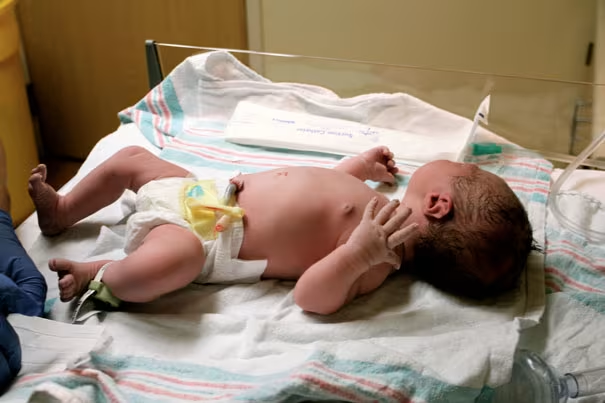
How To Put Diaper On Newborn With Umbilical Cord
Did you know that newborns might need 10 diaper changes a day? You'll get a lot of practice changing your baby and keeping the cord area clean too. Learn more about diapering and cord care.
Read moreFormula Feeding and Constipation
Wondering about formula feeding and constipation? Learn what’s normal, possible causes, and gentle tips to help your baby feel comfortable. Read more.
Read moreMeconium: Your Baby’s First Poop
Learn what meconium is, its composition, and how long it lasts. Understand meconium staining and aspiration syndrome (MAS) with expert medical insights.
Read moreHow Many Wet Diapers Should a Newborn Have?
By Christopher B. Peltier
Wondering how many wet diapers a newborn should have? Learn day-by-day expectations and when to call your baby’s provider. Read more.
Read moreUnderstanding Baby Pee: Wet Diapers, Frequency, Color, and Smell
Learn all about your baby’s pee, including normal urinary frequency, why there might be a strong smell, the meaning behind different pee colors, and more.
Read moreUnderstanding Blood in Your Baby's Diaper
By Christopher B. Peltier
Discover common causes of blood in your baby's diaper, from minor issues like constipation to allergies. Learn when to consult a healthcare provider.
Read moreHow To Put Diaper On Newborn With Umbilical Cord
Did you know that newborns might need 10 diaper changes a day? You'll get a lot of practice changing your baby and keeping the cord area clean too. Learn more about diapering and cord care.
Read moreFormula Feeding and Constipation
Wondering about formula feeding and constipation? Learn what’s normal, possible causes, and gentle tips to help your baby feel comfortable. Read more.
Read moreMeconium: Your Baby’s First Poop
Learn what meconium is, its composition, and how long it lasts. Understand meconium staining and aspiration syndrome (MAS) with expert medical insights.
Read moreJoin a World of Support
through Pregnancy and Parenthood.
TRACK WITH TOOLS
LEARN WITH EXPERTS
GET REWARDED




Where You Already Belong