
Week 40
of pregnancy

You are 100% through your pregnancy, with your due date in 0 weeks
Fetal development
Height
~20 in
Weight
~7.5-9 lb
Weekly highlights
- 1Baby’s Development. Your baby is full term—about the size of a small pumpkin and usually head-down. If still breech, your provider may discuss turning techniques or a planned cesarean birth. Even if your due date passes, your baby is closely monitored until labor begins.
- 2Bodily Changes & Symptoms. You may experience contractions, water breaking, or losing the mucus plug—all signs labor is near. Common symptoms include snoring, pelvic pressure, and back pain. Call your provider right away for heavy bleeding, severe headaches, fever, or concerning changes in movement.
- 3Health & Wellness. If labor doesn’t start on its own, your provider may recommend induction between 41–42 weeks. During vaginal birth, labor progresses in stages: dilation, pushing, and delivery of the placenta. Discuss your preferences for pain relief or procedures ahead of time. Cesarean births are also common, and partners are often allowed in the OR for planned procedures.
- 4Tips & To-Dos. Keep your hospital bag ready, confirm your support team, and review postpartum recovery basics. Arrange home help for meals or chores, and wrap up any last baby prep. Take time for rest and self-care as you wait for your little one’s arrival.
You are 100% through your pregnancy, with your due date in 0 weeks
Checklist for week 40
- Check with your hospital or birth center to see if their facilities include bathtubs or showers that you can use during labor. Some pregnant people find that this hydrotherapy can help lessen pain and discomfort.
- Read up on how to time contractions.
- Make a list of all the people you want to tell as soon as your little one’s born so you don’t forget anyone. If you plan to make a social media announcement, you may want to draft something now, then just fill in details like the time of birth and your baby’s weight later on.
- If you haven’t packed your hospital bag at 40 weeks pregnant, now would be a really good time to start getting together the essential items you’ll need at the hospital or birthing center. Use our handy hospital bag checklist to make sure you haven’t missed anything.
- Download the Pampers Club app to earn discounts and rewards on all the diapers and wipes you’ll be buying in the coming years.
- If possible, organize some help around the house for the first few days and weeks after your baby is born. Friends, neighbors, or nearby family members may be happy to pitch in with meal preparation, grocery shopping, or caring for your older children.
- Have a few spare minutes of downtime before the big day arrives? You might want to take a look at how to navigate the first few weeks with your newborn.
- It’s not too late to shop for any baby items you still need. For example, check out our list of the best diaper bags and the best swaddle blankets as selected by thousands of Pampers Parents.

Loyalty program
Are you starting to think about buying the first diapers for your baby?
Get exclusive recommendations and offers just for you to save hundreds of $$$ on Pampers

Get the Pampers Rewards app
Welcome to 40 weeks pregnant! This could be the final week of your pregnancy, and the thrilling moment of meeting your little one may be just days or hours away. During this time, your body and baby are preparing for the miraculous experience of birth. In this article, we’ll review the signs of labor, discuss what happens during labor and delivery, and suggest some key points to keep in mind when you're 40 weeks pregnant.
Highlights at 40 Weeks Pregnant
You’ve made it to 40 weeks pregnant! So, what should you know about or do during this special period?
40 Weeks Pregnant: Your Baby's Development
At 40 weeks pregnant, your little one could arrive any day, but they might also prefer a little more time in the coziness of your belly. If you don’t go into labor within a week of your expected due date, your healthcare provider will keep an extra close eye on your baby’s heart rate and movement to be sure that all is well.
How Many Months Is 40 Weeks Pregnant?
Now that you’ve reached the amazing milestone of 40 weeks pregnant, you may be wondering what that is in months. Although there are various ways to group the weeks into months, we generally consider 40 weeks to be nine months pregnant—and you’re now full-term!

Baby's Size at 40 Weeks Pregnant
At 40 weeks pregnant, the average baby is about the size of a small pumpkin. Babies generally weigh between five and a half and nine and a half pounds at birth (if they’re full-term). Keep in mind that this is just an average—pretty soon, you’ll know your baby’s exact birth weight and length.
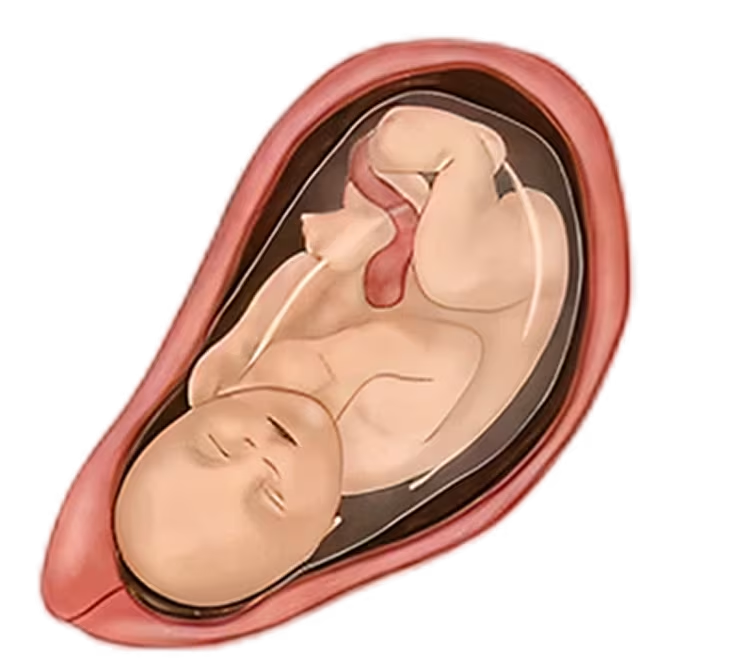
Your Baby: What Does 40 Weeks Pregnant Look Like?
Although not every baby is head-down this week, here’s an illustration of how your baby may be positioned at 40 weeks:
Your Body at 40 Weeks Pregnant
Your body has done an amazing job of housing and nourishing your baby throughout your pregnancy. Read on to discover what happens during labor and delivery for both a vaginal delivery and a cesarean section.
Vaginal birth
If you’re having a vaginal birth, when the time comes, you’ll go through three labor stages before you meet your baby.
First Stage
During the first stage, which includes two phases called “early labor” and “active labor,” you will experience cervical effacement, which means your cervix will start to open by stretching and thinning. At this stage, you’ll feel contractions starting in your back area and moving toward your belly. These contractions move your baby lower down into the birth canal.
Although each person’s labor experience is different, some can be in the early labor phase for as many as 14 to 20 hours before progressing to active labor, which is when the cervix dilates about six centimeters. Active labor may last between four and eight hours.
It’s not uncommon to spend most of your early labor at home; your healthcare provider will be able to give you personalized advice as to when you should head to the hospital. If you start to notice the early signs of labor any time around 40 weeks pregnant, try to make the time as relaxing as possible.
You might want to go for a walk or take a warm bath at home, or you could listen to your favorite music or start practicing any breathing techniques you’ve learned in your childbirth education classes.
Second Stage
Once your cervix is fully dilated (10 centimeters), you’ve made it to the second stage of labor. This is when you’ll be encouraged to push to help move your baby through the birth canal and out into the world.
This part is usually a bit quicker (lasting about half an hour to three hours, on average) but can be more physically demanding and painful than the earlier stage of labor.
Third Stage
Finally, after you deliver your baby, you’ll reach the third and final stage of labor. This is when you’ll deliver the placenta. You’ll probably still feel contractions as the placenta detaches from the uterus and comes out, but this stage is usually quicker and less uncomfortable than delivering your baby.
If you haven’t done this already, you might like to read up on the medical interventions your healthcare provider may recommend or the ones you prefer. These include having an epidural or getting an episiotomy.
Discuss your preferences with your provider in advance or add them to your birth plan. If you’re unsure exactly what your preferences are, ask your provider why such medical interventions may be recommended and what the risks and benefits are of each.
Cesarean Birth
Not all pregnancies deliver vaginally. You may have a scheduled cesarean section, or your healthcare provider may decide that a c-section is the best action once you’re in labor.
For cesarean delivery, you’ll first be given anesthesia to numb you or put you to sleep before surgery. Then, after being prepped for surgery, your doctor will make an incision in your abdomen and uterus and remove the baby and placenta manually.
If your c-section is planned, your partner will likely be allowed in the operating room with you during surgery.
40 Weeks Pregnant: Your Symptoms
At 40 weeks pregnant, here are some of the symptoms you may be experiencing:
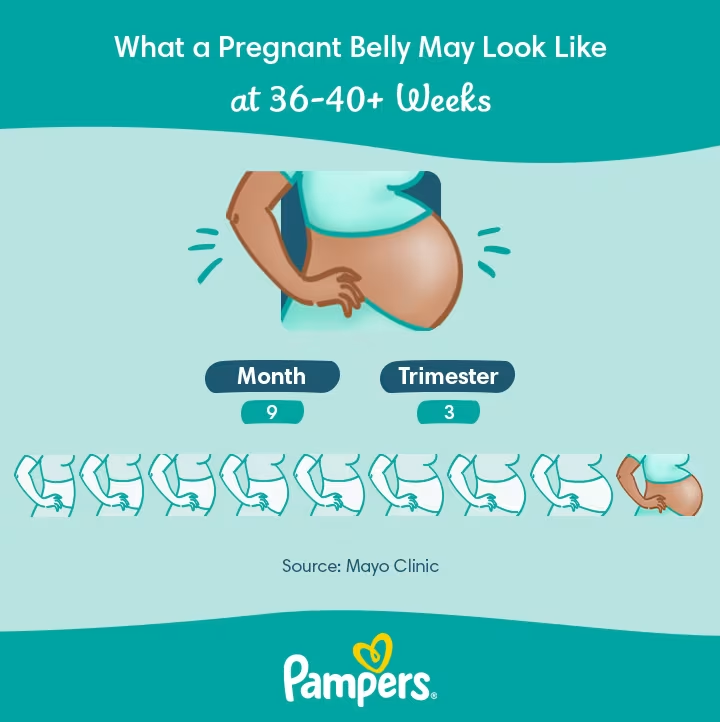
How Big Is a Pregnant Belly at 40 Weeks?
Your uterus has probably finished expanding now—there’s been a lot of growth in the past nine months! Before your pregnancy, your uterus started out at around two ounces, and at 40 weeks, it may now weigh about two and a half pounds.
You and your healthcare provider have likely been monitoring your weight gain over the course of your pregnancy. Most of this weight comes from your own stores of fat, your baby’s body weight, and extra blood and fluid volume. You’ll lose most of the weight gained during pregnancy once your baby is born. Then, once you're fully recovered from childbirth, you can read up on postpartum weight loss. Keep in mind that you’ll have a lot on your plate when your newborn is here, so take things slowly and try not to put too much pressure on yourself to “bounce back” into shape.
What Does 40 Weeks Pregnant Look Like?
Here’s a general idea of how your belly might look around 40 weeks pregnant:
40 Weeks Pregnant: Things to Consider
Before your little one arrives, here are a few things you might want to consider:
Tip for Partners As always, it’s great to let your pregnant partner know that you’re there to support them. Ask them how they’re feeling and discuss what may be in store in the next week. If you’re going to be the birth partner, review what you’ve learned during the childbirth classes, such as breathing and relaxation exercises. Your pregnant partner will be grateful for your calming and reassuring help during labor. |
40 Weeks Pregnant: Questions for Your Healthcare Provider
These are a handful of questions you may have for your healthcare provider:
FAQs at a Glance
Yes, being 40 weeks pregnant is generally considered safe, as it marks the end of a full-term pregnancy. However, it’s essential to consult with your healthcare provider for individualized guidance and to ensure your and your baby's well-being.
40 Weeks Pregnant: Your Checklist
Use our handy checklist at 40 weeks pregnant:
How We Wrote This Article The information in this article is based on the expert advice found in trusted medical and government sources, such as the American Academy of Pediatrics and the American College of Obstetricians and Gynecologists. You can find a full list of sources used for this article below. The content on this page should not replace professional medical advice. Always consult medical professionals for full diagnosis and treatment.
- American College of Obstetricians and Gynecologists. Your Pregnancy and Childbirth: Month to Month, 7th ed. (Washington, DC: American College of Obstetricians and Gynecologists, 2021).
- Kids Health. “Inductions.”
- Kids Health. “Week 40.”
- Mayo Clinic. “Fetal development: The 3rd trimester.”
Week 27
At 27 weeks pregnant, your baby’s heart rate may slow down when they hear your voice. Learn all baby development and your symptoms at 27 weeks pregnant.
Read more
Week 14
At 14 weeks, your fetus is developing a sense of taste and smell. Find out more about baby development, and common pregnancy symptoms at 14 weeks pregnant.
Read more
Week 15
Discover the most common pregnancy symptoms at 15 weeks pregnant, and all the exciting ways your fetus is developing this week.
Read more
Week 16
At 16 weeks pregnant, you may have an ultrasound where you could learn your baby’s gender. Discover more about this exciting week of pregnancy.
Read more
Week 20
By 20 weeks pregnant you may have found out the gender of your baby via an ultrasound. Learn more about what takes place at 20 weeks.
Read more
Week 11
At 11 weeks pregnant, you might be experiencing some unusual food cravings. Find out why this happens and catch up on baby development at 11 weeks.
Read more
Week 13
At 13 weeks pregnant, you’ve almost made it to the “honeymoon” period of pregnancy—the second trimester. Find out what else is exciting about this pregnancy week.
Read more
Week 12
At 12 weeks pregnant, there’s a lot going on with your baby’s development and your body. Read on to learn about what happens during this week of pregnancy.
Read more
Week 34
At 34 weeks, you might feel more pressure on your pelvis as your baby drops down. Read on for more about what might happen during this week of pregnancy.
Read more
Weeks 1 to 2
Will you really notice those very early signs of pregnancy in weeks 1 to 2? Read on to learn what’s happening in your body at the start of your pregnancy.
Read moreWeek 27
At 27 weeks pregnant, your baby’s heart rate may slow down when they hear your voice. Learn all baby development and your symptoms at 27 weeks pregnant.
Read moreWeek 14
At 14 weeks, your fetus is developing a sense of taste and smell. Find out more about baby development, and common pregnancy symptoms at 14 weeks pregnant.
Read moreWeek 15
Discover the most common pregnancy symptoms at 15 weeks pregnant, and all the exciting ways your fetus is developing this week.
Read moreWeek 16
At 16 weeks pregnant, you may have an ultrasound where you could learn your baby’s gender. Discover more about this exciting week of pregnancy.
Read moreWeek 20
By 20 weeks pregnant you may have found out the gender of your baby via an ultrasound. Learn more about what takes place at 20 weeks.
Read moreWeek 11
At 11 weeks pregnant, you might be experiencing some unusual food cravings. Find out why this happens and catch up on baby development at 11 weeks.
Read moreWeek 13
At 13 weeks pregnant, you’ve almost made it to the “honeymoon” period of pregnancy—the second trimester. Find out what else is exciting about this pregnancy week.
Read moreWeek 12
At 12 weeks pregnant, there’s a lot going on with your baby’s development and your body. Read on to learn about what happens during this week of pregnancy.
Read more