Postpartum Belly: Week-by-Week Changes and Recovery Tips



Key Takeaways
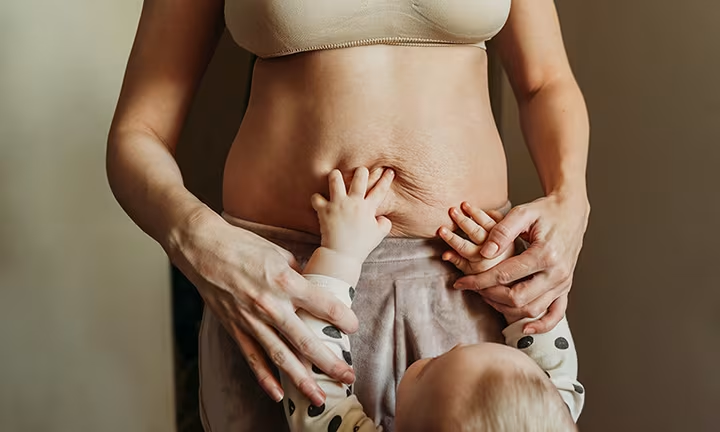
It’s completely normal to still have a soft, rounded abdomen, known as a postpartum belly, weeks or even months after giving birth. Your body spent nearly 10 months growing and supporting a baby, and recovery takes time.
Common contributors include:
Understanding the changes in your post-pregnancy belly helps you set realistic expectations and focus on healing. In the sections below, we’ll break down what’s typical, what may need medical advice, and the most effective ways to support healing.
How Your Postpartum Belly Might Look and Feel After Pregnancy
After childbirth, it’s common to feel surprised by your postpartum belly. Your post-pregnancy belly doesn’t immediately return to its pre-pregnancy shape—and that’s completely normal.
In the early weeks, your stomach after pregnancy may:
This happens because your abdominal muscles were stretched, your skin expanded, and your body is still adjusting after birth.
Every post-pregnancy belly heals differently. With time and recovery, your body continues to adjust—and patience with yourself is an important part of that process.
How Long Does It Take for the Uterus to Shrink After Giving Birth?
Postpartum, the uterus begins contracting in a process called involution—its gradual return to pre-pregnancy size. This process of the uterus shrinking after pregnancy typically takes about six weeks. If you’re wondering, how long for the uterus to shrink after a C-section versus vaginal delivery, the timeline is similar for both, but can vary from person to person.
During involution, it’s common to experience postpartum belly cramps or “afterbirth pains,” especially during breastfeeding. These are signs that the uterus is healing and contracting back to its normal size. If you’re curious about how long it takes for the womb to shrink, keep in mind that healing is individual, but most people notice steady progress week by week.

| Parents also ask… |
|---|
Does age affect postpartum belly recovery? Age can influence skin elasticity and muscle recovery, but gradual improvement is still common with consistent care and time.
Is it normal for the postpartum belly to look different throughout the day? Yes—bloating, digestion, activity level, and fatigue can change how the belly looks from morning to night. This is very common. |
Post-Pregnancy Belly Week by Week
Your postpartum belly week by weekjourney may not look like everyone else’s—and that’s completely normal.
Right after giving birth, it’s common to still look a few months pregnant. Although your uterus typically returns to its prepregnancy size by about six weeks, it may take several months—or longer—for your abdominal muscles and skin to recover fully.
So, how long for the postpartum belly to go down? For many parents, visible changes happen gradually over six months to a year. Here’s a closer look at what you might notice along the way.
First Two Weeks: 1- and 2-Week Postpartum Belly
In the first days after birth, your belly may feel soft, rounded, and slightly swollen. Your 1 week post pregnancy belly may still resemble a pregnant belly, and that’s normal.
During this time, your uterus begins a process called involution. This means it’s shrinking back to its prepregnancy size.
Here’s what’s happening internally:
You may also feel cramping (sometimes called “afterpains”), which is a sign that your uterus is contracting.
The biggest visible reduction often happens in these first two weeks, largely due to the uterus shrinking and fluid shifts.
3- to 4-Weeks Postpartum Belly
By the time you reach 3 weeks postpartum, your belly may look smaller—but likely not back to prepregnancy shape.
Around 3 to 4 weeks postpartum, common changes to your belly may include:
Your abdominal muscles separate during pregnancy to accommodate your growing baby. Recovery of these muscles takes time, especially if you have diastasis recti (a separation of the abdominal muscles), which is common postpartum.
Tip
If you notice bulging along the center of your abdomen or ongoing weakness, consult your healthcare provider before starting abdominal exercises.
6 Weeks Postpartum Belly
The 6-week postpartum bellymark is often considered a major postpartum recovery checkpoint.
By now:
However, your belly may still feel soft. Many parents find that:
If you had a cesarean birth, recovery may feel different. A c-section postpartum belly week by weekprogression may include incision healing, swelling near the scar, and numbness around the area, which can take several months to improve.
Always consult your healthcare provider before resuming exercise, especially after a cesarean birth.
1- to 2-Months Postpartum Belly
Around the first to second month postpartum, you may notice:
By 2 months postpartum,many parents see more visible changes to their belly, particularly if they’ve been cleared for gentle movement and core-strengthening exercises.
Muscle engagement often starts to improve, but this varies widely. Genetics, activity level, sleep, nutrition, and whether this is your first pregnancy all play a role.
Remember: body composition may shift even if the number on the scale doesn’t.
Up to 1 Year Postpartum Stomach
By the time you reach 1-year postpartum,many parents notice significant healing in the stomach area.
With regular exercise and a healthy, balanced diet, you may start to notice:
Stretch marks and some skin looseness are often permanent. That’s a normal part of how skin stretches during pregnancy.
Some parents return to their prepregnancy body shape. Others find their hips, waistline, or abdominal area have changed long-term. Both experiences are normal.
The journey of regaining your pre-pregnancy body varies greatly from one parent to another, influenced by factors such as genetics, the nature of your delivery, diet, exercise, and overall lifestyle.
| Postpartum Phase | Uterus Status | How the belly might look |
| Weeks 0–2 | Rapid shrinkage; fundus descends ~1 cm/day | Belly remains soft and protruding; fluid and uterine bulk are still present |
| Around Weeks 3-4 | Involution underway; uterus may no longer feel obvious | Muscles still stretched; skin loose; gradual tone recovery begins |
| Around Week 6 | The uterus might be at pre-pregnancy size | Belly size reduced; muscles are gaining tone, but may still feel soft or lax |
| Around Months 1-2 | The uterus has likely shrunk to pre-pregnancy size | Improvement in muscle tone; however, it varies depending on the level of physical activity and other factors |
| Up to 1 Year | Complete involution by ~6 weeks | Muscle strength and skin elasticity improve over months, but full return varies widely |
Tips and Best Ways to Help Lose Postpartum Belly Fat
Physical recovery and returning to your pre-pregnancy fitness levels is a gradual process that requires patience and self-care. Combining exercise and healthy eating can help you gradually regain your energy and get your body back to where you want it to be. If you want to learn how to get rid of a pregnant-looking belly or how to lose belly fat after pregnancy, know that a consistent routine can make a meaningful difference over time.
It’s important to remember that results will vary depending on factors like skin elasticity, genetics, and overall health. Here are some tips to support your recovery and help restore your postpartum belly.
Postpartum Belly Diet and Nutrition
What you eat plays a key role in supporting healing and helping reduce a postpartum belly. If you’re looking for a postpartum weight loss diet, it’s best to avoid crash diets or calorie restrictions and rather focus on nourishing your body with a healthy, balanced diet.
Learn more about postpartum weight loss in our dedicated guide.
Postpartum Belly Exercises
Exercising is a great way to help lose your postpartum belly. Before starting any postpartum exercise regimen, it’s recommended to wait until your healthcare provider gives you the green light. Once you get the go-ahead, try to stay active for 20 to 30 minutes per day, but remember to listen to your body and be gentle and patient with yourself. Here are some of the best exercises for the postpartum belly:
You can find more postpartum workouts in our dedicated article.
| Parents also ask… |
|---|
Can carrying or lifting your baby impact postpartum belly recovery? Repeated lifting without core engagement can strain abdominal muscles. Using proper lifting techniques can support healing.
Will my postpartum belly ever look exactly the same as before pregnancy? Everybody is different—some return close to their pre-pregnancy shape, while others notice lasting changes. Both are normal. |
Loose Belly Skin After Pregnancy
Noticing loose skin after pregnancy—especially around your abdomen—is very common.
For many parents, skin gradually tightens over several months as the body heals. However, some degree of looseness or stretch marks may be long-lasting, especially after multiple pregnancies or significant weight changes.
If you’re wondering how to get rid of loose skin after pregnancy, the safest approach is time and overall recovery. The American College of Obstetricians and Gynecologists (ACOG) recommends a gradual return to activity and avoiding rapid weight loss during the postpartum period.
If you’re concerned about persistent bulging or muscle separation, consult your healthcare provider.
Tip
When does the linea nigra go away? The dark vertical line from the pubic area to the belly button, known as linea nigra, often appears during pregnancy. This change typically fades within a few months after childbirth as hormone levels normalize, but the fading process varies among individuals. Some may see it disappear quickly, while others may take longer.
Learn more about linea nigra in our guide.
Postpartum Belly Wrap and Band
Belly wraps, or bands, for postpartum are traditional aids embraced by various cultures to support the abdomen and uterus, offering both physical support and aiding recovery after childbirth. Using these aids by wrapping your belly postpartum may provide gentle compression to assist in reducing swelling, support weakened abdominal muscles and the uterus as it returns to its pre-pregnancy size. They may also help improve posture during the recovery process.
Postpartum support garments can be helpful in the initial weeks after childbirth, as they make it easier to move around and participate in daily activities. However, it's important to wear them correctly—snugly but not too tight. Be sure to consult your healthcare provider before using them, especially if you've had a cesarean section. Postpartum belly wraps should be seen as a temporary support measure, complemented by a healthy diet and exercise for effective long-term postpartum recovery.
FAQs at a Glance
The uterus typically takes about six weeks to shrink back to its pre-pregnancy size through a process called involution. This process can vary slightly from person to person, with various factors, such as breastfeeding, affecting the timing.
The Bottom Line
The postpartum period is a time of significant physical and emotional adjustment. Understanding the changes your body undergoes and knowing that recovery takes time can help you set realistic expectations and be compassionate with yourself. Remember, everyone’s experience is unique, and embracing your body’s pace of recovery is a vital step toward wellness and strength.
If you haven’t already, download our Pampers Rewards app to get rewards and discounts on all those diapers your little one is going through.
- American College of Obstetricians and Gynecologists. Your Pregnancy and Childbirth: Month to Month, 7th ed. (Washington, DC: American College of Obstetricians and Gynecologists, 2021).
- Mayo Clinic. Guide to a Healthy Pregnancy, 2nd ed. (Rochester, MN: Mayo Clinic Press, 2018).
- Cleveland Clinic. “Diastasis Recti.”
- Cleveland Clinic. “Linea Nigra.”
- Cleveland Clinic. “Postpartum Belly Wrap.”
- Cleveland Clinic. “Uterus Involution.”
- March of Dimes. “Your Body After Baby: The First 6 Weeks.”
The Postpartum Period (Puerperium): How Long It Lasts, Symptoms, and Tips
The postpartum period consists of the weeks after you give birth. Learn about the postpartum period and read our tips to help ease the transition.
Read more
Postpartum Weight Loss
By Maria Striemer
Many new parents want to lose those extra pounds after giving birth. Here’s how to lose weight in the postpartum period safely and effectively.
Read more
Postpartum Depression: Symptoms, Treatment, and Support
Explore postpartum depression symptoms, causes, and treatments, along with ways to support loved ones experiencing PPD.
Read more
FAQ: Lochia (Postpartum Bleeding)
Postpartum bleeding, or lochia, is a normal part of recovery after birth. Learn how long it lasts, what to expect, and when to consult your healthcare provider.
Read more
Postpartum Recovery Timeline: Recovering From Labor and Delivery
Explore your postpartum recovery week by week. Learn about healing, symptoms, emotional changes, and tips from birth to 2+ months.
Read more
Postpartum Workout: When and How to Start Safely
Ease back into fitness with a safe postpartum workout plan. Get expert tips, gentle exercise ideas, and recovery guidance after a vaginal or C-section birth.
Read more
Postpartum Hair Loss: Cause, Timeline, and Care Tips
By Maria Striemer
Learn why postpartum hair loss happens, when it starts, and how to manage it. Discover tips to promote hair regrowth after pregnancy.
Read more
When Does Your Period Return After Birth? Postpartum Guide
Curious when your period returns after giving birth? Discover how nursing vs non-nursing affects your flow and cramps, plus tips on your first postpartum cycle.
Read moreThe Postpartum Period (Puerperium): How Long It Lasts, Symptoms, and Tips
The postpartum period consists of the weeks after you give birth. Learn about the postpartum period and read our tips to help ease the transition.
Read morePostpartum Weight Loss
By Maria Striemer
Many new parents want to lose those extra pounds after giving birth. Here’s how to lose weight in the postpartum period safely and effectively.
Read morePostpartum Depression: Symptoms, Treatment, and Support
Explore postpartum depression symptoms, causes, and treatments, along with ways to support loved ones experiencing PPD.
Read moreFAQ: Lochia (Postpartum Bleeding)
Postpartum bleeding, or lochia, is a normal part of recovery after birth. Learn how long it lasts, what to expect, and when to consult your healthcare provider.
Read morePostpartum Recovery Timeline: Recovering From Labor and Delivery
Explore your postpartum recovery week by week. Learn about healing, symptoms, emotional changes, and tips from birth to 2+ months.
Read morePostpartum Workout: When and How to Start Safely
Ease back into fitness with a safe postpartum workout plan. Get expert tips, gentle exercise ideas, and recovery guidance after a vaginal or C-section birth.
Read morePostpartum Hair Loss: Cause, Timeline, and Care Tips
By Maria Striemer
Learn why postpartum hair loss happens, when it starts, and how to manage it. Discover tips to promote hair regrowth after pregnancy.
Read moreWhen Does Your Period Return After Birth? Postpartum Guide
Curious when your period returns after giving birth? Discover how nursing vs non-nursing affects your flow and cramps, plus tips on your first postpartum cycle.
Read moreJoin a World of Support
through Pregnancy and Parenthood.
TRACK WITH TOOLS
LEARN WITH EXPERTS
GET REWARDED



Where You Already Belong