Manners for Toddlers


Key Takeaways
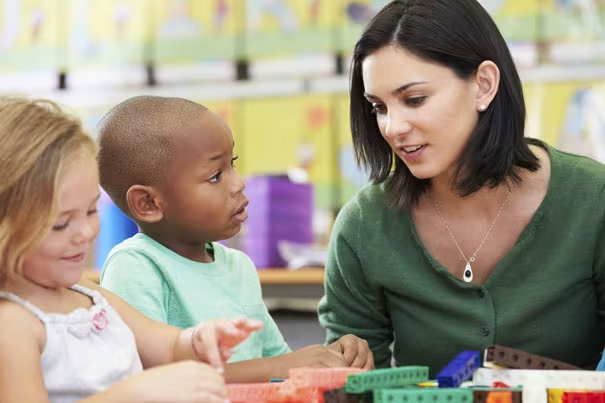
When our children were very young, we didn't much care about their manners. As babies, their loud burps would usually elicit laughter, and as they learned to speak, we considered their inadvertent insults or seemingly rude behavior rather adorable. But as children get into preschool/day care and start having play dates and doing the birthday party circuit, manners become increasingly important.
Children who don't learn respect, good manners, and how to behave with others run the risk of being shunned by their peers as children, alienating teachers and classmates during the school years, and having trouble in social situations as adults.
The Good News
Unfortunately, teaching kids manners isn't easy. If toddlers and preschoolers could draw a picture of the universe, they'd put themselves at the very center. They aren't particularly interested in anyone else's needs.
The good news is that you've probably already started teaching your child manners. When your toddler wanted more green beans (okay, white rice), you prompted him to say "please." And when your preschooler receives a present, you encourage him by asking, "What do you say to Grandma?"
Good Manners Teaching Advice
While saying "please" and "thank you" is a great start, it is only a start. There's much more to learn for your child. Overall, teaching manners is about instilling good behavior in a variety of situations. These few tips can help:
Finally, keep your expectations reasonable. The reality is that teaching good manners is a process that will take years. In the meantime, you'll need to be prepared to remind your child dozens of times every day before the message really sinks in.
Read more about Toddler
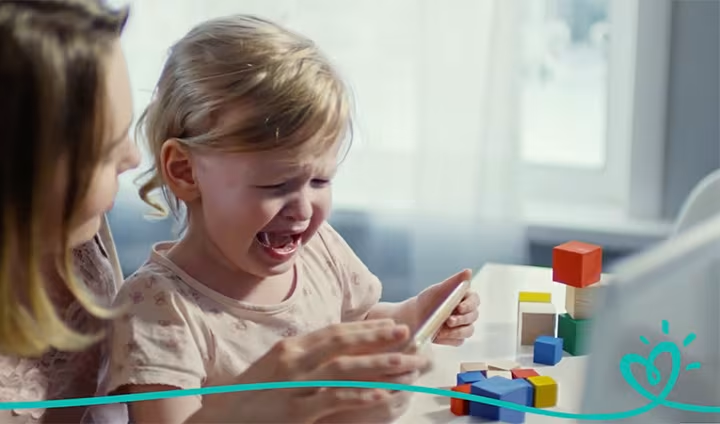
Toddler Pushing Boundaries? Learn Techniques to Help you Best Handle the Situation
Set boundaries for kids' behavior. Without them, they won't know what's acceptable. Learn effective responses as parents. More info.
Read more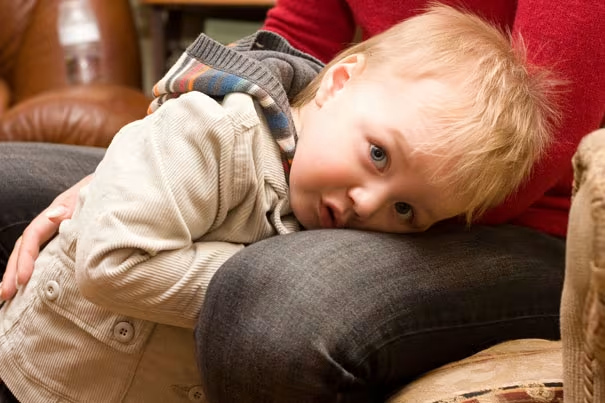
How to Help a Child Who Is Shy
What causes shyness? How can we help a young child overcome these feelings?
Read more
Fighting Toddlers: Handling Aggressive Behavior
Does your child fight a lot? Some toddlers and preschoolers get into repeated and escalating tussles. Get some tips and insight on helping kids cope with aggressive behavior.
Read more
Potty Talk: Curbing Bad Language in Toddlers
Poo-poo head! Sometimes, the words toddlers and preschoolers use are not as innocent as you might hope. What does this bad language really mean to them?
Read more
How to Handle Toddler Temper Tantrums
By Christopher B. Peltier
Temper tantrums are an inevitable part of toddler development. Learn how to prevent and manage your toddler’s temper tantrums before they escalate.
Read more
How Understanding ‘Power’ Can Help With Toddler Behavior
Back to basics parenting consists of four major tools that parents can learn to resolve 90% of behavior issues with your little ones at home. Mastering the first principle, power, is an important step to conquering these challenges and reducing tantrums. Read more about it here!
Read more
Why Some Children Cry More Than Others
You might ask yourself why your baby cries so much. Here’s what you can do to soothe your baby and relieve your own stress.
Read more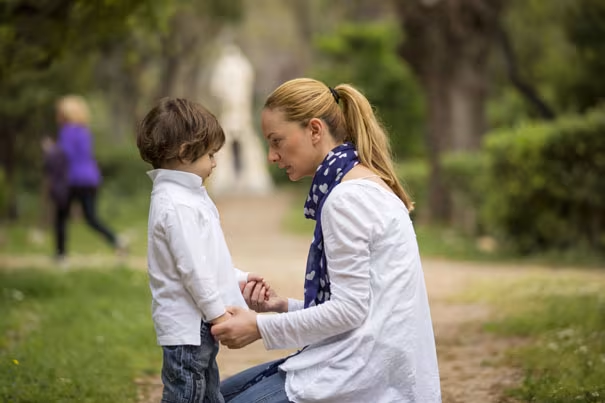
Toddler Biting: How to Help a Child Who Bites
Ouch! Biting is a common behavior among toddlers and preschoolers, who often have strong feelings and limited language ability. Get some tips on dealing with biting.
Read more
Why Does Your Child Suck Her Thumb and Should You Stop It?
Most babies suck their thumbs, but should you be trying to stop it when they get older? Learn why your child sucks her thumb and when to break the habit.
Read more
Pincer Grasp Development
Find out at what age your baby may start developing the pincer grasp, the type of hold that’s used for fastening and holding a pencil.
Read moreToddler Pushing Boundaries? Learn Techniques to Help you Best Handle the Situation
Set boundaries for kids' behavior. Without them, they won't know what's acceptable. Learn effective responses as parents. More info.
Read moreHow to Help a Child Who Is Shy
What causes shyness? How can we help a young child overcome these feelings?
Read moreFighting Toddlers: Handling Aggressive Behavior
Does your child fight a lot? Some toddlers and preschoolers get into repeated and escalating tussles. Get some tips and insight on helping kids cope with aggressive behavior.
Read morePotty Talk: Curbing Bad Language in Toddlers
Poo-poo head! Sometimes, the words toddlers and preschoolers use are not as innocent as you might hope. What does this bad language really mean to them?
Read moreHow to Handle Toddler Temper Tantrums
By Christopher B. Peltier
Temper tantrums are an inevitable part of toddler development. Learn how to prevent and manage your toddler’s temper tantrums before they escalate.
Read moreHow Understanding ‘Power’ Can Help With Toddler Behavior
Back to basics parenting consists of four major tools that parents can learn to resolve 90% of behavior issues with your little ones at home. Mastering the first principle, power, is an important step to conquering these challenges and reducing tantrums. Read more about it here!
Read moreWhy Some Children Cry More Than Others
You might ask yourself why your baby cries so much. Here’s what you can do to soothe your baby and relieve your own stress.
Read moreToddler Biting: How to Help a Child Who Bites
Ouch! Biting is a common behavior among toddlers and preschoolers, who often have strong feelings and limited language ability. Get some tips on dealing with biting.
Read moreJoin a World of Support
through Pregnancy and Parenthood.
TRACK WITH TOOLS
LEARN WITH EXPERTS
GET REWARDED




Where You Already Belong