
Toddler and Parent Separation Anxiety


Key Takeaways
Separation from a parent is a normal part of childhood development, and of parenting too. It's marked by developmental milestones like learning to use the potty and going to daycare or preschool. These changes introduce new experiences as your little one begins to explore his world in new ways.
During the toddler and preschool years, socialization, greater mobility, and a growing vocabulary all prepare children for life changes. These transitions can be hard on both sides. A parent watches from the sidelines in angst, fearful that her child will fall down after making those first few steps on her own. A child begins to feel sad when she has to say good-bye to a friend after a particularly fun play date.
Separation and Anxiety
Separation is a challenge when children become intensely anxious about leaving a parent or caregiver. Some anxiety is normal and even expected. Take the instance of when you say good-bye to your little one to go to work. "Don't go, Mommy!" he cries. You feel terrible. It's an effort to walk out the door. You call from the road three minutes later only to learn that your child is playing happily.
Separation is harder to manage when the anxiety becomes more intense, longlasting, and ongoing. The child who doesn't want to go to day care is a common example. Your child may go to great lengths to stay at home with you. She says she doesn't feel well, she has a tummy ache, and the clincher —she just doesn't want to go, period.
How to Help Your Child
Keep in mind that problems with separation often arise during developmental transitions like sleeping in a "big kid bed" or adjusting to a new little brother or sister. If this is the case, ask your child what is difficult about the new situation. Young children don't necessarily have the verbal skills to directly share their experiences, so have your child play or draw to learn more about her feelings. Observe when the intense reaction occurs. The reactions you see in your child can guide you in efforts to manage difficult separation situations. Some children, for instance, have no problem saying good-bye after an activity or event is over. For others, the departure is tearful and painful. Identifying when separation comes up for your child is one way to be ready to respond when it does occur.
If your child is staying with a babysitter for the first time, a good rule in this situation is to try to make your departure a quick one with one solid good-bye that your child will see and hear. This way she’ll know you have left and will be able to transition from knowing you are there, watching you go, and adjusting to being with the sitter.
Going to school for the first time is another important transition for children. Explore ways to make the transition easier. Meet soon-to-be classmates and visit the school the summer before to minimize the fear of the unknown. Many preschools have phase-in programs where parents attend school with their children at the beginning of the year.

How to Help Yourself
Finally, consider your own issues. If your child gleefully leaves your embrace and runs to the classroom the minute you get to school, do you find yourself wondering, "Wait a minute! Does that mean my child doesn't want to be with me? Is it that easy for her to say good-bye?" Children are like sponges. Their perceptiveness and ability to read people (like their parents!) lead them to react to how they think you're doing. Talk about your separation struggles with your partner, friends, or other parents. It's harder for children to leave you when they sense that you don't want to leave them.
One way to cope is to develop a good-bye ritual. This can be as simple as waving good-bye and blowing kisses to one another. Another tip is to make a plan a fun activity with your little one when you're reunited. Discussions about going to the library or playing at home give both you and your youngster something to look forward to, making the separation that much easier.
Remember this: growing up is hard to do, for children and their parents!
Read more about Toddler
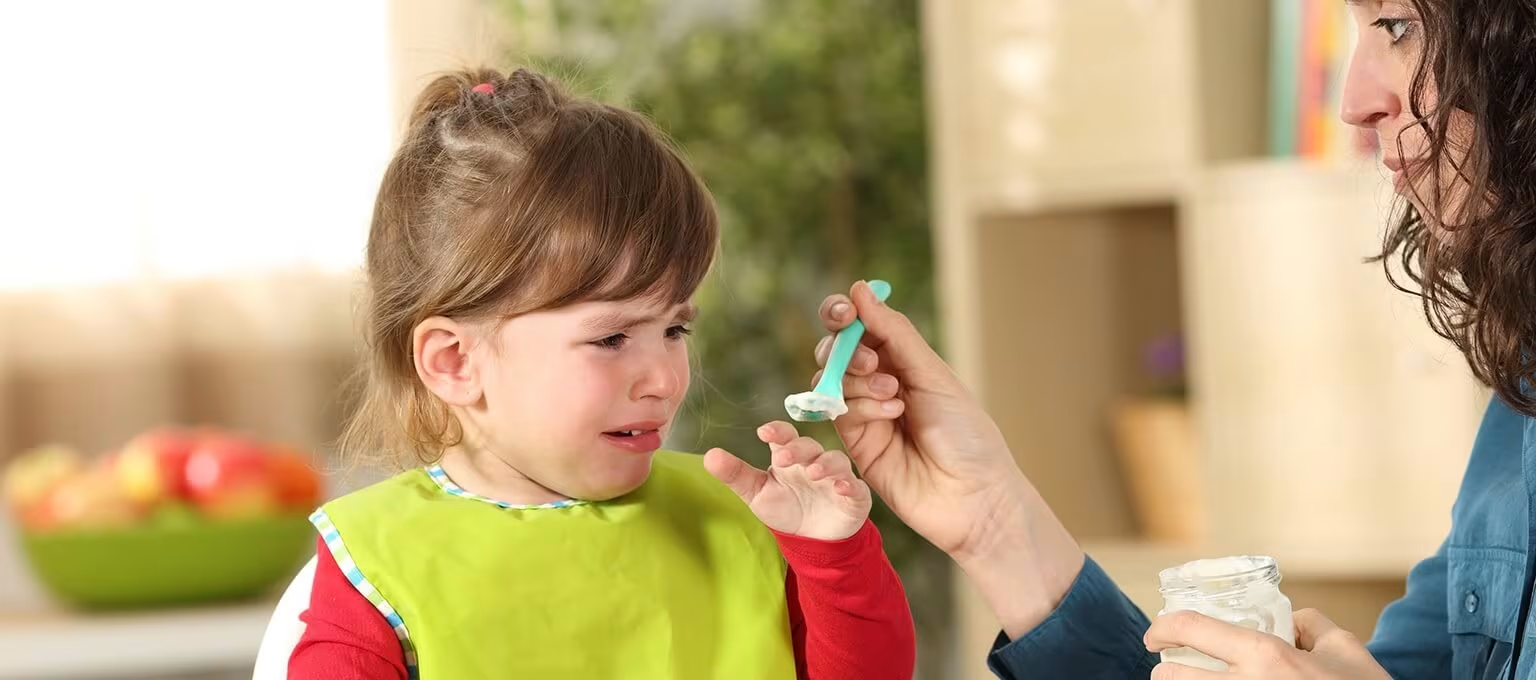
Toddler Pushing Boundaries? Learn Techniques to Help you Best Handle the Situation
Set boundaries for kids' behavior. Without them, they won't know what's acceptable. Learn effective responses as parents. More info.
Read more
How to Help a Child Who Is Shy
What causes shyness? How can we help a young child overcome these feelings?
Read more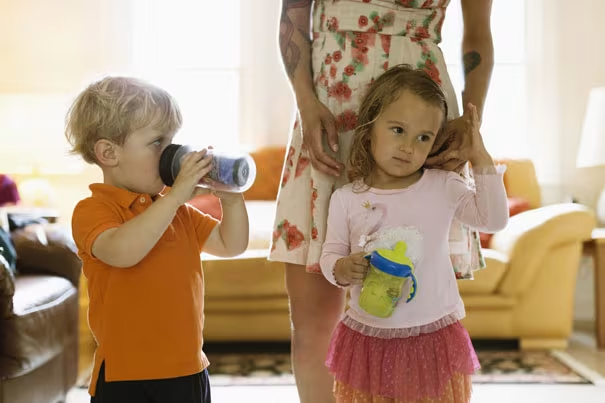
Fighting Toddlers: Handling Aggressive Behavior
Does your child fight a lot? Some toddlers and preschoolers get into repeated and escalating tussles. Get some tips and insight on helping kids cope with aggressive behavior.
Read more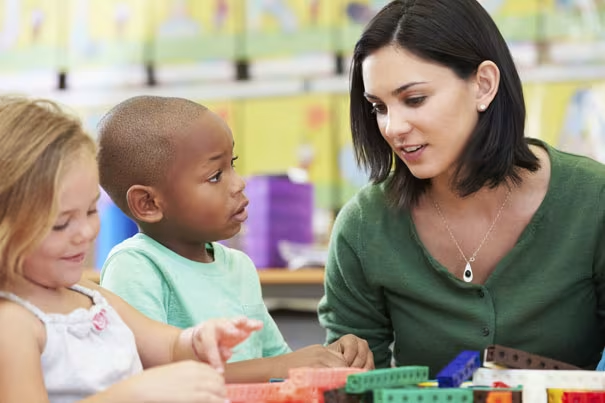
Manners for Toddlers
Are you struggling with getting your little one to say please and thank you? A few smart strategies and techniques may help this go more smoothly. Learn more about teaching manners.
Read more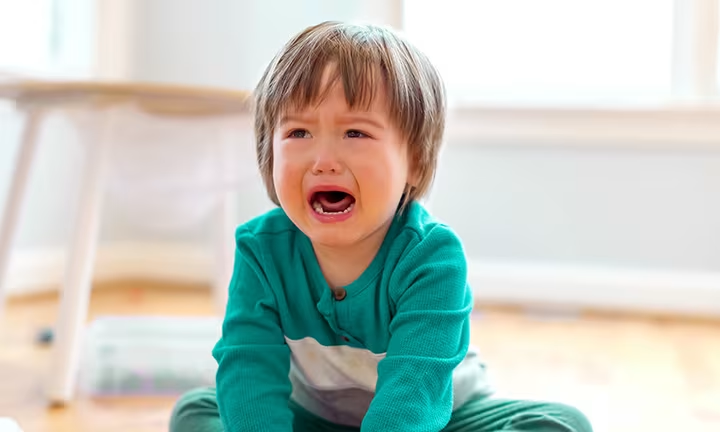
How to Handle Toddler Temper Tantrums
By Christopher B. Peltier
Temper tantrums are an inevitable part of toddler development. Learn how to prevent and manage your toddler’s temper tantrums before they escalate.
Read more
How Understanding ‘Power’ Can Help With Toddler Behavior
Back to basics parenting consists of four major tools that parents can learn to resolve 90% of behavior issues with your little ones at home. Mastering the first principle, power, is an important step to conquering these challenges and reducing tantrums. Read more about it here!
Read more
Why Some Children Cry More Than Others
You might ask yourself why your baby cries so much. Here’s what you can do to soothe your baby and relieve your own stress.
Read more
Toddler Biting: How to Help a Child Who Bites
Ouch! Biting is a common behavior among toddlers and preschoolers, who often have strong feelings and limited language ability. Get some tips on dealing with biting.
Read more
Why Does Your Child Suck Her Thumb and Should You Stop It?
Most babies suck their thumbs, but should you be trying to stop it when they get older? Learn why your child sucks her thumb and when to break the habit.
Read more
Pincer Grasp Development
Find out at what age your baby may start developing the pincer grasp, the type of hold that’s used for fastening and holding a pencil.
Read moreToddler Pushing Boundaries? Learn Techniques to Help you Best Handle the Situation
Set boundaries for kids' behavior. Without them, they won't know what's acceptable. Learn effective responses as parents. More info.
Read moreHow to Help a Child Who Is Shy
What causes shyness? How can we help a young child overcome these feelings?
Read moreFighting Toddlers: Handling Aggressive Behavior
Does your child fight a lot? Some toddlers and preschoolers get into repeated and escalating tussles. Get some tips and insight on helping kids cope with aggressive behavior.
Read moreManners for Toddlers
Are you struggling with getting your little one to say please and thank you? A few smart strategies and techniques may help this go more smoothly. Learn more about teaching manners.
Read moreHow to Handle Toddler Temper Tantrums
By Christopher B. Peltier
Temper tantrums are an inevitable part of toddler development. Learn how to prevent and manage your toddler’s temper tantrums before they escalate.
Read moreHow Understanding ‘Power’ Can Help With Toddler Behavior
Back to basics parenting consists of four major tools that parents can learn to resolve 90% of behavior issues with your little ones at home. Mastering the first principle, power, is an important step to conquering these challenges and reducing tantrums. Read more about it here!
Read moreWhy Some Children Cry More Than Others
You might ask yourself why your baby cries so much. Here’s what you can do to soothe your baby and relieve your own stress.
Read moreToddler Biting: How to Help a Child Who Bites
Ouch! Biting is a common behavior among toddlers and preschoolers, who often have strong feelings and limited language ability. Get some tips on dealing with biting.
Read moreJoin a World of Support
through Pregnancy and Parenthood.
TRACK WITH TOOLS
LEARN WITH EXPERTS
GET REWARDED




Where You Already Belong