
Strep Throat in Babies and Toddlers: Signs and Treatment


Your little one might get a sore throat every now and then. While a viral infection is the most common cause of this in infants and babies, strep throat in babies is another possible reason. Let's break down what strep throat is, what causes it in little ones, how to recognize the signs, and the best ways to treat it.
What Is Strep Throat and Can Babies or Toddlers Get It?
Strep throat is a bacterial infection caused by the Streptococcus pyogenes bacterium. It can give you a sore throat and inflamed tonsils and is often mistaken for viral throat infections.
Besides making your throat scratchy and sore, strep throat can bring on a fever, rash, and even kidney problems if it's not treated. The good news? Strep throat is easy to treat with antibiotics.
Even though strep throat is most common in children aged 5 to 15, it can happen at any age. So yes, babies can get strep throat, but it's pretty rare in little ones.
What Are the Symptoms of Strep Throat in Babies and Toddlers?
The symptoms of strep in babies and toddlers may differ from those of adults and older kids.
Strep Throat Symptoms in Babies
The symptoms of strep throat in infants tend to be mild and may include the following:
Strep Throat Symptoms in Toddlers
Among the symptoms of strep throat in toddlers are the following:
Strep Throat Symptoms in Children Over 3 Years Old
For older children, strep throat can cause:
What Causes Strep Throat?
The bacterium Streptococcus pyogenes, also known as group A streptococcus, is what causes strep throat.
This kind of bacteria spreads easily. It can be passed through the air when someone sneezes or coughs, or by sharing food or drinks with an infected person. Your baby or toddler could also get infected if they touch a contaminated surface and then touch their nose, mouth, or eyes.
How to Protect Your Little One Against Strep Throat
Here's what you can do to lower the chances of your baby or toddler (or anyone in the family) catching strep throat:
How Is Strep Throat Diagnosed?
If you think your child might have strep throat, it's best to take them to the healthcare provider. Diagnosing strep throat in babies may need a rapid strep test or a throat culture, which can give results in minutes. A negative result usually means the infection is likely caused by a virus.
However, up to a third of negative rapid strep tests can be false negatives. So even if the rapid test says negative, if your healthcare provider thinks strep throat might be the cause, they might swab your child's throat to test for the presence of the streptococcus bacterium, just to be sure. The results from the throat culture usually come back in a day or two.
What Is the Treatment for Strep Throat?
Strep throat in babies is easy to treat. If the tests come back positive, your healthcare provider will likely prescribe antibiotics that can be given as a liquid or injection.
Make sure your little one takes the full course of antibiotics, even if they start feeling better before it's finished. For kids older than 3, it's really important that strep throat is fully treated to prevent serious complications, like abscesses in the tonsils or kidney problems.
When Should You Contact Your Healthcare Provider?
If your little one isn't feeling well, it's always a good idea to check in with your healthcare provider.Get in touch if you notice any of these signs:
Very rarely, a group A strep infection can lead to complications like ear infections, sinusitis, abscesses in the tonsils, lymph node infections, or scarlet fever. That's why it's important to consult your child's healthcare provider and follow their treatment plan.
What Is the Difference Between a Sore Throat, Tonsillitis, and Strep Throat?
You might have heard the terms tonsillitis, strep throat, and just a regular sore throat used interchangeably, and wonder what's the difference between them. Here’s a quick rundown:
If you suspect your child’s throat is bothering them, consult your healthcare provider, who can make a diagnosis and recommend the appropriate treatment.
FAQS AT A GLANCE
Strep throat usually doesn't cause dangerous complications in infants and only rarely needs treatment from your healthcare provider.
The Bottom Line
The good news about strep throat in babies is that it's super rare in infants and toddlers and is usually mild when it does happen in kids under 3. Even for older children, antibiotics usually do the trick. If you're ever worried about how your little one is feeling, reach out to your healthcare provider for advice and to make sure everything's okay. And while you focus on keeping your baby healthy, the Pampers Rewards App can help you save on essentials with exclusive discounts and digital offers—because every little moment matters!
- American Academy of Pediatrics. Caring for Your Baby and Young Child: Birth to Age 5, 6th ed. (New York: Bantam Books, 2014).
- Healthy Children. “Can Infants Get Strep Throat?”
- Healthy Children. “The Difference Between a Sore Throat, Strep & Tonsillitis.”
- Healthy Children. “When is a Sore Throat a More Serious Infection?”
- Kids Health. “Test Rapid Strep.”
- Mayo Clinic. “Strep Throat.”
- Mayo Clinic. “Tonsillitis.”
- Mayo Clinic. Tonsillitis Diagnosis.”

Pinkeye (Conjunctivitis) in Babies: Causes and Treatment
By Christopher B. Peltier
Pinkeye in babies and newborns is usually caused by an infection or allergy. Find out what exactly pinkeye is, and how you can try to prevent and treat it.
Read more
Chicken Pox in Babies and Toddlers, and During Pregnancy
By Terri L. Major-Kincade
Chicken pox is common for babies and toddlers—and even for you during your pregnancy. Read on to learn about symptoms, treatment, and when to visit the doctor.
Read more
Helping Your Baby with Constipation
By Christopher B. Peltier
Discover remedies for relieving your baby's constipation, signs to watch for, and tips on when to consult a healthcare provider.
Read more
Baby Diarrhea: Causes, Symptoms, and Treatment
By Christopher B. Peltier
Find out what to do if your baby or toddler has diarrhea, signs to look out for, and the possible causes. Plus, learn how to prevent it from happening.
Read more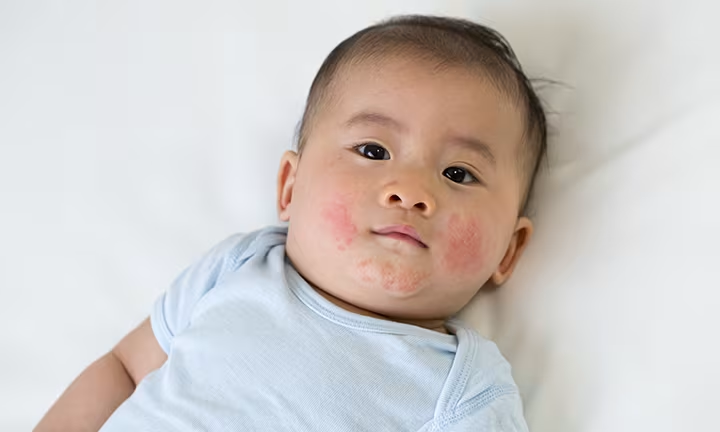
FAQ: What Is Fifth Disease?
By Christopher B. Peltier
Fifth disease is a type of mild viral infection that can affect some young children. Learn more about its symptoms and treatment here.
Read more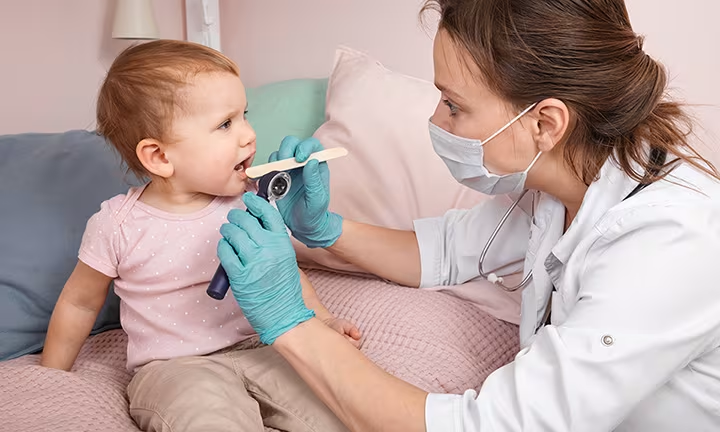
Coughs in Babies and Toddlers: Causes, Symptoms, and Treatment
By Terri L. Major-Kincade
Discover what types of coughs there are, and what they may mean for your baby or older child. Learn remedies and when to see your child’s healthcare provider.
Read more
What to Do if Your Baby Has Reflux or GERD
Occasional acid reflux can be a common condition in your infant’s first year, but if it happens too frequently, it may be a condition called GERD. Learn about the symptoms of reflux and how it can be treated.
Read more
Baby Arching Back: Why Do Babies Arch Their Backs?
By Terri L. Major-Kincade
Why is your baby arching their back? There are many reasons why babies arch their backs! Learn when it’s normal and when to contact your healthcare provider.
Read more
How to Prevent and Stop Baby Hiccups
By Christopher B. Peltier
Does your baby or newborn get hiccups frequently? Read to learn how to help prevent and stop hiccups and how to soothe your little one when they happen.
Read more
Whooping Cough in Babies
Whooping cough, also known as pertussis, is a bacterial infection that may affect children and adults. Read more about the symptoms and treatment of whooping cough in babies.
Read morePinkeye (Conjunctivitis) in Babies: Causes and Treatment
By Christopher B. Peltier
Pinkeye in babies and newborns is usually caused by an infection or allergy. Find out what exactly pinkeye is, and how you can try to prevent and treat it.
Read moreChicken Pox in Babies and Toddlers, and During Pregnancy
By Terri L. Major-Kincade
Chicken pox is common for babies and toddlers—and even for you during your pregnancy. Read on to learn about symptoms, treatment, and when to visit the doctor.
Read moreHelping Your Baby with Constipation
By Christopher B. Peltier
Discover remedies for relieving your baby's constipation, signs to watch for, and tips on when to consult a healthcare provider.
Read moreBaby Diarrhea: Causes, Symptoms, and Treatment
By Christopher B. Peltier
Find out what to do if your baby or toddler has diarrhea, signs to look out for, and the possible causes. Plus, learn how to prevent it from happening.
Read moreFAQ: What Is Fifth Disease?
By Christopher B. Peltier
Fifth disease is a type of mild viral infection that can affect some young children. Learn more about its symptoms and treatment here.
Read moreCoughs in Babies and Toddlers: Causes, Symptoms, and Treatment
By Terri L. Major-Kincade
Discover what types of coughs there are, and what they may mean for your baby or older child. Learn remedies and when to see your child’s healthcare provider.
Read moreWhat to Do if Your Baby Has Reflux or GERD
Occasional acid reflux can be a common condition in your infant’s first year, but if it happens too frequently, it may be a condition called GERD. Learn about the symptoms of reflux and how it can be treated.
Read moreBaby Arching Back: Why Do Babies Arch Their Backs?
By Terri L. Major-Kincade
Why is your baby arching their back? There are many reasons why babies arch their backs! Learn when it’s normal and when to contact your healthcare provider.
Read moreJoin a World of Support
through Pregnancy and Parenthood.
TRACK WITH TOOLS
LEARN WITH EXPERTS
GET REWARDED



Where You Already Belong