Baby Acne: What Causes It and How to Treat It


Key Takeaways
Your beautiful newborn has made their long-awaited entrance into the world, but a few weeks later you notice pimple-like spots on their face. Don’t worry—your little one isn’t heading into their teens particularly early! It’s likely they have baby acne, a condition that’s common in newborns. Find out more about it and what you can do to care for your baby's delicate skin during a bout of baby acne.
What Is Baby Acne and What Are the Symptoms?
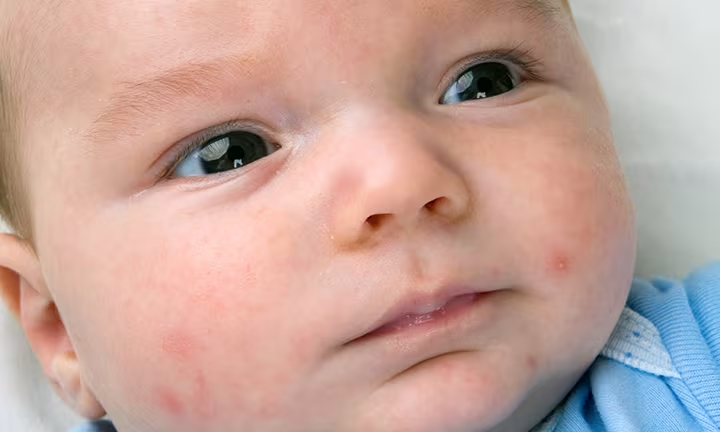
You may see your newborn baby with small pimples on their face, usually on their cheeks, nose, eyelids, chin, and/or forehead. This may be baby acne, which is also referred to as neonatal acne. It’s common in newborns and appears in 3 out of 10 babies.
When Does Baby Acne Start and How Long Does It Last?
Baby acne may first appear on your newborn at around 2 to 5 weeks old. So, when does baby acne go away? It's a temporary condition that typically clears up after about three to four months and leaves no scars.
What Causes Baby Acne?
There is no way to prevent baby acne. Experts are not exactly sure what causes baby acne, but it could be due to one of the following:
Baby acne has nothing to do with the type of acne that a teenager may experience.
What Does Baby Acne Look Like?
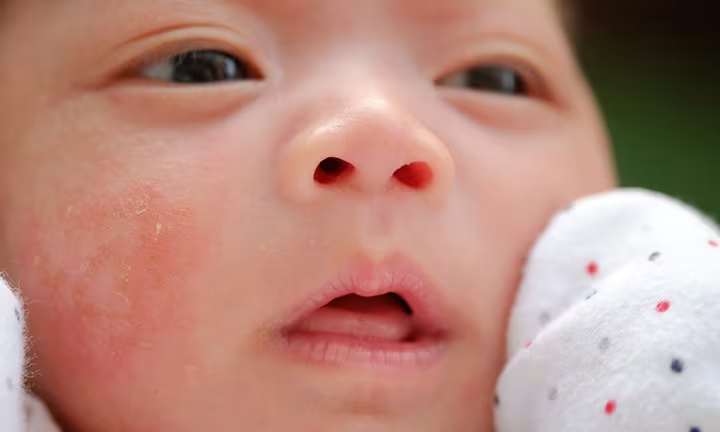
Baby acne looks like tiny red or white bumps (a.k.a. milia) or pustules that appear on your infant's cheeks, nose, eyelids, chin, and/or forehead. Sometimes the acne can also appear on your baby’s scalp or on their neck or upper trunk. Unlike acne that teens and adults can experience, baby acne does not have blackheads or whiteheads.
How to Treat Baby Acne
There are no treatments or natural, at-home remedies for clearing up baby acne—you will just have to wait for it to go away on its own.
In the meantime, here’s how you can care for your baby's delicate skin:
When Should You See Your Baby’s Healthcare Provider?
So, when is baby acne a concern? If anything about your baby's complexion seems out of the ordinary, or if the condition isn't getting better after three to four months, consult your baby's healthcare provider. Also, contact your baby's provider if you ever notice any of the following:
How Is Baby Acne Diagnosed?
Your baby’s healthcare provider will be able to determine if it's baby acne or some other form of baby rash such as heat rash or eczema after examining your little one.
The healthcare provider may prescribe a medicated ointment or some other treatment for the baby acne. But be sure not to use any over-the-counter creams or medications without consulting the healthcare provider first, as these can damage your baby's delicate skin.
The Bottom Line
A little baby acne will not diminish how absolutely adorable your newborn is. Like teenage acne, baby acne is just something that can happen as a part of growing up. Take care of your little one's skin as best as you can, wait for it to pass, and keep giving those little cheeks plenty of kisses.
Did you know that you can get rewarded for all the diapers you buy from Pampers? Simply download the Pampers Rewards app, scan your Pampers purchases, and watch your Pampers Cash balance grow.
- Book: Caring for your baby and young child, birth to age 5, Sixth Edition Paperback – November 2, 2014 by American Academy of Pediatrics (Author)
- Mayo Clinic: Baby acne – Symptoms & Causes
- Mayo Clinic: Baby acne – Diagnosis & Treatment
- Cleveland Clinic: Baby acne
- Cleveland Clinic: Baby acne – Living with
- Cleveland Clinic: Baby acne – Diagnosis and tests
- Cleveland Clinic: Baby acne – Management and treatment
- Healthy Children: Newborn Rashes and Birthmarks
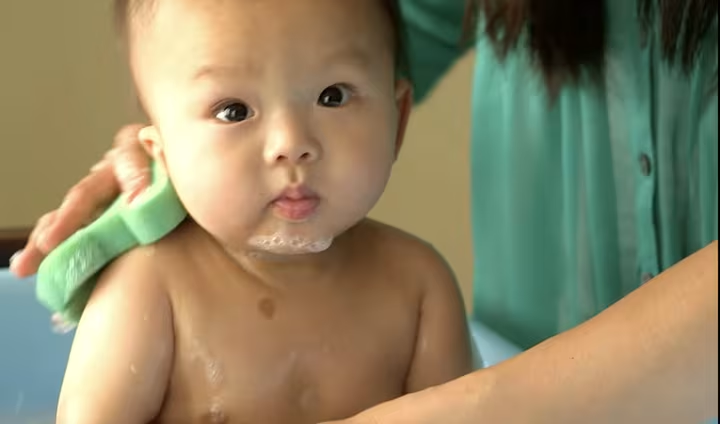
How to Bathe a Newborn: Safe Bathing Tips
By Christopher B. Peltier
Unsure how to bathe your newborn? Get clear, step-by-step help on sponge baths, bath temperature, umbilical cord care, and building bath time confidence.
Read more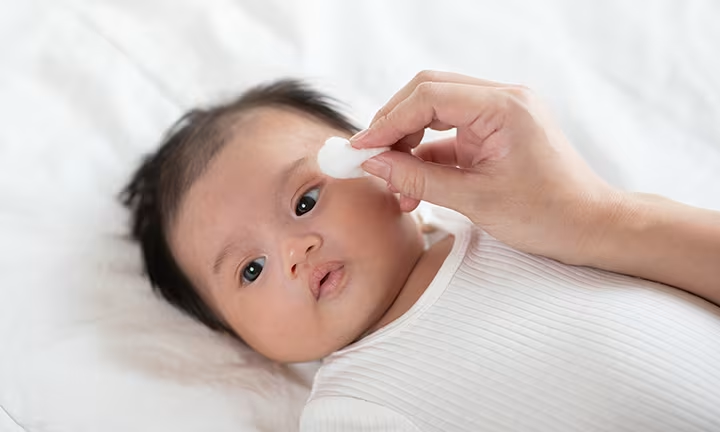
How to Clean Your Baby’s Ears, Eyes, and Nose Using water that is too hot or too cold when cleaning the baby’s face.
Discover the ultimate guide to cleaning your baby's delicate face, including tips on how to gently clean their ears, nose, and eyes.
Read more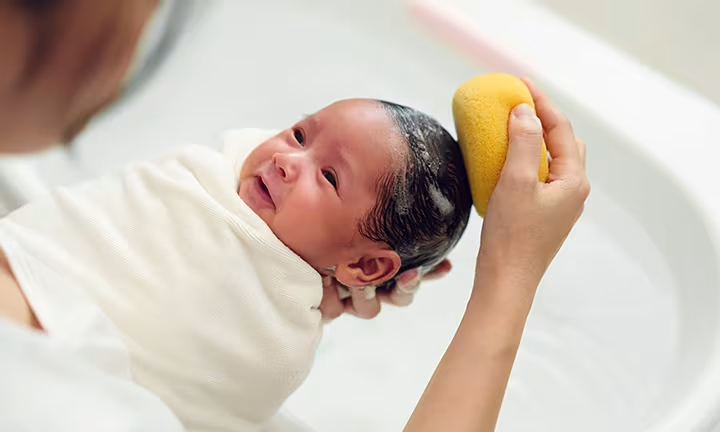
Newborn Sponge Bath
Learn how to give your newborn a sponge bath safely and comfortably. Our guide provides step-by-step instructions to keep your baby clean and happy.
Read more
Helping Your Baby with Reflux Sleep
Uncover important information and tips on helping a young baby with acid reflux get the sleep they need.
Read more
Flat Head Syndrome (Positional Plagiocephaly): Causes and Treatment
By Christopher B. Peltier
Learn about why your baby may have a flat back of the head, and how flat head syndrome can be prevented and treated.
Read more
Taking Care of Your Newborn’s Umbilical Cord
By Christopher B. Peltier
Discover how to care for your newborn’s umbilical cord stump so it stays clean and dry, and learn the signs of an infection.
Read more
Can a Newborn Sleep with a Pacifier? Your Guide to Pacifiers
Wondering if babies need pacifiers? Learn about their benefits—like reduced SIDS risk and sleep support—plus when and how to introduce one safely.
Read moreHow to Bathe a Newborn: Safe Bathing Tips
By Christopher B. Peltier
Unsure how to bathe your newborn? Get clear, step-by-step help on sponge baths, bath temperature, umbilical cord care, and building bath time confidence.
Read moreHow to Clean Your Baby’s Ears, Eyes, and Nose Using water that is too hot or too cold when cleaning the baby’s face.
Discover the ultimate guide to cleaning your baby's delicate face, including tips on how to gently clean their ears, nose, and eyes.
Read moreNewborn Sponge Bath
Learn how to give your newborn a sponge bath safely and comfortably. Our guide provides step-by-step instructions to keep your baby clean and happy.
Read moreHelping Your Baby with Reflux Sleep
Uncover important information and tips on helping a young baby with acid reflux get the sleep they need.
Read moreFlat Head Syndrome (Positional Plagiocephaly): Causes and Treatment
By Christopher B. Peltier
Learn about why your baby may have a flat back of the head, and how flat head syndrome can be prevented and treated.
Read moreTaking Care of Your Newborn’s Umbilical Cord
By Christopher B. Peltier
Discover how to care for your newborn’s umbilical cord stump so it stays clean and dry, and learn the signs of an infection.
Read moreCan a Newborn Sleep with a Pacifier? Your Guide to Pacifiers
Wondering if babies need pacifiers? Learn about their benefits—like reduced SIDS risk and sleep support—plus when and how to introduce one safely.
Read moreHow to Bathe a Newborn: Safe Bathing Tips
By Christopher B. Peltier
Unsure how to bathe your newborn? Get clear, step-by-step help on sponge baths, bath temperature, umbilical cord care, and building bath time confidence.
Read moreJoin a World of Support
through Pregnancy and Parenthood.
TRACK WITH TOOLS
LEARN WITH EXPERTS
GET REWARDED



Where You Already Belong