
What to Do if Your Baby Only Sleeps When Held


Tale as old as time—your baby sleeps like a dream when you’re holding them but wakes the second you lay them in their crib. For many, this is the beginning of what may seem like an endless cycle of trying to get your baby to sleep on their back so you can get some shut eye as well. While it’s normal and often recommended for you to hold your newborn while they sleep for naps, contact naps may become a habit for an older baby that is harder to break. Always holding your baby when they are sleeping can keep you from getting the sleep you need as a parent, since it’s unsafe to hold your baby while you’re also asleep.
Contact naps aren’t necessarily a bad habit and are expected in the first few weeks of life. They continue to work for some families as a baby gets older, and they don’t need to end unless they stop working for you.
Many babies naturally outgrow contact naps as their sleep skills develop. Others continue to enjoy occasional contact naps well into infancy—and that’s completely normal.
As long as sleep is safe and your needs as a parent are being met, the right choice is the one that works for your family.
Understanding Why Your Baby Only Wants to Sleep When Held
Imagine suddenly waking up in an unfamiliar place or position––you too probably wouldn’t want to keep sleeping! After months warm and snug in the womb, your baby needs some time to get used to the outside world and that includes sleeping on their back in the crib. When it comes to why babies sleep well when held, research shows that holding your baby and skin-to-skin contact provides many benefits, including helping your baby relax and feel secure.
For newborns especially, being held against your body and hearing your heartbeat feels familiar. The motion and movement of being held can also help soothe them, as they were constantly in motion before they were born. Your body temperature can also help them regulate their own temperature, which they’re unable to do at the beginning of their life.
When Should You Stop Holding a Baby to Sleep?
It’s normal, and welcome, for you to hold your newborn baby while they sleep. Contact naps are a great way for your newborn to adjust to the outside world and there’s not much better than the sounds and cuddles from a new baby!
Most babies don’t need to stop contact naps at a specific age, but many families find that between 4 and 6 months is the easiest window to begin transitioning.
Once your baby starts to develop their circadian rhythm and understand patterns and routine, which happens around 3-4 months, you could consider stopping holding your baby while they sleep. This is because at this age they could develop a sleep association, which is when they rely on being held to fall asleep. As your baby ages, this sleep habit may become harder to break.
Here’s why these age ranges often work well:
There’s no strict deadline. If contact naps are still working for you and your baby, it’s completely okay to continue.
Tip
If your older baby relies on you to hold them to fall asleep and you want them to start sleeping in their crib, take this FREE sleep quiz. A team of expert sleep consultants and pediatricians created an app that looks at your answers and recommends a personalized plan full of easy-to-follow changes and tips to help your baby start to sleep independently.
How to Know If It’s Time to Transition (or If It’s Not)
Instead of focusing only on age, it can be helpful to look at what’s working for your family right now.
Signs it might be time to try crib naps:
Signs contact naps are still working:
Safe Ways to Hold a Sleeping Baby
If you decide to hold your baby while they sleep at any age, it’s important to follow safe sleep practices:
Tips for Getting Baby to Sleep in Crib or Stopping Contact Naps
1. Set up the sleep fundamentals
2. Make naps in the crib appealing
Start to offer naps in the bassinet or crib (never your bed) to get your baby comfortable with sleeping without you.
Pediatric Sleep Consultant Mandy Treeby shared how some parents have success wearing the crib or bassinet sheet down your tee shirt for a day, so it takes on your scent. For newborns especially, scent can be very important to get them to sleep in their back in their crib.
If your baby is showing no signs of rolling over, you can also swaddle them before you put them in bed to keep them extra cozy, like a warm hug.
3. Put your baby down in their crib drowsy, but awake
You don’t need to stop holding your baby during the time before naps and bed, but it’s important to put them in their crib once they become drowsy, but before they fall asleep. This allows them to fall asleep independent of you holding them, while still being tired and ready for sleep.
Transitioning from contact naps isn’t easy, but cuddling with your baby first and then putting them down can help with the transition. When you transfer them (after feeding) place them on their side and gently pat their butt and shush in their ear ‘pat shush, pat shush’. Decreasing the amount of time you hold your baby before you put them in their crib can also get them used to falling asleep in their crib, not while being held.
The best way to put your baby down in their crib is feet first, followed by their butt, back, and then head. This approach reduces the startle reflex which can rouse them more.
At first your baby may protest when you put them in their crib awake. If they do, that’s totally normal! Keep consistent so they can get comfortable falling asleep in their crib.
4. Consider sleep training
If your baby continues to struggle with falling asleep in their crib, depending on their age, you can explore one of the many approaches to sleep training. The Smart Sleep Coach app can help you choose an approach that’s best for you and your family and walk you step-by-step how to implement it. Even if you choose to sleep train, you can still respond to your baby’s needs during the nighttime––the goal is just to help them be able to fall asleep without external support.
Remember: crying is normal as your baby adjusts to something new, like sleeping in their crib. With patience and consistency, they will learn to love their bed!
Tips
Start with one crib nap a day—the first nap is often the easiest because your baby isn’t overtired.
Focus on progress, not perfection. Even short naps count!
Begin by soothing as usual, then lay your baby down drowsy but awake.
Gradually reduce how long you hold them before naps.
Use familiar cues like white noise, darkness, and routine to create a cozy sleep environment.
Go at your baby’s pace. It’s OK to return to contact naps and try again later.
Tools that May Help Support the Transition
While no products are required, some families find these tools helpful when moving away from contact naps:
The goal isn’t to replace comfort—it’s to help your baby feel secure in their crib.
FAQS AT A GLANCE
Sleep consultants say the soonest you could stop contact naps is 3-4 months, but there is no need to stop contact naps if they are working for you.
The Bottom Line
Moving from holding your baby while they sleep to having them sleep on their own in their crib can be a challenge for you both. However, with time, every baby can become a strong independent sleeper––they just need our support. Remember that your baby may not love their crib at first and you could hear some crying. It’s all normal and all part of them growing up. Every baby is different and every parenting appropriate is different, too. As long as you approach baby sleep safely and follow the sleep safety guidelines, whether you hold your baby while they sleep or not is up to you.
- American Academy of Pediatrics Healthy Children.org, “How to Keep Your Sleeping Baby Safe: AAP Policy Explained”
- Sleep Foundation, “How Does Being a New Parent Affect”

All About Baby Sleep Cycles
By Christopher B. Peltier
Explore baby sleep cycles and phases in depth. Understand how to nurture healthy sleep habits and establish comforting routines for your newborn and infant
Read more
Early Rising: What to Do When Your Child Wakes Up Too Early
Here are nine great tips and strategies for dealing with a child who wakes up too early. Read on for all the methods you can try to prevent early rising.
Read more
Sleep Training for Babies: When to Start and What to Expect
By Christopher B. Peltier
Learn what sleep training is, when to start, and gentle methods to help your baby sleep independently—plus tips to make the process smoother.
Read more
Fussy Baby at Night: Why It Happens and How to Calm Your Baby
Learn about all the different reasons your baby might be fussy at night and what you can do to help calm, support, and comfort your little one.
Read more
Why Is Your Baby Not Sleeping? The Top 7 Reasons
By Christopher B. Peltier
Wondering why your baby won’t sleep? Learn the signs of sleeplessness in infants, why your baby won’t sleep, and how to help them sleep better with simple tips.
Read more
What’s Normal When It Comes to Baby Sleep Patterns
By Christopher B. Peltier
Curious about your baby’s sleep patterns? Discover what to expect at every age with our guide. Learn tips for fostering healthy sleep habits for your little one.
Read more
Baby Wake Windows by Age and Why They’re Important
Learn why wake windows are crucial for your baby's sleep. Discover how to use wake windows to optimize your child's sleep schedule and promote more restful sleep.
Read more
Why Do Babies Fight Sleep?
By Christopher B. Peltier
Discover why your baby may be fighting sleep and learn gentle, effective ways to help them settle—plus tips for newborn routines and sleep regressions.
Read more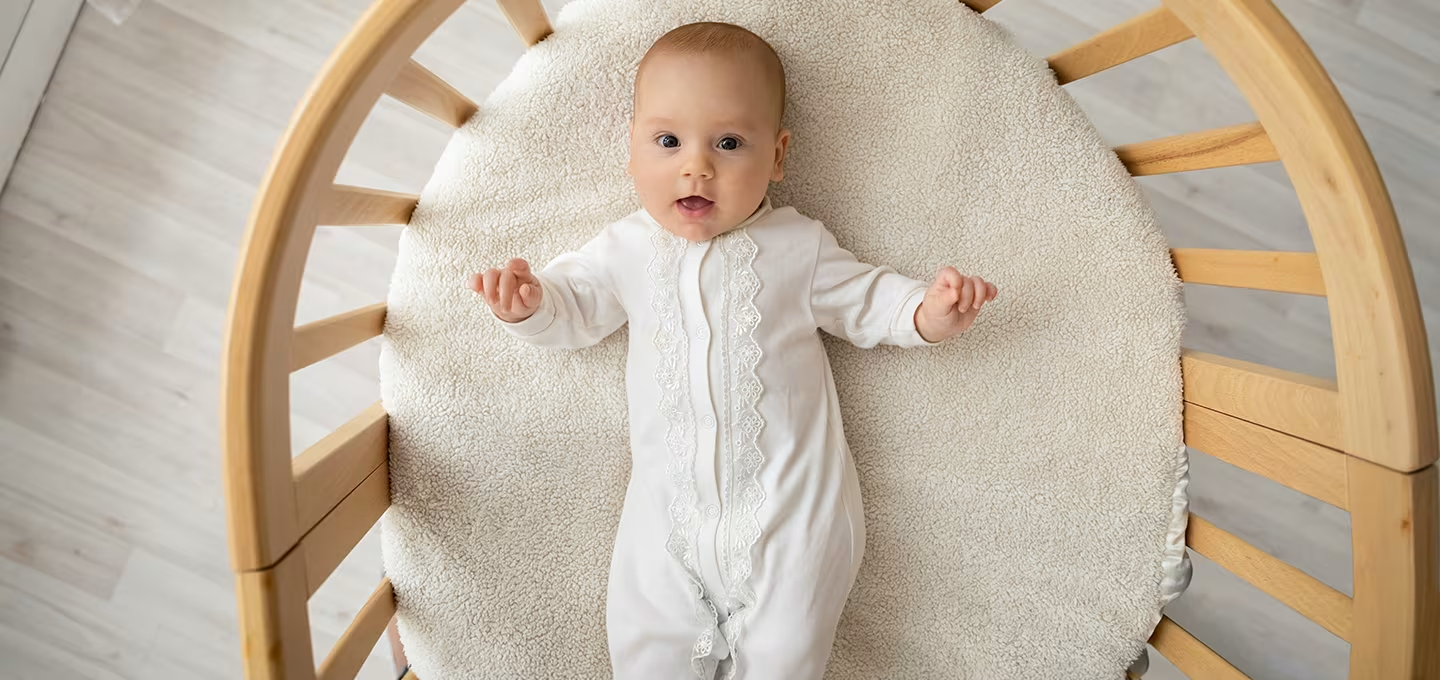
How to Get Your Baby to Sleep in a Bassinet
By Christopher B. Peltier
If your baby won’t sleep in a bassinet, there may be various reasons. We’ll provide tips to help you create a safe and calm sleep environment.
Read more
How to Adjust Your Baby’s Sleep for Daylight Saving Time
Adjusting to Daylight Saving Time can be difficult for anyone, especially babies. Get tips on how to handle daylight saving time with your baby and ease into fall back or spring forward changes.
Read moreAll About Baby Sleep Cycles
By Christopher B. Peltier
Explore baby sleep cycles and phases in depth. Understand how to nurture healthy sleep habits and establish comforting routines for your newborn and infant
Read moreEarly Rising: What to Do When Your Child Wakes Up Too Early
Here are nine great tips and strategies for dealing with a child who wakes up too early. Read on for all the methods you can try to prevent early rising.
Read moreSleep Training for Babies: When to Start and What to Expect
By Christopher B. Peltier
Learn what sleep training is, when to start, and gentle methods to help your baby sleep independently—plus tips to make the process smoother.
Read moreFussy Baby at Night: Why It Happens and How to Calm Your Baby
Learn about all the different reasons your baby might be fussy at night and what you can do to help calm, support, and comfort your little one.
Read moreWhy Is Your Baby Not Sleeping? The Top 7 Reasons
By Christopher B. Peltier
Wondering why your baby won’t sleep? Learn the signs of sleeplessness in infants, why your baby won’t sleep, and how to help them sleep better with simple tips.
Read moreWhat’s Normal When It Comes to Baby Sleep Patterns
By Christopher B. Peltier
Curious about your baby’s sleep patterns? Discover what to expect at every age with our guide. Learn tips for fostering healthy sleep habits for your little one.
Read moreBaby Wake Windows by Age and Why They’re Important
Learn why wake windows are crucial for your baby's sleep. Discover how to use wake windows to optimize your child's sleep schedule and promote more restful sleep.
Read moreWhy Do Babies Fight Sleep?
By Christopher B. Peltier
Discover why your baby may be fighting sleep and learn gentle, effective ways to help them settle—plus tips for newborn routines and sleep regressions.
Read more