What Are 3D and 4D Ultrasound Scans?


Key Takeaways
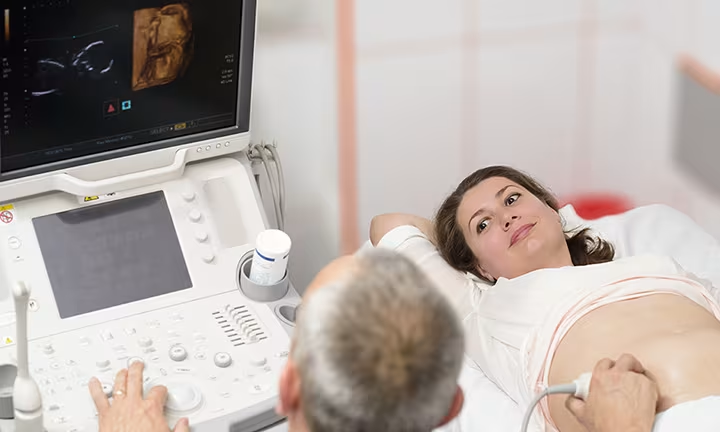
Though most women will have a routine pregnancy 2D ultrasound, some women will be advised by their healthcare provider to have a 3D or 4D ultrasound. What are these scans and why might you have them?
What's the Difference Between 2D, 3D, and 4D Scans?
While a 2D ultrasound provides a grainy, flat image of your little one, 3D ultrasounds will show more detail. During the 3D ultrasound, multiple 2D images are taken from different angles, and these are rendered together to create a three-dimensional image of your baby. This scan can provide a clear image of the fetus, including the exact shape of the mouth, nose, cheeks, and eyes. The 4D images are similar, but they also show movement in the form of a short video. So, you might see your little one yawning, sucking a thumb, making cute faces, or opening and closing those little eyes.
Why Would I Need a 3D or 4D Scan?
Unlike the 2D scans, 3D and 4D ultrasounds are not usually routine prenatal exams. If needed, your healthcare provider will arrange to have one of these done for medical reasons, such as to get a closer look at the development of the fetus.
When Should I Get a 3D or 4D Scan?
If you need to get one of these more detailed ultrasounds for medical purposes, your doctor will be able to tell you exactly when.
Are 3D and 4D Ultrasounds Safe?
There is no current, reliable evidence that ultrasound is harmful. Ultrasound scans are generally considered to be safe if they are administered for medical reasons and by a qualified healthcare provider.
If you're wondering exactly how your baby is changing over the course of your pregnancy, you can always follow our week-by-week calendar instead. Before long, you'll be through the third trimester, and you'll be able to meet your little one in person and take all the photos your heart desires!

Genetic Testing: Everything You Need to Know
Genetic testing during pregnancy can help with the diagnosis of different medical conditions your baby may be born with. Learn more about genetic tests here.
Read more
Working and Staying Healthy During Pregnancy
Are you wondering how long to continue working? Or whether certain on-the-job tasks and activities are safe? Pick up some strategies and insights to help you navigate working while pregnant.
Read more
Pregnancy Test Basics: When to Take Them, Getting the Results, and More
By Amy Wiford
Are you wondering if you’re pregnant? Learn the basics about pregnancy tests: the different types, when to take one, getting the results, and more.
Read more
Chorionic Villus Sampling Diagnostic Test
Chorionic villus sampling is a procedure in which a sample of tissue from the placenta is examined to detect whether your little one has certain genetic disorders. Learn more here.
Read more
Your Guide to Pregnancy Ultrasounds
Learn what a pregnancy ultrasound shows, when you might have one, and how many are needed during pregnancy. Get helpful tips and answers.
Read more
Nuchal Translucency Scan: Results & What to Expect
Learn about the nuchal translucency scan, what it tests for, and how results are interpreted. Find out what’s normal and when further testing may help.
Read more
Group B Strep (GBS) During Pregnancy
Group B strep (GBS) is a type of bacteria that can affect some pregnant people and their newborn babies. Learn about GBS, including tests and treatment.
Read more
FAQ: Amniocentesis
Amniocentesis is a prenatal test which can detect some genetic or chromosomal disorders in babies. Read more about what amnio entails, including risks, side effects, and results.
Read more
FAQ: Maternal Serum Alpha-Fetoprotein (MSAFP) Test
A maternal serum alpha-fetoprotein test checks your baby’s alpha-fetoprotein levels to assess the risk of certain medical conditions. Read on to learn more.
Read more
Glucose Challenge and Tolerance Tests in Pregnancy
Blood glucose challenge and tolerance tests are performed during pregnancy to determine whether you have or are at risk of developing gestational diabetes.
Read moreGenetic Testing: Everything You Need to Know
Genetic testing during pregnancy can help with the diagnosis of different medical conditions your baby may be born with. Learn more about genetic tests here.
Read moreWorking and Staying Healthy During Pregnancy
Are you wondering how long to continue working? Or whether certain on-the-job tasks and activities are safe? Pick up some strategies and insights to help you navigate working while pregnant.
Read morePregnancy Test Basics: When to Take Them, Getting the Results, and More
By Amy Wiford
Are you wondering if you’re pregnant? Learn the basics about pregnancy tests: the different types, when to take one, getting the results, and more.
Read moreChorionic Villus Sampling Diagnostic Test
Chorionic villus sampling is a procedure in which a sample of tissue from the placenta is examined to detect whether your little one has certain genetic disorders. Learn more here.
Read moreYour Guide to Pregnancy Ultrasounds
Learn what a pregnancy ultrasound shows, when you might have one, and how many are needed during pregnancy. Get helpful tips and answers.
Read moreNuchal Translucency Scan: Results & What to Expect
Learn about the nuchal translucency scan, what it tests for, and how results are interpreted. Find out what’s normal and when further testing may help.
Read moreGroup B Strep (GBS) During Pregnancy
Group B strep (GBS) is a type of bacteria that can affect some pregnant people and their newborn babies. Learn about GBS, including tests and treatment.
Read moreFAQ: Amniocentesis
Amniocentesis is a prenatal test which can detect some genetic or chromosomal disorders in babies. Read more about what amnio entails, including risks, side effects, and results.
Read moreJoin a World of Support
through Pregnancy and Parenthood.
TRACK WITH TOOLS
LEARN WITH EXPERTS
GET REWARDED




Where You Already Belong