
What Is Gestational Diabetes and How to Treat It



Gestational diabetes is a condition in which a person develops high blood sugar during pregnancy. It can affect your pregnancy and the health of your baby, so it requires special care from your healthcare provider both during and after pregnancy. Although your provider will test for gestational diabetes at your prenatal visits, there are some steps you can take before and during pregnancy to lower the risk, or to control your blood sugar levels. These include eating healthy and exercising regularly. Read on to find out more about diabetes in pregnancy, what the risk factors are, how to manage it, and how it may affect your pregnancy.
What Is Gestational Diabetes?
Gestational diabetes is a form of diabetes that affects some people during pregnancy. If you’re wondering how common gestational diabetes is, on average it affects about 2 to 10 percent of pregnancies in the United States.
Similar to other forms of diabetes mellitus, gestational diabetes affects how your body uses glucose, resulting in high blood sugar. Here’s how: Pregnancy hormones make it harder for the body to process sugar (glucose) because they stop insulin from doing its job of keeping blood sugar levels more stable. Usually, the body produces more insulin to counteract this, but, for some pregnant people, not enough extra insulin is produced, resulting in blood sugar levels remaining high. As a result, too much glucose remains in the blood, instead of moving to cells where it’s used up as energy.
When Does Gestational Diabetes Occur?
This condition usually occurs in the second half of pregnancy, sometimes as early as 20 weeks but usually later. This is because, as the baby grows, the placenta produces more of those hormones that stop insulin from working as it should. A modest spike in blood sugar levels after eating is normal, but if you have gestational diabetes the rise in blood sugar levels can impact the growth and development of your baby.
Generally, the standard blood sugar level an hour after eating a meal is below 140 mg/dL. However, this number may vary, so it’s always important to ask your healthcare provider what they recommend as “normal” blood sugar levels.
How Is Gestational Diabetes Diagnosed?
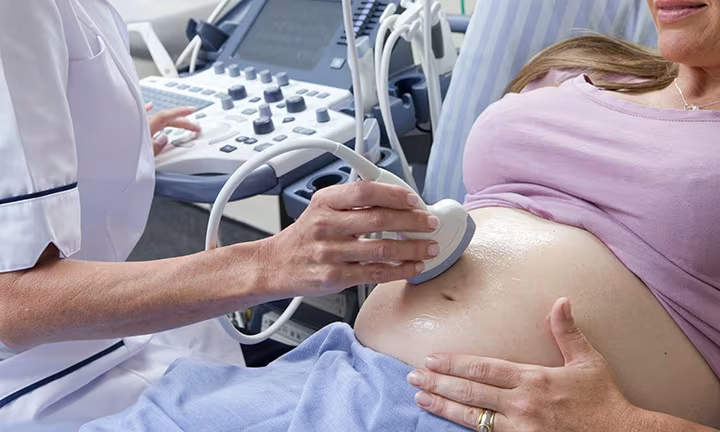
You may not notice any signs or symptoms of gestational diabetes. However, if you have any of the risk factors listed below, your healthcare provider will probably test for gestational diabetes at a prenatal checkup. This is commonly done using the 1-hour glucose challenge. If the results show high blood sugar levels, a diagnostic glucose test will be performed on a different day.
If you’re at a lower risk of gestational diabetes, your provider may wait and do a screening test during the second half of your pregnancy, usually between 24 weeks and 28 weeks. If you’re concerned, ask your provider for advice on what’s right for your situation.
If you have gestational diabetes, your healthcare provider may want you to have more frequent prenatal visits, particularly during the last three months of pregnancy, to check that everything is going well for both you and your baby.
Pregnancy Weight Gain Calculator
Fill out your details:
Risk Factors of Gestational Diabetes
It’s not known why certain people develop this condition during pregnancy (and some may even have none of the following risk factors); however, common risk factors for gestational diabetes include if you
Your healthcare provider might be aware that you have some of the risk factors, but make sure you mention whether any of these factors apply to you, either before trying to get pregnant, or at your first prenatal visit.
What Are the Signs and Symptoms of Gestational Diabetes?
Gestational diabetes generally doesn’t present with noticeable signs or symptoms, though some people may experience increased thirst and more frequent urination during pregnancy. It is typically diagnosed through routine screening rather than symptoms. If gestational diabetes is not managed effectively, it can lead to complications, which we will discuss further in the section, How Can Gestational Diabetes Affect the Baby and Your Pregnancy?
What Causes Gestational Diabetes?
As we mentioned earlier, gestational diabetes arises primarily due to hormonal changes during pregnancy that interfere with insulin’s ability to regulate blood sugar. As the pregnancy progresses, the body produces more hormones that block insulin, increasing the risk of insulin resistance.
The risk factors listed above, including being overweight before your pregnancy, may increase your risk of developing gestational diabetes.

How to Treat and Manage Gestational Diabetes
What happens if you have gestational diabetes? Suppose you have been diagnosed with diabetes during your pregnancy. In that case, your healthcare provider will provide you with the best possible treatment and care and help you keep your blood sugar under control throughout your pregnancy.
During the last three months of pregnancy, your healthcare provider may recommend more regular prenatal checkups to monitor your health and your baby’s and to test your blood sugar levels. In some cases, your provider may recommend that you check your own blood sugar on a daily basis (possibly even several times a day). If this is the case, they’ll be able to walk you through exactly how and when to do this.
To keep your blood sugar under control, it’s recommended to follow a healthy diet, exercise regularly, and take any medication your provider may prescribe you. Some pregnant people with gestational diabetes need insulin (usually in the form of injections) to help control their blood sugar levels. Your healthcare provider will prescribe insulin if this is needed.
Right after you give birth, your healthcare provider will typically check your blood sugar levels, and again 6 to 12 weeks later (sometimes more regularly). Your provider may recommend having your blood sugar levels checked every few years thereafter.
Can Gestational Diabetes Go Away?
If you were diagnosed with gestational diabetes during your pregnancy—and you didn’t have diabetes before getting pregnant—it likely won’t be an issue after childbirth. However, there’s an increased risk of developing diabetes later in life if you had gestational diabetes.
Gestational Diabetes Self-Care
As well as the treatment and advice your healthcare provider gives you, here’s what you can do to help control your blood sugar levels and reduce the chance of complications from gestational diabetes:
It can be stressful and upsetting to find out you have gestational diabetes, and you probably have many questions. But keep in mind your healthcare team will be available to answer your concerns and provide the best care for you and your baby.

How to Prevent Gestational Diabetes
If you’re planning to get pregnant soon or you’re in the early stages of pregnancy, you may be wondering “How can I prevent gestational diabetes?” There are some practical steps you can take to help prevent gestational diabetes. Adopting healthy habits before becoming pregnant may help reduce the risk, but there are no guarantees. If you can, eat healthily, exercise regularly, and lose any excess weight well before you conceive.
How Can Gestational Diabetes Affect the Baby and Your Pregnancy?
Most pregnant people with gestational diabetes will go on to have healthy babies. However, if your gestational diabetes is untreated or not carefully controlled and monitored by your healthcare provider, it may lead to complications. These are some of the possible risks and effects of high blood sugar during pregnancy on your baby’s health and your pregnancy:
Delivery of a large baby may often involve
Gestational diabetes also increases your risk of
Some people may have had a mild form of diabetes before becoming pregnant without realizing it. For these people, diabetes may be a lifelong condition that may not go away after giving birth.
The Bottom Line
Gestational diabetes, a form of diabetes that develops during pregnancy, is primarily caused by hormonal changes that affect how the body processes blood sugar. While it can pose risks for the pregnant person and baby, such as increased chances of high blood pressure and the need for cesarean delivery, managing the condition through diet, exercise, and medical oversight can lead to a healthy pregnancy and delivery. If you have been diagnosed with gestational diabetes, you should work closely with your healthcare provider to monitor and manage your blood sugar levels to ensure the best outcome for yourself and your baby.
- American College of Obstetricians and Gynecologists. Your Pregnancy and Childbirth: Month to Month, 7th ed. (Washington, DC: American College of Obstetricians and Gynecologists, 2021).
- ACOG. “Gestational diabetes.”
- Cleveland Clinic. “Gestational Diabetes.”
- Mayoclinic. “Gestational diabetes.”
Read more about Pregnancy




Join a World of Support
through Pregnancy and Parenthood.
TRACK WITH TOOLS
LEARN WITH EXPERTS
GET REWARDED




Where You Already Belong