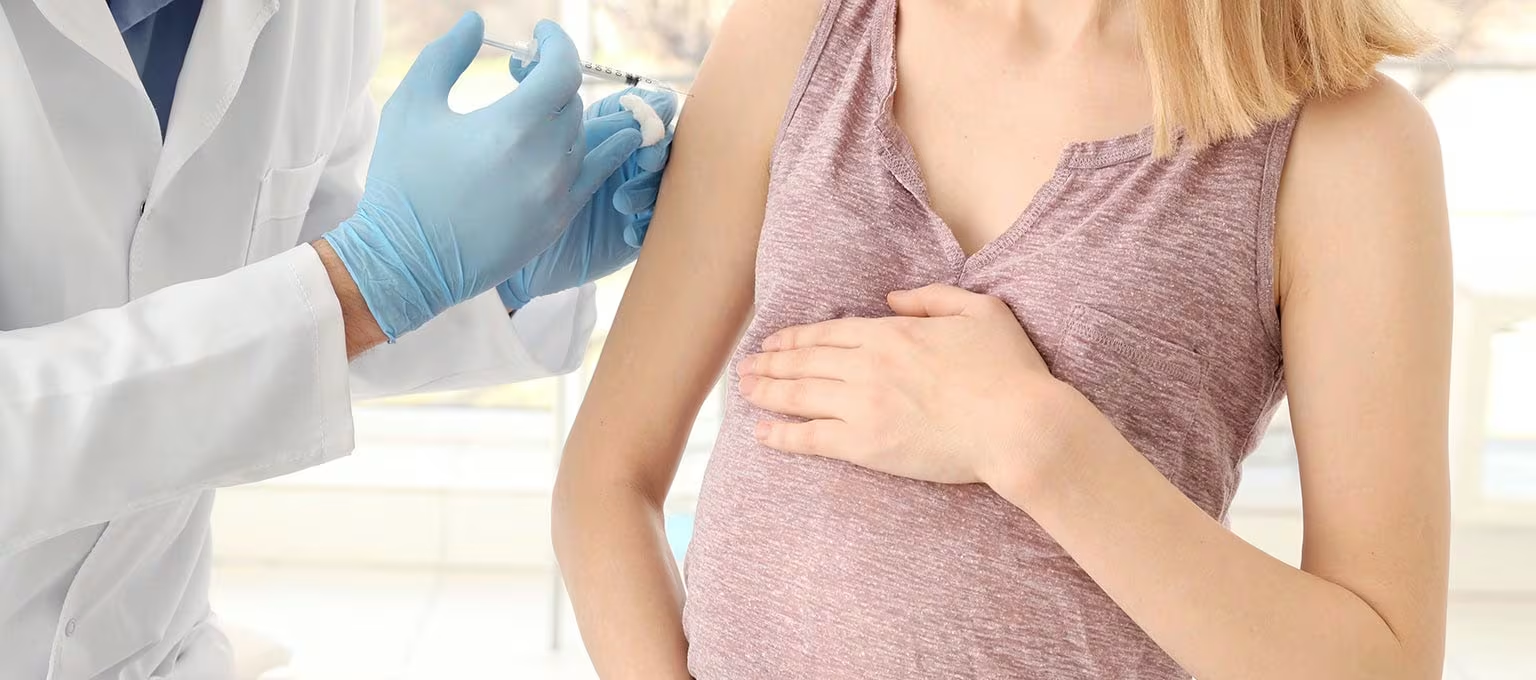
Tdap Vaccine and Pregnancy: What You Need to Know




Are you wondering what a Tdap vaccine is and whether you need it during pregnancy? This quick guide explains how it protects both you and your little one and when to get it for the best protection.
Here’s a quick look:
Let’s explore how Tdap vaccination works, its benefits and risks, and when to consult your healthcare provider.
What Is Tdap Vaccine?
The Tdap vaccine stands for tetanus toxoid, reduced diphtheria toxoid, and acellular pertussis vaccine. This combination vaccine helps protect you and others against three potentially serious diseases:
In short, it's designed to prevent the spread of these diseases, particularly pertussis, which can be severe in infants. The Tdap vaccine definition also highlights that it’s recommended for pregnant people to help protect their newborns before they’re old enough to be vaccinated themselves.

Who Needs to Get the Tdap Vaccine?
Adults, adolescents, healthcare professionals, and pregnant people can all benefit from the Tdap vaccine. In fact, anyone who is in close contact with your baby while they’re younger than 12 months should also be vaccinated, helping reduce the risk of spreading pertussis.
How Long Does the Tdap Vaccine Last?
If you’re wondering, “How long is Tdap immunization good for?” A single Tdap vaccine is generally effective for 10 years, after which adults are advised to get a Td booster every decade. In some cases, a Tdap booster may be given instead, depending on your healthcare provider’s guidance.
So, how many Tdap vaccines do you need? Typically, one, unless you're pregnant, in which case you’ll need a Tdap vaccine during each pregnancy—ideally between 27 and 36 weeks—to help protect your baby from pertussis.
What is the Tdap Vaccine Schedule During Pregnancy?
The ideal Tdap vaccine schedule during pregnancy is between 27 weeks and 36 weeks. While the vaccine can be given at any time, this timeframe offers the best chance to pass protective antibodies to your baby.
It takes about two weeks for your body to make antibodies. Getting the vaccine in your third trimester allows those antibodies to be passed on before birth. If you miss the vaccine during pregnancy, consult your healthcare provider about getting it after delivery, before leaving the hospital.
Pros and Cons of Getting the Tdap Vaccine During Pregnancy
The Tdap vaccine is recommended during pregnancy because it may help protect your baby from pertussis after birth. Once vaccinated, your body makes antibodies that pass to your baby, helping guard against whooping cough from birth until they can begin their own shots.
The earliest your baby can be vaccinated is at 2 months of age. You can also review your baby’s full immunization schedule.
Benefits
The Tdap vaccine’s side effects are generally mild, and the vaccine is considered safe during pregnancy. It’s made with inactive bacteria, so it can’t cause the illnesses it protects against. Experts note there’s no evidence linking the vaccine to pregnancy complications.
For babies who do get whooping cough, the infection is often less serious if their parent received the Tdap during pregnancy. One evaluation found that receiving the Tdap vaccination during the third trimester protected 9 in 10 babies from serious infections requiring hospital treatment.
Risks
Some people may experience mild Tdap vaccine symptoms after getting the shot. These are usually short-lived and not cause for concern.
Side effects of the Tdap vaccine may include pain, redness, or swelling where the shot was given, as well as:
Tdap vaccine side effects may begin within a few hours and typically resolve in a couple of days. Let your provider know if you feel dizzy, have vision changes, or hear ringing in your ears. If you’re concerned about pregnancy Tdap side effects, your healthcare provider can help answer any questions specific to your situation.
How Do You Get the Tdap Vaccine?
You can usually receive the Tdap vaccine during a prenatal care visit, such as when you’re 7 months pregnant. Your healthcare provider may recommend it and schedule the shot for you at that time.
If your provider hasn’t mentioned the vaccine, you can ask about it at your next appointment. Wondering where to get the Tdap vaccine if it’s not available at your prenatal visit? Local pharmacies, clinics, or your health department may also offer it.
When to Consult Your Healthcare Provider
If you have questions about the Tdap vaccine, or if you’re unsure whether you’ve received it during your pregnancy, consult your healthcare provider. They can confirm your vaccination status and help schedule it if needed.
You can also ask about any concerns regarding any Tdap side effects during pregnancy and whether the vaccine is right for your specific situation. If you missed the vaccine during pregnancy, your provider may advise getting it after delivery, ideally before you leave the hospital.
FAQS AT A GLANCE
The Tdap vaccine is strongly recommended during each pregnancy to help protect your baby from whooping cough.
The Bottom Line
Getting the Tdap vaccine may help protect you from tetanus, diphtheria, and pertussis, and it could also help shield your baby from whooping cough during the first two months of life. It’s a simple step that offers early protection until your baby can begin their own vaccinations.
Don’t forget to download our free Pampers Rewards app to save on Pampers diapers and wipes. It’s an easy way to enjoy exclusive discounts and rewards, all at no cost to you!
- CDC. "Tdap Vaccine Information Statement (VIS)."
- CDC. "Tdap Vaccination During Pregnancy."
- CDC. "Vaccines During Pregnancy."
- CDC. "Vaccinating Pregnant Patients Against Pertussis."
- Mayo Clinic. "Vaccines During Pregnancy: Are They Safe?"
- National Library of Medicine. "Tdap (Tetanus, Diphtheria, Pertussis) Vaccine."
Glucose Challenge and Tolerance Tests in Pregnancy
Blood glucose challenge and tolerance tests are performed during pregnancy to determine whether you have or are at risk of developing gestational diabetes.
Read more
Genetic Testing: Everything You Need to Know
Genetic testing during pregnancy can help with the diagnosis of different medical conditions your baby may be born with. Learn more about genetic tests here.
Read more
Working and Staying Healthy During Pregnancy
Are you wondering how long to continue working? Or whether certain on-the-job tasks and activities are safe? Pick up some strategies and insights to help you navigate working while pregnant.
Read more
Pregnancy Test Basics: When to Take Them, Getting the Results, and More
By Amy Wiford
Are you wondering if you’re pregnant? Learn the basics about pregnancy tests: the different types, when to take one, getting the results, and more.
Read more
What Are 3D and 4D Ultrasound Scans?
3D and 4D ultrasound scans are not routine but they do allow you to see a clearer 3D image of your baby. Find out everything you need to know about them here.
Read more
Your Guide to Pregnancy Ultrasounds
Learn what a pregnancy ultrasound shows, when you might have one, and how many are needed during pregnancy. Get helpful tips and answers.
Read more
Nuchal Translucency Scan: Results & What to Expect
Learn about the nuchal translucency scan, what it tests for, and how results are interpreted. Find out what’s normal and when further testing may help.
Read more
Group B Strep (GBS) During Pregnancy
Group B strep (GBS) is a type of bacteria that can affect some pregnant people and their newborn babies. Learn about GBS, including tests and treatment.
Read more
FAQ: Amniocentesis
Amniocentesis is a prenatal test which can detect some genetic or chromosomal disorders in babies. Read more about what amnio entails, including risks, side effects, and results.
Read more
FAQ: Maternal Serum Alpha-Fetoprotein (MSAFP) Test
A maternal serum alpha-fetoprotein test checks your baby’s alpha-fetoprotein levels to assess the risk of certain medical conditions. Read on to learn more.
Read moreGlucose Challenge and Tolerance Tests in Pregnancy
Blood glucose challenge and tolerance tests are performed during pregnancy to determine whether you have or are at risk of developing gestational diabetes.
Read moreGenetic Testing: Everything You Need to Know
Genetic testing during pregnancy can help with the diagnosis of different medical conditions your baby may be born with. Learn more about genetic tests here.
Read moreWorking and Staying Healthy During Pregnancy
Are you wondering how long to continue working? Or whether certain on-the-job tasks and activities are safe? Pick up some strategies and insights to help you navigate working while pregnant.
Read morePregnancy Test Basics: When to Take Them, Getting the Results, and More
By Amy Wiford
Are you wondering if you’re pregnant? Learn the basics about pregnancy tests: the different types, when to take one, getting the results, and more.
Read moreWhat Are 3D and 4D Ultrasound Scans?
3D and 4D ultrasound scans are not routine but they do allow you to see a clearer 3D image of your baby. Find out everything you need to know about them here.
Read moreYour Guide to Pregnancy Ultrasounds
Learn what a pregnancy ultrasound shows, when you might have one, and how many are needed during pregnancy. Get helpful tips and answers.
Read moreNuchal Translucency Scan: Results & What to Expect
Learn about the nuchal translucency scan, what it tests for, and how results are interpreted. Find out what’s normal and when further testing may help.
Read moreGroup B Strep (GBS) During Pregnancy
Group B strep (GBS) is a type of bacteria that can affect some pregnant people and their newborn babies. Learn about GBS, including tests and treatment.
Read moreJoin a World of Support
through Pregnancy and Parenthood.
TRACK WITH TOOLS
LEARN WITH EXPERTS
GET REWARDED




Where You Already Belong