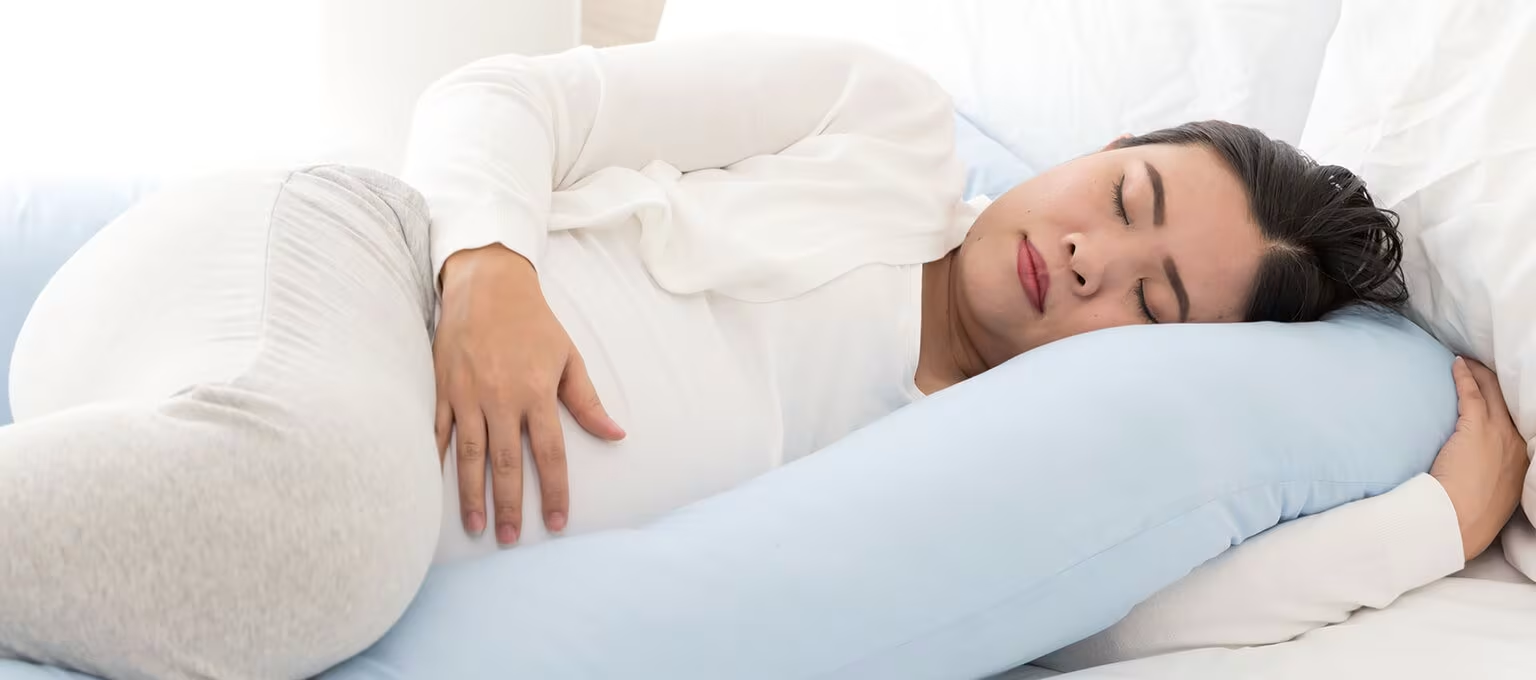
Hip and Pelvic Pain During Pregnancy


During pregnancy, you may feel some aches or pains in your hip or pelvic region, and sometimes it can be difficult to pinpoint the exact problem. Here, we describe some of the causes and common symptoms of hip and pelvic pain, and offer some tips on how you can relieve or prevent the pain.
What Can Hip and Pelvic Pain Feel Like During Pregnancy?
It might help to know where the pelvis and hips are located in relation to one another: The pelvis, which is a large bone structure at the base of your spine, sits at the lower part of your torso. The hips are the joints on either side of the pelvis that connect each thigh to the pelvis.
If you feel pain in the pelvic or hip area, it can sometimes be tricky to pinpoint exactly where and what is sore. Pain in the pelvis or hip may even feel like back pain, particularly if it’s radiating, and many women have back pain at some point during pregnancy. Plus, women experience pain in different ways: Some feel sharp, sudden discomfort, while others get a dull, constant ache. For you, it may even be a bit of each at different times throughout your pregnancy. Your healthcare provider will be able to make an accurate diagnosis.
Pelvic pain during pregnancy is not uncommon. It can be dull or sharp, constant or infrequent, mild or severe. You might even feel it radiate to your lower back, buttocks, or thighs. You might experience pelvic pain only during certain movements, for example if it hurts to walk. Or you might feel it in certain positions, for example when you lie down to sleep.
Make sure to tell your doctor about any pain that disrupts your daily life, that gets worse over time, or that feels severe; let your doctor know if you also feel light-headed, or if you have vaginal bleeding or a fever as well as pain.
Causes of Hip Pain
If you experience hip pain in early pregnancy or later in the first trimester, it may not be the result of pregnancy, but may be related to another condition. Your healthcare provider will be able to help pinpoint the cause.
Hip pain during the second or third trimester may be caused by sciatica. This condition occurs when the growing uterus presses against the sciatic nerve. The pain can shoot down your lower back, hip, and back of the leg. The good news is this kind of pain will often resolve itself once your baby is born.
Causes of Pelvic Pain
Experiencing pelvic pain in early pregnancy is usually not a cause for concern. It can occur as your bones and ligaments shift to accommodate your growing baby.
In early pregnancy or even later during the first trimester, pelvic pain can be a symptom of an ectopic pregnancy, which is when the fertilized egg implants somewhere other than the uterus — usually in the fallopian tube. Other ectopic pregnancy symptoms include feeling a sharp pain in your shoulder, having vaginal bleeding or spotting, or feeling faint, dizzy, or weak. Ectopic pregnancies require medical treatment, so if you notice any of these symptoms, contact your doctor right away.
Pelvic pain during the third trimester can be triggered by the extra weight you are now carrying, as well as pregnancy hormones. The joints that connect the two halves of your pelvis are usually quite stiff and hard. Later in pregnancy, the hormone relaxin causes the muscles, joints, and ligaments in your pelvic region to loosen to make it easier for your baby to pass through the birth canal. This loosening, however, can lead to discomfort in the pelvic region if the ligaments and joints become too mobile.
Another change that happens later in pregnancy is that your baby drops lower into the pelvis in preparation for birth. As a result, you will feel more pressure in your pelvis, hips, and bladder. The plus side? It’s a sign your baby is getting ready to be born, and you may be able to breathe a little easier as the pressure is taken off your lungs. If your pregnancy is not yet full term, pressure in your pelvic region or lower abdomen could be a sign of preterm labor, so contact your healthcare provider right away if you notice this. Preterm labor may be accompanied by other symptoms such as a dull lower backache, bloody vaginal discharge, or regular contractions.
Pelvic pain can sometimes be a symptom of a urinary tract infection (UTI). If you also have a fever or a burning sensation while you pee, contact your healthcare provider for advice and treatment.
How to Prevent or Relieve Pelvic or Hip Pain During Pregnancy
It’s best to ask your healthcare provider, who may advise you to
Your healthcare provider may recommend pain relief drugs, physical therapy, or specific exercises to help reduce hip or pelvic pain.
Hip or pelvic pain may be one of the annoying aches you experience during pregnancy, but sometimes, just knowing that this can be a natural part of pregnancy helps.
FREQUENTLY ASKED QUESTIONS
As you start to approach labor, you may feel pressure in your pelvis when your baby “drops” lower in preparation for birth. This is known as “lightening,” and it may happen a few weeks or a few hours before labor actually begins.
- March of Dimes: Common Discomforts of Pregnancy
- Mayo Clinic: Hip Pain
- Merck Manuals: Pelvic Pain During Early Pregnancy
- Mayo Clinic: Third trimester pregnancy: What to expect
- Cleveland Clinic: Pregnancy: Having a Healthy Pregnancy
- Mayo Clinic: Pelvic pain
- Difference Between: Difference Between Pelvis and Hip
- LexMedicus: Pelvis Hip Anatomy
- ACOG: Chronic Pelvic Pain
- Cleveland Clinic: Low Back and Pelvic Pain in Pregnancy
- March of Dimes: Common Discomforts of Pregnancy
- ACOG: How to Tell When Labor Begins
- Book: Your Pregnancy and Childbirth: Month to Month, Sixth Edition Paperback – January 1, 2016
by American College of Obstetricians and Gynecologists (Author)

Pregnancy Discharge: When Is It Normal and What Do Different Colors Mean?
Pregnancy discharge is usually normal, but it may indicate issues like infection. Know the signs and when to consult your healthcare provider.
Read more
Quickening and Fetal Movement
Wondering when you might feel your baby move for the first time? Learn more about what quickening is and all about fetal movement.
Read more
How Your Baby Bump Grows Week by Week
The first signs of a baby bump don’t typically appear until the second trimester, but read on to discover how your pregnancy belly grows and your body changes.
Read more
All About Stretch Marks During and After Pregnancy
As your body grows to accommodate your developing baby, you might get stretch marks. Learn what these marks are, when they may appear, and how to minimize them.
Read more
What Is Lightning Crotch During Pregnancy and What Causes It?
Lightning crotch: pregnancy's sudden jolts unraveled! Learn when it occurs, what causes it, and how to manage this discomfort with our simple guide.
Read more
I Struggled Through Hyperemesis Gravidarum Three Times and I’d Do It Again
Have you suffered with extreme nausea whilst pregnant? Read this inspiring account of how one mother motivated herself through her pregnancies.
Read more
Pregnancy Acne: Causes and Safe Treatment Options
Acne and facial breakouts during pregnancy are common. Read more about the causes of pregnancy acne, prevention strategies, and treatments you should avoid.
Read more
How to Cope With Constipation During Pregnancy
Constipation is a common symptom of the later stages of pregnancy. Learn what might cause it, when it usually starts, and discover remedies for some relief.
Read more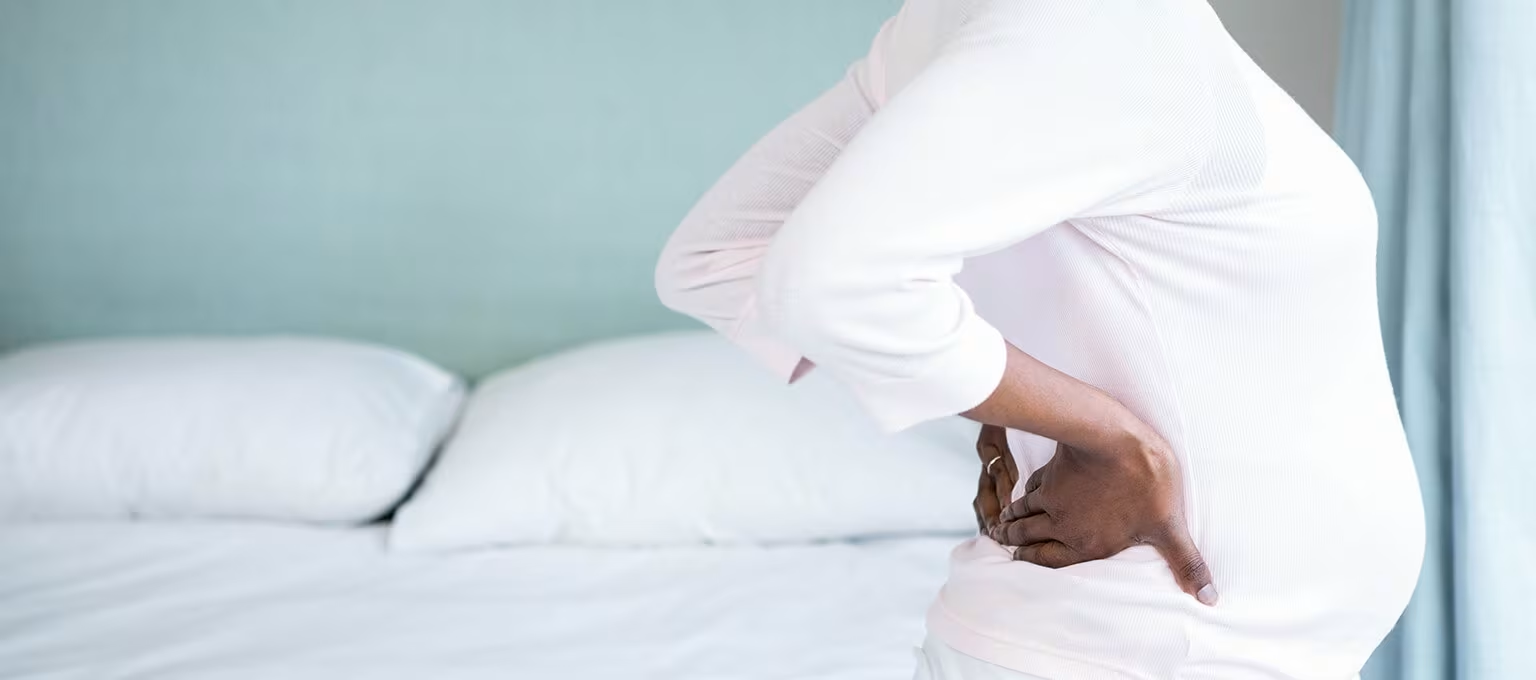
Back Pain During Pregnancy: Causes, Symptoms, & Relief Tips
Learn about the causes, symptoms, and relief tips for back pain during pregnancy. Find out when to contact your healthcare provider and get expert-backed strategies for comfort.
Read more
Linea Nigra: What It Is and When Does It Go Away?
By Charlotte Wool
Discover linea nigra: the natural pregnancy phenomenon of a dark vertical line on the abdomen. Learn causes, appearance, and care tips.
Read morePregnancy Discharge: When Is It Normal and What Do Different Colors Mean?
Pregnancy discharge is usually normal, but it may indicate issues like infection. Know the signs and when to consult your healthcare provider.
Read moreQuickening and Fetal Movement
Wondering when you might feel your baby move for the first time? Learn more about what quickening is and all about fetal movement.
Read moreHow Your Baby Bump Grows Week by Week
The first signs of a baby bump don’t typically appear until the second trimester, but read on to discover how your pregnancy belly grows and your body changes.
Read moreAll About Stretch Marks During and After Pregnancy
As your body grows to accommodate your developing baby, you might get stretch marks. Learn what these marks are, when they may appear, and how to minimize them.
Read moreWhat Is Lightning Crotch During Pregnancy and What Causes It?
Lightning crotch: pregnancy's sudden jolts unraveled! Learn when it occurs, what causes it, and how to manage this discomfort with our simple guide.
Read moreI Struggled Through Hyperemesis Gravidarum Three Times and I’d Do It Again
Have you suffered with extreme nausea whilst pregnant? Read this inspiring account of how one mother motivated herself through her pregnancies.
Read morePregnancy Acne: Causes and Safe Treatment Options
Acne and facial breakouts during pregnancy are common. Read more about the causes of pregnancy acne, prevention strategies, and treatments you should avoid.
Read moreHow to Cope With Constipation During Pregnancy
Constipation is a common symptom of the later stages of pregnancy. Learn what might cause it, when it usually starts, and discover remedies for some relief.
Read moreJoin a World of Support
through Pregnancy and Parenthood.
TRACK WITH TOOLS
LEARN WITH EXPERTS
GET REWARDED



Where You Already Belong