
Working From Home While Caring for Your Baby or Toddler


If you’re working from home with a baby, you might be wondering how you can keep your children entertained while you stay productive yourself.
It's possible to work from home with a baby or toddler, but it is helpful to create a loose schedule and plan some fun indoor activities ahead of time so you've got the supplies you need on hand. Caring for a child (or kids) under 3 years old also means you'll probably get most of your work done in short bursts, so you'll need to prioritize with this in mind.
To help you juggle both, we've gathered some great tips on how to work from home with a baby or toddler. It may feel overwhelming at times, but you've got this!
How to Stay Productive While Working From Home
Here are some tips towork from home with a baby or children under 3 years old:
Read on for specific tips on how to work from home with a baby, newborn, or toddler.
Working at Home With Your Newborn
Your newborn will likely be sleeping in three-to four-hour stretches all through the day, so you may be able to get solid blocks of time to work during their daytime sleep periods. Keep in mind that you’ll also be waking up for feedings, even if you're splitting these with your partner, so be prepared to feel a little groggier during the day.
As you're working from home with a baby, you might like to "wear" your newborn in a baby carrier, sling, or wrap so your newborn can enjoy feeling close to you while you get things done.
Although it's just a nice-to-have extra, a bassinet can be helpful for a work-at-home parent, as it can easily be moved to be right by your desk or table, allowing you to remain close to your newborn as you work.
Of course, if the width of your doorways allows it, you can also move your little one’s crib from room to room. Keep in mind that for your baby’s safety, they should sleep only in their crib or bassinet.
Staying Productive While You’re Home With an Older Baby
Since your baby will want to be near you, and you'll want to keep an eye on them, place a few toys or an activity center on a play mat or in a playpen right by you. This way, you might be able to squeeze in some work while your little one plays next to you.
If your baby enjoys it and you have one, they can also spend short stints in a baby swing, glider, or bouncer. This way, you may be able to have some peace and quiet to work as your baby entertains themselves.
Working From Home While Caring for Your Toddler
Working from home with a toddler has its upsides and downsides. The positives are that your toddler may be able to entertain themselves for short periods and may still take one or two naps a day, during which you can work. The challenge is that when your toddler is up, they may want more of your attention.
It’s OK to expect your older toddler to entertain themselves for short intervals on occasion. You may need to be firm in telling them they have toys to play with and that for the next 30 minutes they need to play quietly. To help your child understand that independent playtime has an end in sight, consider setting a timer on your phone or microwave. Reassure them that once the timer goes off, you’ll be able to take a break and spend some time with them—like playing their favorite game or reading a few books. Remember, independent play and being able to use their imagination and stave off boredom is an important skill to learn.
To help support their solo play, create a safe space for your toddler to play in. It might be that you thoroughly childproof the living room and let your toddler play freely in that area while you work nearby from the kitchen counter or dining room table.
Reward your toddler for playing nicely by themselves by praising them and showing interest in what they were up to.
Another option is to get your older toddler set up with their own "workstation" at the other end of the table from you. They could be busy "working" on a drawing while you’re busy writing emails, for example. You could tell them that they're a big kid now and that you’ll both be working for 30 minutes before you can take a break together.
Although you’ll need to work out a routine that works for you and your family, here’s a sample of what a day could look like while working from home with a baby or caring for your children:
| Early morning | Aim to get your most important work done before your children wake up, as you won’t have many distractions. You might also like to use this time to do some exercise and get ready yourself. |
| Breakfast | Grab some breakfast and feed your little ones. Dress your children and brush their teeth. |
| Mid-morning | Spend some time playing with your little ones. If your children have a morning nap or if your children have periods where they can play alone or together, squeeze in some work. |
| Lunch | Grab a bite to eat and feed your baby or toddler. |
| Afternoon | If your children have an afternoon nap, use this time to make some important phone calls or finish any time-sensitive work. You may like to put aside 30 minutes for the most pressing household chores. When they are up, spend some time playing with them, but if they are playing solo for short stints, use that time to get some work done. |
| Dinner | Enjoy some quality time with your little ones, have some dinner, and give your children a nice bath and a relaxing bedtime story. |
| Evening | Once your children are asleep, you might be able to squeeze in a few more hours of work. Because this time will be distraction-free, you might like to do the kind of work where you really need to focus. Or you might just like to use this time to respond to any emails you missed during the day. End the day by having a relaxing shower, reading a book, or watching a little TV to unwind. |
| Weekend | • Cook meals and prepare snacks for the coming weekdays • Write a to-do list and create a loose plan for the week ahead • Get some arts and crafts supplies out so you’ll have them on hand • Do some crucial chores like the laundry so you are freer mid-week |
Coping With Tantrums, Fights, and Other Behavior
If you are cooped up with a toddler, or have more than one child in the house, you may encounter issues that make working from home challenging—such as temper tantrums and sibling squabbles (which often lead to temper tantrums). Here are some ways to help curb and possibly even eliminate tantrums and other unwanted behavior:
If you’re new to working from home and caring for your children at the same time, you may be feeling a little overwhelmed. Give yourself time to adjust and figure out what’s most effective for you in terms of routines. With a little trial and error, you’ll soon fall into a groove that works for your family. It might also help to remind yourself about the many positives of working from home, like less time commuting and more time with your family.

Get Excited for Halloween with these Adorable and Creative Costumes for Babies
Halloween is all about wearing something a little different, so why not try these super cute costumes to transform your little angel in to a little terror!
Read more
Turn Your Baby Carrier into a Costume for Some Halloween Fun!
Transform your baby carrier into a terrifying trick-or-treat costume with these fun and adorable costumes!
Read more
Baby Stimulation: Activities for Your 4-Month-Old
Discover engaging activities for your 4-month-old to stimulate development and have fun together. Learn how to entertain your 4-month-old with games and toys.
Read more
Baby Swimming: Benefits of Lessons and When to Get Started
Swimming is an important life skill for children to learn. Find out when to start swimming lessons and how to keep your baby safe with our tips.
Read more
10 Books from Your Childhood You’ll Want to Add to Your Baby’s Collection Now
Help your child to love reading by introducing them to these time-less classics.
Read more
How to Encourage Reading in Kids from an Early Age
Discover how to encourage reading in kids with simple tips, milestones, and fun routines that help babies and preschoolers build a love for books.
Read more
Activities for Newborns: How to Entertain and Bond With Your Baby
Looking for ways to play with your newborn? Find simple, age-based activities to support your baby’s growth, bonding, and sensory development.
Read more
Engaging Indoor Activities for Babies, Toddlers, and Preschoolers
Looking for indoor activities you can do at home with your baby, toddler, or preschooler? Check out these great play ideas.
Read more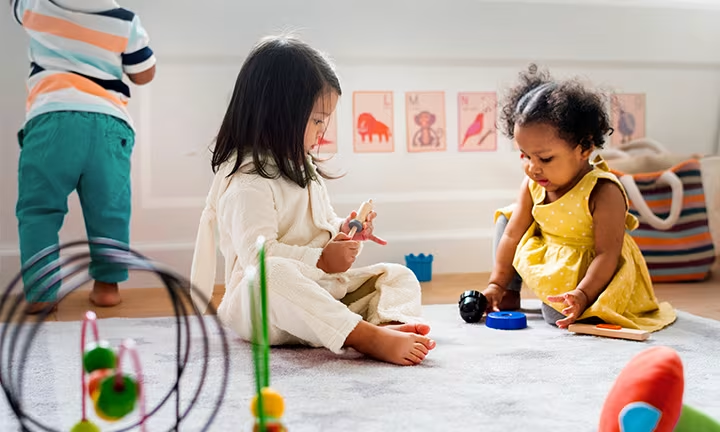
What to Look for When Choosing Day Care for Your Baby
To make choosing day care for babies easier, we’ve compiled several tips on how to choose, what to look for, and when to start looking for daycare.
Read more
9 Things You Must Do with Your Baby During the Holiday Season
Meta Description Your baby’s first Christmas can be their most magical, and lasting family traditions can be created. Here’s one Mom’s advice on how to involve your baby in the holiday cheer!
Read moreGet Excited for Halloween with these Adorable and Creative Costumes for Babies
Halloween is all about wearing something a little different, so why not try these super cute costumes to transform your little angel in to a little terror!
Read moreTurn Your Baby Carrier into a Costume for Some Halloween Fun!
Transform your baby carrier into a terrifying trick-or-treat costume with these fun and adorable costumes!
Read moreBaby Stimulation: Activities for Your 4-Month-Old
Discover engaging activities for your 4-month-old to stimulate development and have fun together. Learn how to entertain your 4-month-old with games and toys.
Read moreBaby Swimming: Benefits of Lessons and When to Get Started
Swimming is an important life skill for children to learn. Find out when to start swimming lessons and how to keep your baby safe with our tips.
Read more10 Books from Your Childhood You’ll Want to Add to Your Baby’s Collection Now
Help your child to love reading by introducing them to these time-less classics.
Read moreHow to Encourage Reading in Kids from an Early Age
Discover how to encourage reading in kids with simple tips, milestones, and fun routines that help babies and preschoolers build a love for books.
Read moreActivities for Newborns: How to Entertain and Bond With Your Baby
Looking for ways to play with your newborn? Find simple, age-based activities to support your baby’s growth, bonding, and sensory development.
Read moreEngaging Indoor Activities for Babies, Toddlers, and Preschoolers
Looking for indoor activities you can do at home with your baby, toddler, or preschooler? Check out these great play ideas.
Read moreJoin a World of Support
through Pregnancy and Parenthood.
TRACK WITH TOOLS
LEARN WITH EXPERTS
GET REWARDED




Where You Already Belong