Skip to main contentSkip to search
Pampers logo
Rewards
Sign inShop now

Pampers logo
Products

Pampers is the #1 Pediatrician Recommended Brand

By Category

DiapersPull On DiapersPotty Training PantsWipesAll Products

By Age & Stage

Newborn (0-3 months)Baby (3-12 months)Toddler (12+ months) Best for Sleep Best for Crawling BabiesBest for Walking BabiesBest for Potty Training

Tools and Matchmaker

Plan Your Diaper PurchasePerfect Baby Diaper FinderFind Baby's Diaper SizeCompare DiapersSave on Diapers Products Quality and SafetyContact Us
Pampers Rewards

Join the Pampers Rewards to save money, track with tools, and learn from experts!

Discover Pampers Rewards

Loyalty App & RewardsParenting ToolsOur ExpertsJoin Pampers Rewards

Online exclusives

Refer Friends for Extra Pampers Cash

Get Pampers Rewards

qr-code_Nav_Rewards
Pregnancy

Follow every pregnancy milestone; Pampers guides you at every step

Pregnancy

Pregnancy Calendar Baby NamesPregnancy Symptoms Giving BirthAll Pregnancy Articles

Popular Tools

Baby ShowerFind your baby's nameChinese Gender PredictorDue Date CalculatorFree Pregnancy Guides
Online Birthing ClassesHospital Bag ChecklistQuizzesAll Tools
Parenting

Embrace every milestone, discover Pampers parenting guides

Baby (0-12 months)

DiaperingBaby SleepHealthNewbornBaby DevelopmentAll Baby Articles

Toddler (12-24 months)

Potty TrainingSleepToddler DevelopmentAll Toddler Articles

Parenting Guidance

Plan Your Diaper PurchaseFatherhoodBaby Development MilestonesQuizzesBaby Growth Chart CalculatorFree Pregnancy GuidesAll Tools
About Us

Learn about Pampers’ commitment to babies, parents and the planet

About Us

All About UsPampers HistoryQuality And SafetyBehind Every BabyCommunity ImpactEditorial Guidelines and ContributorsContact Us

Sustainability

Nurturing Baby's FutureFAQs
Sign in
Shop now
Slide 1 of 1
A pregnant mom dressed in a light teal long sleeve shirt holding her little baby on her lap. The mom and baby are looking at each other smiling. The background shows a nursery room in soft colors.

Bringing to Life Pampers Evidence-Based Approach

Pampers Pledge to Protect Skin

We pledge to protect every baby’s skin from day one.

We are committed to working with clinicians, scientists and healthcare professionals to further advocate for skin health science.

We vow to deliver innovation led by evidence-based practices while driving towards equitable healthcare for the special needs of neonates.

Because every baby deserves a healthy, happy start from womb to world.

0+

Peer-Reviewed Clinical Safety Studies

0%

Free of Latex

Free of Parabens

Free of Disperse Dyes

NO Elemental Chlorine

Bleaching

0+

Years of partnership with healthcare professionals

#1

Choice of NICU professionals and Pediatricians*

Pampers Pledge to Protect Skin

We pledge to protect every baby’s skin from day one.

We are committed to working with clinicians, scientists and healthcare professionals to further advocate for skin health science.

We vow to deliver innovation led by evidence-based practices while driving towards equitable healthcare for the special needs of neonates.

Because every baby deserves a healthy, happy start from womb to world.

0+

Peer-Reviewed Clinical Safety Studies

0%

Free of Latex

Free of Parabens

Free of Disperse Dyes

NO Elemental Chlorine

Bleaching

0+

Years of partnership with healthcare professionals

#1

Choice of NICU professionals and Pediatricians*

The Experts

Meet Our Scientists

Slide 1 of 6

Dr. Andrew Carr

Andrew Carr designs and oversees clinical studies in P&G’s Baby Care Division, holding a PhD in Pharmacology. His research interests include Skin, Sleep, and Microbiome, and he has over 65 peer-reviewed publications.

A bald male scientist with glasses, wearing a suit and striped tie, smiles.

Jennifer Gustin

Jennifer Gustin, Director Principal Scientist, leads the Pampers Franchise & Professional Diaper Research team, leveraging 21 years of experience and 13 granted patents to innovate diaper technology. Her research, including a novel infant stool scale inspired by her son's FPIES diagnosis, has been published in numerous peer-reviewed journals.

A female scientist with blonde hair and blue eyes smiles.

Dr. Amber Teufel

Dr. Amber Grace Teufel, Director of Life Sciences, is a highly accomplished scientist with expertise in microbiology and clinical sciences. Holding a Ph.D. in Microbiology, an MBA, and multiple patents, she is recognized for her innovative contributions, extensive publications, and active involvement in professional organizations.

A female scientist with brown hair and purple earrings smiles.

Courtney Wargo

Courtney Wargo, Research & Development Director and mom of 3, brings 18 years of experience in product development to global consumers. She specializes in baby care consumer and product research for diapers, potty training, and wipes, holding a Bachelor of Chemical Engineering degree with a minor in Bioengineering from the University of Dayton.

A female scientist with blonde hair and blue eyes and short wavy hair smiles.

Amy Wiford, BSN, RN, NTMNC, ANLC-N

Amy Wiford, a Pampers Nurse Scientist, leverages over ten years of nursing experience in neonatal intensive care to contribute to baby care research and development. Dedicated to infant health, she also actively partners with and educates healthcare professionals through national associations and Pampers hospital program.

A female scientist with blonde hair and blue eyes and long wavy hair smiles.

Audra Kimmet

Audra Kimmet is a Senior Scientist with 18 years of experience in consumer research and product development, including 5 years focused on baby care products like wipes and diapers. She holds a Master's degree in Forensic Science and Law, a Bachelor's in Biology, and a minor in Mathematics from Duquesne University, and as a mother of three, including a special needs child, she understands the value of Pampers products.

A female scientist with blonde hair and blue eyes and long straight hair smiles.

Our Clinical Publications

Slide 1 of 4
Mom holding up a Pampers Swaddlers diaper

Diaper Performance, Technology & Safety

Read Publications
Baby looking at the camera while getting cleaned by mom on the changing table.

Skin Health, Care Regimens & Outcomes

Read Publications
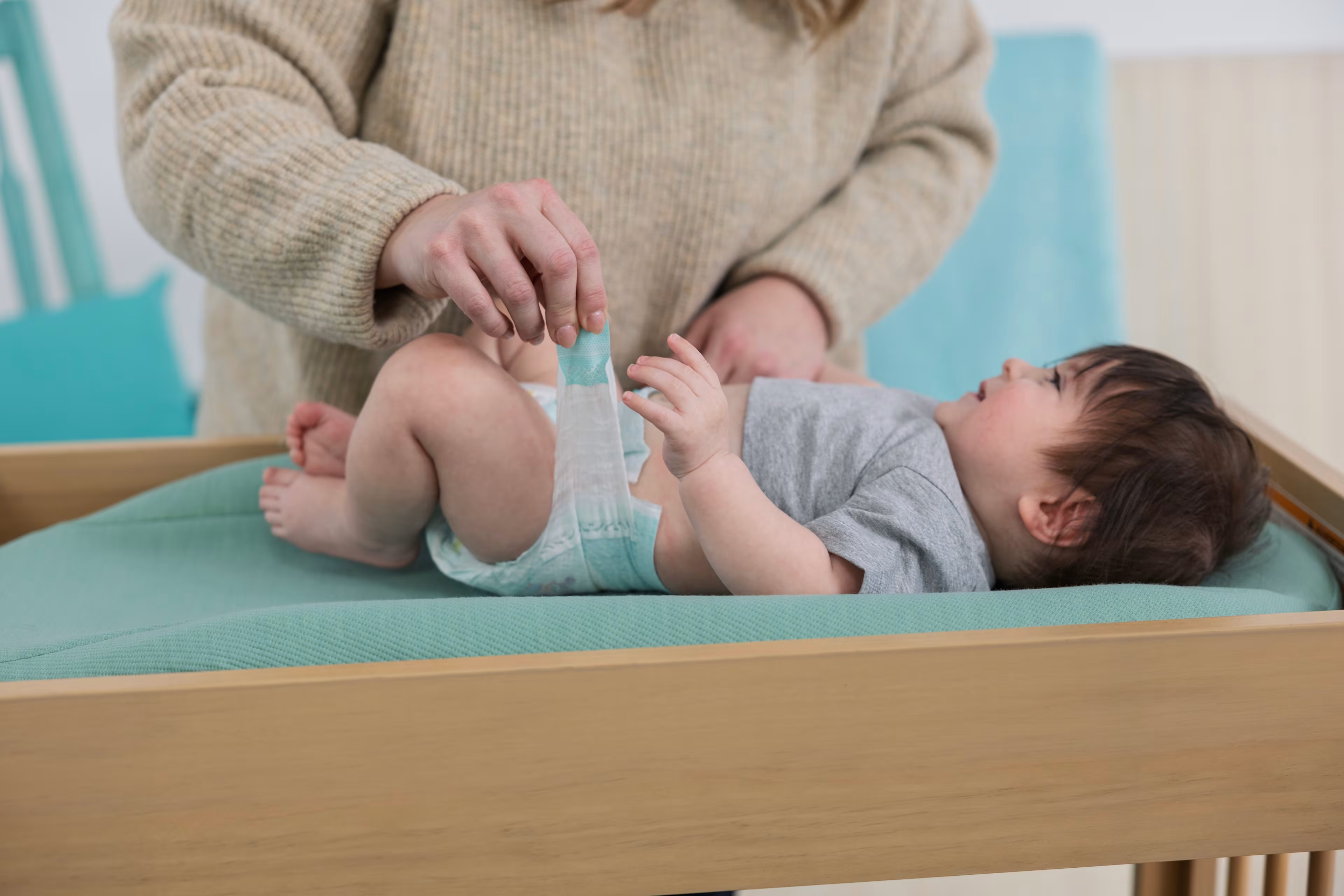
Mom changing a diaper on a changing table

Diaper Dermatitis: Causes, Prevention & Treatment

Read Publications
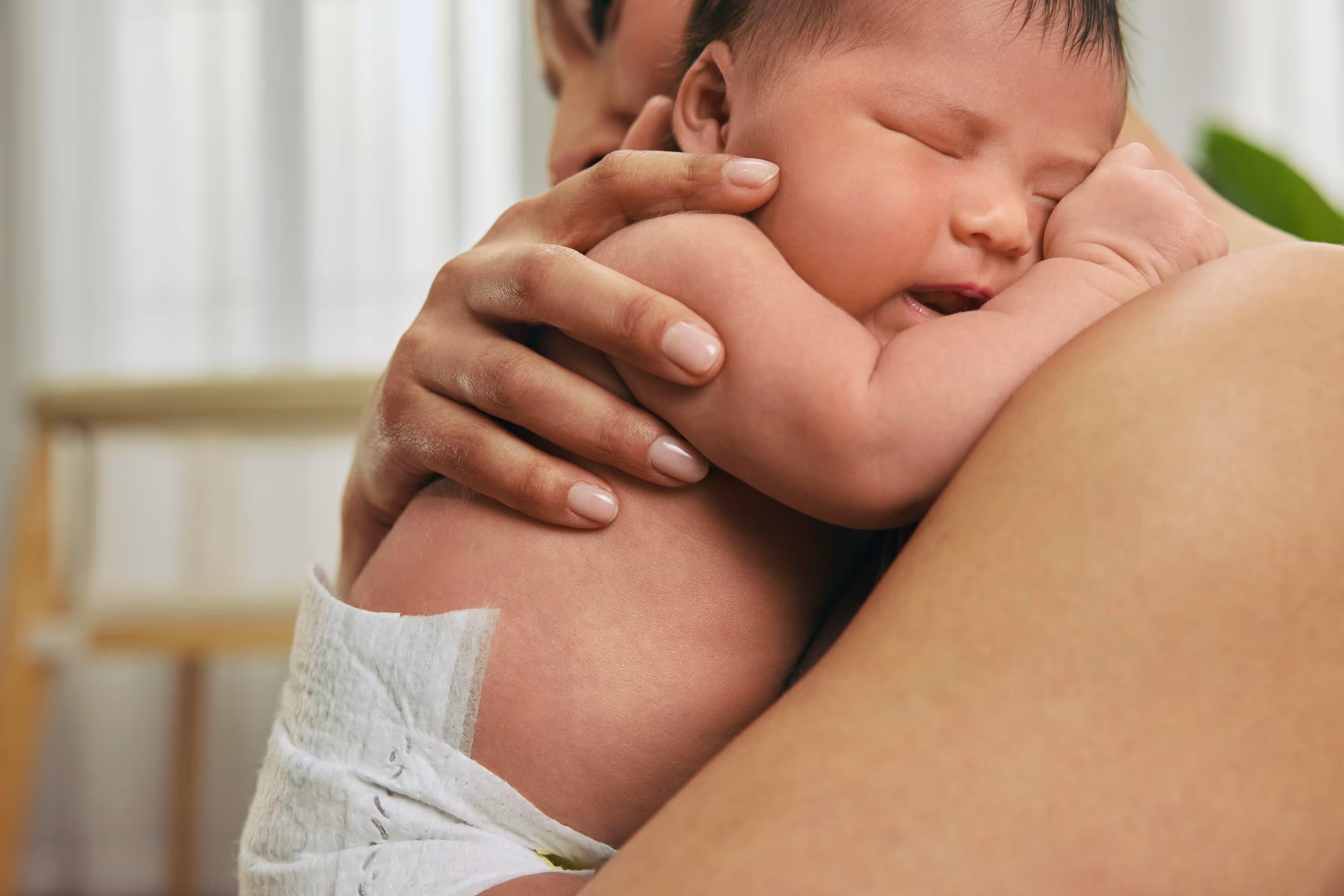
Mom holding an infant skin to skin.

Microbiome, Stool & Research Methods

Read Publications
Mom holding up a Pampers Swaddlers diaper

Diaper Performance, Technology & Safety

Read Publications
Baby looking at the camera while getting cleaned by mom on the changing table.

Skin Health, Care Regimens & Outcomes

Read Publications
Mom changing a diaper on a changing table

Diaper Dermatitis: Causes, Prevention & Treatment

Read Publications
Mom holding an infant skin to skin.

Microbiome, Stool & Research Methods

Read Publications
Mom holding up a Pampers Swaddlers diaper

Diaper Performance, Technology & Safety

Read Publications
Baby looking at the camera while getting cleaned by mom on the changing table.

Skin Health, Care Regimens & Outcomes

Read Publications
Mom changing a diaper on a changing table

Diaper Dermatitis: Causes, Prevention & Treatment

Read Publications
Mom holding an infant skin to skin.

Microbiome, Stool & Research Methods

Read Publications

FAQsFAQs

  • Most diapers use cellulose and sodium polyacrylate Together, they absorb and lock in liquid efficiently.

  • No, only select products are made with fragrance. We have multiple fragrance free options such as Pampers AMORE diapers, Pampers Swaddlers diapers, Pampers Swaddlers Ultra diapers, Pampers Pure diapers, Aqua Pure wipes, Ultraclean wipes, Sensitive wipes, and Complete Clean wipes. We will NEVER use an ingredient that poses a safety concern to your baby.

  • Yes, it is safe for diaper use. They are designed to stay inside the diaper core and help reduce moisture exposure on your baby’s skin.

  • The diaper materials we use are always carefully chosen with Pampers safety and comfort in mind, helping keep your baby’s skin dry and happy. Pampers diapers are made from materials such as:

    • Super absorbent

    • Cellulose

    • Polypropylene

    • Polyethylene

    • Spandex

    • Adhesives

    • Polyester

    • Emollient

    • Pigments

    • Wetness indicator.

    Our Pampers diapers are hypoallergenic, dermatologically tested, and approved by dermatologists from the Skin Health Alliance.

    Every diaper goes through a series of quality checks, from materials sourcing to production and daily monitoring. That’s how we ensure each Pampers diaper is designed to protect against leaks and support your baby’s delicate skin health while prioritizing safety.

  • Pampers has published over 132 clinical and safety studies and abstracts.

    Recent studies published in Pediatric Dermatology (Gustin et al., 2021) by Pampers scientists demonstrate that using a super-absorbent diaper with emollient, along with baby wipes with pH-balancing lotion, resulted in significantly fewer severe diaper rash episodes. This integrated approach actively supports healthy skin pH and protects against irritation, providing clinically proven protection.

    We continuously work with dermatologists and independent laboratories to ensure Pampers products always meet skin safety standards. For more on Pampers’ skin credentials, see our safety accreditations.

  • Our baby wipes are made from a combination of safe fibers like Polypropylene, Cotton, Cellulose and regenerated cellulose, and Polyester. They give the wipe its soft, flexible shape. Our wipes contain a pH-buffering lotion as well to help restore the skin to its natural slightly acidic pH level.

  • Here’s how Pampers prioritizes safety for your baby:

    • We only use safe, trusted ingredients

      that must pass strict Pampers safety checks in every diaper and wipe.

      We never use elemental chlorine bleaching, latex (natural rubber) or disperses dyes.

    • We thoroughly evaluate our materials before using

      and we work with dermatological experts and third-party validators like the Skin Health Alliance.

    • We rigorously assess every product

      Our products go through multiple rounds of lab testing, especially for sensitive skin. They are hypoallergenic.

    • We Monitor in Real Time, Every Day.

      We talk with parents around the world, gathering feedback so we can keep raising our standards. This gives us the opportunity to continuously improve ourselves through feedback from families worldwide.

    We ensure baby safety through robust, data-driven scientific assessments. Research published in Regulatory Toxicology and Pharmacology (Dey et al., 2016), led by Pampers scientists, details our comprehensive methodology for evaluating diaper safety. This study precisely quantifies crucial exposure factors like ingredient transfer [KA3] [EB4] from diaper to skin and frequency of use, confirming that Pampers' rigorous, science-based approach ensures our diapers are safe for daily use and free from harmful levels of substances.

  • The Pampers Safety Promise ensures that every element of our products is safe for your baby.

    Step 1: Carefully selected ingredients

    Step 2: Before using any component, we thoroughly assess both its supplier and the formulation.

    Step 3: Validate our products; our products go through multiple rounds of lab testing, especially for sensitive skin.

    Step 4: Traceable Products & listening to parents

  • Our ingredients are carefully chosen based on safety profiles and their demonstrated effectiveness for keeping babies’ skin dry and healthy. We evaluate every ingredient to ensure it’s safe before it ever comes in contact with your baby’s skin.

  • While diaper rash is one of the most common pediatric conditions, it is not caused by diapers. Here are many possible causes of diaper rash, like moisture and mess on the skin, diaper change frequency, changes in diet or use of antibiotics, etc.

    Diaper technology has dramatically evolved to improve baby skin health over time. A comprehensive review by Pampers scientists in Pediatric Dermatology (Odio & Thaman, 2014 details how innovations like superabsorbent polymers (SAPs) and advanced breathable covers have significantly reduced how often diaper rash occurs and its severity. diaper rash over recent decades. This research shows that the adoption of SAPs alone led to a remarkable 50% decrease in moderate to severe diaper rash.

    Pampers diapers are designed with patented super absorbent technologies to minimize exposure of skin to urine and to help prevent rashes from happening.

  • Pampers diapers use a super absorbent material. Each granule is able to hold up to 30 times its weight in liquid. This helps absorb moisture and lock it away into the diaper core, reducing wetness on your baby’s skin.

  • Gel beads are a key component of the absorbent core in Pampers diapers—they help lock away moisture to keep your little one dry. They have a long history of safe use in diapers. If a small amount touches your baby’s skin, it’s completely safe and can be gently wiped away.

  • No. Adhesives do not come into direct contact with your baby’s skin. They are used throughout the diaper to keep the parts of the diaper together and avoid leakage.

    Pampers' rigorous safety evaluations, as detailed in Clinical Pediatrics (Counts et al., 2017), confirm that our adhesives are thoroughly tested and proven safe for their intended use, providing strong, flexible bonds without any risk to your baby’s delicate skin.

  • Absolutely! Our pigment-based inks are safe and skin-friendly colors for cute designs. The pigments we use are in tiny amounts and are away from baby's skin. Our diapers are approved by the dermatologists of the Skin Health Alliance.

  • The spandex Pampers use is latex-free and carefully covered by soft polypropylene fibers, meaning it never contacts your baby’s skin. This directly helps make every diaper fit securely while prioritizing safety.

  • Yes, the color-changing wetness indicator on Pampers diapers is safe. It reacts to moisture only, stays away from your baby’s skin, and is present in most Pampers diapers for easy indication of urine in the diaper reflecting our ongoing Pampers safety commitment.

  • Yes! Pampers baby wipes, including Sensitive wipes, are clinically tested and shown to have no allergens or skin irritants. They’re hypoallergenic, dermatologically accredited by the Skin Health Alliance, and as gentle as water and a soft cloth, making them suitable for every diaper change and safe to use from day one.

  • No, Pampers baby wipes are all designed to be gentle on delicate skin. Pampers sensitive wipes are made with at least 97% water, a mild cleanser, and a pH-balancing lotion to help prevent irritation, focusing on restoring skin pH and supporting safety at each change.

  • Yes, Pampers Sensitive Wipes are fragrance-free, dermatologically accredited by the Skin Health Alliance, and hold the National Eczema Association Seal of Acceptance.

  • No, Pampers never uses elemental chlorine bleaching. Instead, our suppliers choose well-established methods to help keep every component safe for your baby’s skin, following our safety promise every time.

  • Cellulose is a natural fiber from wood that helps absorb and distribute moisture in the diaper. Pampers cellulose is processed by Elemental Chlorine Free technology and comes from FSC® certified forests and other controlled sources, all in line with our safety standards.

  • The emollient acts as a gentle layer added to the top part of some Pampers diapers. It contains ingredients commonly used in skin care to help reduce friction and create a gentle, breathable barrier between baby skin and wetness.

    Foundational studies published in Dermatology (Odio et al., 2000)and the Journal of the European Academy of Dermatology and Venereology (Baldwin et al., 2001) demonstrated how Pampers' innovative diaper emollient continuously improve skin condition; improved skin condition helps prevent diaper rash, making it a trusted skin guardian for your baby.

  • This soft fiber forms the lining that touches your baby’s skin and helps wick away moisture, keeping skin dry. Polypropylene is widely used in medical fabrics and has a strong safety record, helping us deliver comfort and confidence in every diaper.

  • This technical fiber is specially designed to acquire and spread wetness horizontally on the diaper. These fibers are also widely used in textiles.

  • Polyethylene is mainly used as a thin, protective film in the outer cover to prevent leaks. It acts like a barrier that prevents wetness from passing through, while still allowing air to circulate so your baby’s skin can breathe. It is widely used in medical products, which means it is carefully selected and safe for everyday use.

  • While diapers don’t officially expire, Pampers recommend using them within 12 months of opening to ensure safety and performance.

    It is recommended to use wipes within 3 months of opening for optimal care.

    Learn more about our diapers and expiration.

  • Pampers and our trusted partners around the globe manufacture our diapers and wipes. We have more than 30 manufacturing facilities across 25 countries, and we oversee the entire process from sourcing, production, and distribution to ensure quality every step of the way. Our diapers are available in more than 100 countries around the world. Discover more about our manufacturing process.

  • Pampers was born in 1961 – you can explore the history of Pampers to see how the brand has grown over time. After several redesigns, tests, and manufacturing developments, Pampers was granted its first patent in 1964. While other disposable diapers existed, Pampers stood out for its combination of strong performance and accessible pricing, helping to shape the disposable diaper category in the U.S.

    Over the years, adoption of superabsorbent polymers (SAPs) and breathable covers, disposable diapers have led to a remarkable 50% decrease in moderate to severe diaper rash, as demonstrated by Pampers scientist in Pediatric Dermatology (Odio & Thaman, 2014). Today, the brand continues to innovate using patented technologies to support babies’ needs and development at every stage.

  • Pampers assess every material used in its diaper and wipe for safety using in-house and external testing. We work with dermatological experts and third-party validators like the Skin Health Alliance to go beyond industry requirements.

  • Absolutely! Pampers products are hypoallergenic, dermatologically tested with independent dermatologists and respected associations like the Skin Health Alliance. That means your baby’s skin is healthy and comfortable through every change.

  • Yes, Pampers diapers are designed with carefully selected materials and undergo rigorous safety and quality testing. Pampers diapers are safe products, dermatologically tested, hypoallergenic and accredited by the dermatologists of the Skin Health Alliance to keep your baby dry, comfortable, and protected every day.

  • The main ingredients used in Pampers diapers are: super absorbent material, elemental chlorine free cellulose, polypropylene, polyethylene, polyester, pigments, spandex, emollient, wetness indicator, adhesives. Each ingredient is carefully selected, thoroughly evaluated and safe for a baby’s skin. You can find more details of our ingredients on our product pages!

  • Pampers diapers do not use PFAS. Our diapers are made with carefully selected materials and evaluated materials.

  • Pampers diapers are designed with gentle materials to minimize the risk of allergy and irritation. We do not use common irritants like latex from natural rubber for instance. All our products are accredited by the dermatologists of the Skin Health Alliance.

  • Pampers diapers, training pants, and wipes use carefully selected, trusted Pampers materials that millions of families use every day. All our diapers for newborns are dermatologically approved by the dermatologists of the Skin Health Alliance.

  • Pampers diapers go through extensive safety assessments, including skin compatibility and quality checks. Pampers also conducts millions of tests on materials and monitors production closely to ensure consistent safety and performance. 

  • Pampers production lines are built to minimize any accidental contamination. They are monitored constantly by over 1,000 sensors. Every single diaper is protected through these checks, so you can feel confident in what you’re using.

  • Pampers baby wipes ingredients are designed to be gentle on your baby’s skin. The #1 ingredient is water, made with gentle cleansers to lift mess, skin-conditioning ingredients to keep skin soft, pH balancers to support healthy skin, and small amounts of preservatives to keep the wipes fresh and safe. 

  • Yes—but “chemicals” simply means ingredients. In Pampers wipes, these ingredients are all carefully evaluated and selected to clean, protect, and stay safe over time. 

  • Many parents look for baby wipes made with simple, gentle ingredients. While terms like "non-toxic" and "chemical-free" are often used, it's worth remembering that all products, including water, are made up of chemicals. What matters is choosing wipes whose ingredients have been carefully assessed for safety, quality and skin compatibility. 

    Options such as Pampers Aqua Pure wipes, made with 99% water and 1% skin supporting ingredients, are designed to provide a gentle, safe clean for even sensitive or newborn skin.

  • Eco-friendly diapers are complex. Disposable diapers are not fully biodegradable or compostable in home settings. Pampers is reducing impact through weight and material changes, carbon analysis, and working on future waste solutions—always keeping safety and diaper performance top of mind. 

  • Diapers are made with both biodegradable and synthetic materials. Biodegradable disposable diapers typically can’t break down fully in landfills and aren’t considered fully biodegradable. 

  • Wrap used diapers, seal with the sticky tabs, and put them in your trash, unless local rules provide for special disposal of diapers. 

  • Pampers keeps lowering the environmental footprint of diapers—by reducing weight, measuring impact with LCAs, and investing in research. But we never compromise on safety or reliability while pursuing more sustainable diaper options. 

  • The term “ecological diapers” does not have a single definition. It often refers to diapers designed with features such as reduced material use or responsibly sourced components. Like other disposable diapers, they absorb and lock away wetness to help keep your baby dry. 

  • Yes, diapers don’t necessarily expire, so if they’ve been stored properly and still perform well, they’re generally still safe to use. Check for odor, absorbency, and fit before use. 

  • Unopened diapers can typically be used for up to 3 years when stored properly, while opened diapers are best used within 12 months. 

  • Check for odor, discoloration, loss of absorbency, and loss of elasticity and adhesiveness.  

  • Unopened and correctly stored diapers last longer (up to 3 years), but they can still gradually lose performance over time. 

  • Pampers diapers don’t have a strict expiration date but are best used within a few years for optimal performance. Unopened diapers can generally be used for up to 3 years if stored properly, while opened diapers are best used within 12 months. 

  • Only if they show signs of damage or don’t perform well. Otherwise, they’re usually fine to use. 

  • Pampers diapers and wipes are made by Pampers and our trusted partners around the globe. We have more than 30 manufacturing facilities across 25 countries. Each site follows strict quality and safety standards, with end-to-end monitoring to ensure every product is safe for your baby. Local contact details are printed on every pack, so parents can always reach our safety team with questions or feedback.

  • Pampers diapers are produced in state-of-the-art facilities that carefully combine soft, absorbent materials under strict hygiene conditions. Checks are conducted at every stage, and each diaper is monitored by more than 500 sensors for quality targets. Every diaper is traceable, giving parents confidence in how our diapers are made safely for your little one. 

  • Yes. Each Pampers pack has a batch code that lets us trace the materials and the exact factory where it was made. This traceability offers full transparency and ensures the highest levels of product safety—reassurance from Pampers origin country expertise. 

  • Our commitment continues beyond the factory. Pampers products are continuously monitored in-market, and packaging includes local contact details so parents can share feedback with our experts. That’s part of how Pampers are made with parents’ trust in mind. We even publish our research to show this.   

  • You can see what goes into our diapers —from absorbent polymers to a soft outer layer. All materials are chosen in line with our strict safety standards, so they are safe and gentle for your baby’s skin. 

  • A diaper can help support a healthy environment for the skin. A study published in Pediatric Dermatology (Gustin et al., 2021), found that babies using a diaper with an emollient, together with a pH-balanced wipe had significantly fewer severe diaper rash instances compared with babies using a standard regimen. Pampers researchers found that this routine also found within Pampers diapers and wipes helped maintain the skin’s natural pH and reduced exposure to irritants from urine and stool. The benefit was clinically demonstrated in babies and the products were shown to be safe and gentle for delicate infant skin.

  • Pampers scientists have discovered that a special topsheet design with tiny perforations can significantly improve the absorption of runny messes. Pampers aperture topsheet pulls liquid stool away from your baby's delicate skin, reducing direct contact and helping to prevent diaper rash. This has been demonstrated in Pediatric Dermatology (Gustin et al., 2018). Pampers Swaddlers helps protect against the 4 leading causes of diaper rash: overhydration, friction, increased pH, and mess on skin, helping keep baby's skin healthy before irritation can start.

  • Pampers Research published in Pediatric Dermatology (Odio & Thaman, 2014)showed that diapers using advanced absorbent materials and breathable designs were associated with a 50% reduction in moderate-to-severe diaper rash. By helping move wetness away from the skin and creating a drier diaper environment, these technologies can help reduce one of the key causes of diaper irritation.

Slide 1 of 1
Close up of parent softly wiping baby’s foot with a baby wipe

The Most Awarded & Trusted Diaper Brand*
Number one choice of NICU Professionals certification

#1 Choice of NICU Professionals

From the number 1 pediatrician recommended brand seal

#1 Pediatrician Recommended

Hypoallergenic seal
Hypoallergenic

Skin health alliance certification

Dermatologically Approved

Parents chosen best diaper for baby certification 2025

Best Diapers for Everyday Use

*based on 2025 BrandSpark American Trust Study and on a P&G study of awards given 2021-2025

Pampers home page

Trusted for decades, Pampers supports families through every milestone with care, expertise, and a legacy of comfort that spans generations.

Follow us on
  • Instagram
  • Tiktok
  • Twitter
  • Facebook
  • Youtube
  • Pinterest
  • Diapers
  • Wipes
  • What is Pampers Rewards?
  • Join Pampers Rewards
  • Contact Us
  • Careers
  • Editorial Guidelines and Contributors
  • Terms and Conditions
  • Privacy
  • Consumer Health Data Privacy Policy
  • Accessibility Statement
  • Your privacy choices
  • Cookies
  • Site Map
  • PG Site
  • Accredited Business
  • Language
    • English |
    • Spanish
  • Change country/region
  • Do Not Sell or Share My Personal Information / Opt-Out of Targeted Advertising
  • Pampers does not sell your sensitive personal data. NOTICE: Other P&G brands may sell your sensitive personal data.
  • See All Pregnancy
  • Pregnancy Symptoms
  • Pregnancy Announcement
  • Prenatal health and wellness
  • Baby Names
  • Baby shower
  • Multiples
  • Giving Birth
  • Preparing for new Baby
  • All Baby Articles
  • Newborn
  • Baby Activities
  • Baby Development
  • Baby Care
  • Baby Health
  • Baby Feeding
  • Baby Sleep
  • Diapering
  • Teething
  • Parenting life
  • All Toddler Articles
  • Toddler Activities
  • Toddler Health
  • Toddler Development
  • Toddler Sleep
  • Toddler Nutrition
  • Potty Training
  • Parenting Life
  • Baby Name Generator
  • Due Date Calculator
  • Hospital Bag Checklist
  • Online Birthing Classes
  • Chinese Gender Predictor
  • Pregnancy Calendar
  • Baby Birthday Facts
  • Pregnancy Weight Gain Calculator
  • Quizzes
  • Happy Monthiversary Printables
  • Pregnancy Milestones Tracker
  • Diaper Purchase Planner
  • Baby Development Milestones
  • Baby Growth Chart Calculator
  • Guides and Downloadables
  • See All About Us
  • Quality and Safety
  • Behind Every Baby
  • Sustainability
  • Community Impact
  • Pampers Heritage
  • Accessibility Statement
Procter and Gamble logo

© 2026 Procter & Gamble

The use and access to the information on this site is subject to the Terms & Conditions, set out in our legal agreement.