How to Encourage Independence From a Young Age


Apple pies, delicious barbecue, and fireworks on a warm summer night—these are the first things that come to mind when we think about the Fourth of July. Trailing not far behind those nostalgic memories are the lessons of Independence Day we can take and apply to our daily parenting habits.
It’s a good opportunity for us to take an honest look at how we can give our children the gift of independence.
I always ask the parents I work with if they would knowingly choose to instill any of the following traits in their children:
The answer, as you would expect, is always no. None of us choose to instill these traits in our children. But the unintended consequence of some of our best intentions lead to older kids who live with these three traits on a daily basis. There are a few specific things we can do and some ideas we can mull over to help them internalize the feelings of security, confidence, and independence within themselves.
1. Feeling safe comes from two places: trusting their parents & trusting themselves.
It’s easy to fall for the false notion that 100% of our babies’ sense of security comes from being tended to every moment of every day. In reality, it is important that we teach our children that they are just as safe and secure when they are down on the floor as they feel in our arms. When we spend a significantly higher portion of our time holding and immediately tending to our children’s every fussy moment, we are accidentally reinforcing this feeling: I am only safe and secure if I am in my parents’ arms. Yes, we want them to know we will always keep them safe, but we also want them to feel safe independent of us.

Baby Growth Chart Calculator
Keep an eye on your baby’s average growth by tracking height, weight, and head circumference with our simple tool.
This is a mandatory field.
This is a mandatory field.
This is a mandatory field.
This is a mandatory field.
*Input details of your baby’s last measurements. **Source: World Health Organization
2. Give babies safety & security from a distance.
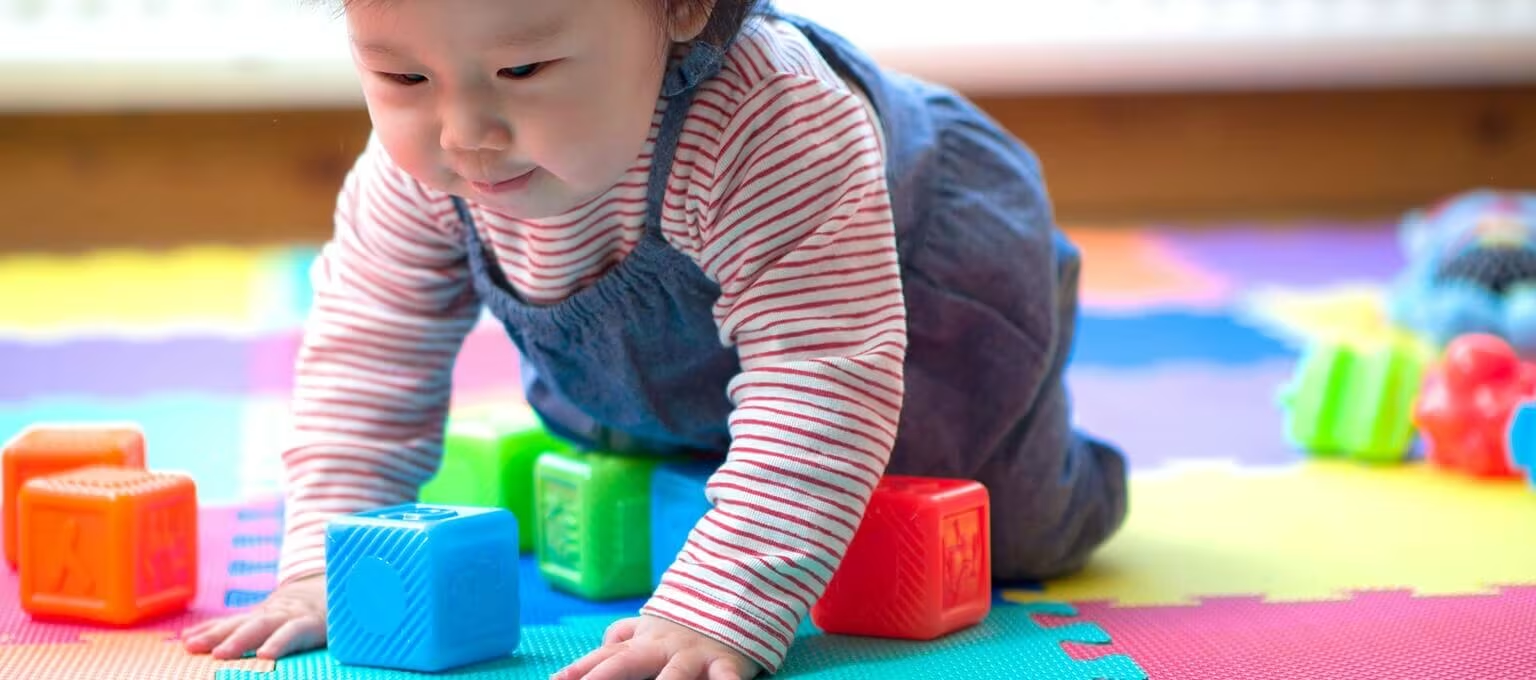
If you know your baby’s needs are all met, you can let them have some independent playtime. This can be tummy time, sitting time, or crawling time. As long as the place you put them down is baby-proofed, you can walk away for a few minutes and let them play. Walk out of the room for a minute or two then come back in. Smile and talk to them enthusiastically. When you come back smiling, your facial expressions and tone are telling them, “You’re okay, and I always come back!”
3. Give toddlers safety & security from a distance.
In toddlerhood, teaching independence takes the form of accepting that they will climb, run, fall over, bonk, and explore. This makes some parents want to hover over them, protect them, and do things for them. Instead of hovering, within reason, let them fall down. Respond calmly and with a comforting smile. When we rush over and wear a look on our faces that shows panic, we are showing them that they are in danger. When we respond calmly and with a comforting smile, we are showing them, “I know you’re okay. Let’s try again!”
4. Let them do it on their own.
Regardless of your child’s age, if they are capable of doing something on their own, but it takes them a little longer, be patient and encourage them instead of doing it for them. There isn’t always time for this of course. Obviously, sometimes you just need to get out the door. When you aren’t running out the door, though, be sure to incorporate modeling and practicing new skills as part of playtime.
5. Give the illusion of power and control.
Giving a child the actual power to make decisions about the day will always backfire. That isn’t teaching independence; that’s called letting your child run the house. Instead, give the illusion of control by letting them make what feels like important choices. Always give opportunities for them to decide between two choices you know you’re okay with. For example, “Would you like bubbles in your bath or no bubbles?” They don’t get to decide if bath-time will happen, but they feel like they have some independence about what happens during bath-time.
6. Child-proof and create opportunities for independent choices.
If you are constantly worried your child will get hurt at home because you haven’t gotten around to child-proofing, this will limit your child’s ability to think and behave independently. Once you know their environment is safe, it frees you up to let them safely explore because you are no longer nervously following them around. Within that safe environment, you can leave some of your child’s favorite activities down where they can easily reach them. Puzzles, books, blocks, and soft toys are all good things to keep down low. In the kitchen, you can make a cupboard that isn’t locked that has some of their dishes. When it is time for snack or a meal, they can choose which dish to use and get it out without help.
7. Look at it from your child’s perspective.
I learn to trust my body’s physical capabilities and limits by exploring, not by being hovered over. I learn about gravity by my parents letting me fall. I learn falling isn't so bad by getting a smile instead of an overreaction from my parents. I learn that I am safe to try something new by my parents encouraging me to do so instead of fearfully saying no or doing it for me. I learn I am safe when I’m alone by my parents allowing me to entertain myself. In these ways, I learn that I am safe/loved/secure both with and without my parents.
8. If they don’t feel safe and secure without you, teaching independence is difficult at best.
The bottom line is, the feeling of personal safety does not come from parents directly providing safety. The feeling of personal safety and security comes from parents teaching their children to trust themselves. Once they feel safe with you and without you, you will see the spirit of exploration, curiosity, and confidence from your little one.
9. Who are you parenting for?
Take some time to examine your parenting motives. When we hover and over-protect our kids, are we doing it because we are genuinely afraid for their safety? Or are we doing it because we fear what other parents will think or say? Often times, we have a false belief that sounds like this: “If I am not overly cautious and always worried about my child, I will be perceived as a bad parent.” I encourage all parents I work with to ask themselves if that statement resonates. Letting go of that false belief helps parents feel empowered to loosen the reins and instill independence instead of anxiousness.
Related Articles:
FAQS AT A GLANCE
For a 7-month-old baby, independent play often lasts about 5 to 15 minutes at a time, though some babies may stay engaged for longer. Try offering one or two short sessions each day when your baby is well-rested, fed, and comfortable. A safe play area with age-appropriate toys can help encourage exploration and confidence while you supervise nearby.
When Do Babies Start Laughing?
Do you ever wonder when babies start laughing? Learn all about your baby’s first laugh, when it might happen, and how to encourage it.
Read more
All About Separation Anxiety in Babies, Toddlers, and Older Kids
Separation anxiety can start as early as 8 months in babies and toddlers. Explore common symptoms and learn what to do when your child worries about separation.
Read more
Tips for Reducing Baby Separation Anxiety at Night
Get tips on how to support your baby with their separation at night Separation anxiety in babies at bedtime is completely normal as your baby develops and these tips can help you support them through it.
Read more
Tips for Teaching Baby Sign Language
By Christopher B. Peltier
Teach your baby sign language to communicate before speaking. Begin at 6-7 months with simple signs like “milk” and “more” for easier daily interactions.
Read more
Baby Talk: Understanding Your Baby
Understand your baby's sounds with this guide to baby talk! Explore milestones, from babbles to first words, and learn how to support language development.
Read more
When Do Babies Start Cooing? All About Your Baby’s First Sounds
During the first few weeks of their lives, babies start making sounds and learn to communicate. Read all about when babies start cooing, and how to encourage it.
Read more
How Positive and Proactive Discipline Can Help Change Your Child’s Behavior
Read about how to settle your child’s outbursts with four major tools: understanding power, setting boundaries, consistency and positive and proactive discipline.
Read more
True Grit: How Babies Learn to Be Persistent
Persistence isn’t a personality trait that is often associated with babies, assumed to be innately known rather than learned. A new piece of research, however, suggests that babies as young as 13 months can learn to be persistent. Read our summary of this fascinating development here.
Read more
Surprise, Surprise! Babies Understand More Than We Think
Communicating with babies is crucial for their development. They understand more than we think. Get advice on talking to your little one.
Read more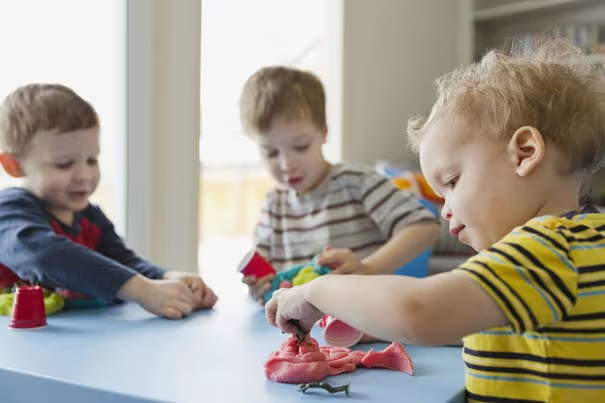
Your 11-Month-Old's Language Development
Explore your 11-month-old's language development! Learn how many words to expect, joint attention skills, and ways to support language development.
Read moreWhen Do Babies Start Laughing?
Do you ever wonder when babies start laughing? Learn all about your baby’s first laugh, when it might happen, and how to encourage it.
Read moreAll About Separation Anxiety in Babies, Toddlers, and Older Kids
Separation anxiety can start as early as 8 months in babies and toddlers. Explore common symptoms and learn what to do when your child worries about separation.
Read moreTips for Reducing Baby Separation Anxiety at Night
Get tips on how to support your baby with their separation at night Separation anxiety in babies at bedtime is completely normal as your baby develops and these tips can help you support them through it.
Read moreTips for Teaching Baby Sign Language
By Christopher B. Peltier
Teach your baby sign language to communicate before speaking. Begin at 6-7 months with simple signs like “milk” and “more” for easier daily interactions.
Read moreBaby Talk: Understanding Your Baby
Understand your baby's sounds with this guide to baby talk! Explore milestones, from babbles to first words, and learn how to support language development.
Read moreWhen Do Babies Start Cooing? All About Your Baby’s First Sounds
During the first few weeks of their lives, babies start making sounds and learn to communicate. Read all about when babies start cooing, and how to encourage it.
Read moreHow Positive and Proactive Discipline Can Help Change Your Child’s Behavior
Read about how to settle your child’s outbursts with four major tools: understanding power, setting boundaries, consistency and positive and proactive discipline.
Read moreTrue Grit: How Babies Learn to Be Persistent
Persistence isn’t a personality trait that is often associated with babies, assumed to be innately known rather than learned. A new piece of research, however, suggests that babies as young as 13 months can learn to be persistent. Read our summary of this fascinating development here.
Read moreJoin a World of Support
through Pregnancy and Parenthood.
TRACK WITH TOOLS
LEARN WITH EXPERTS
GET REWARDED




Where You Already Belong