
What Is Mastitis and How Do You Treat It?

Mastitis is an inflammation of breast tissue that may cause tenderness and pain, often leading to an infection. Having mastitis can be very frustrating, especially if you’re breastfeeding, but there are steps you can take to treat it and relieve some of the symptoms. Read more below to find out what causes mastitis, and how to prevent or treat it.
What Is Mastitis?
By definition, mastitis occurs when a buildup of milk blocks a milk duct, causing inflammation of breast tissue. A hard lump can form, and the breast becomes tender and sore. In the case of lactating parents—those who are breastfeeding or pumping breast milk—this condition is called lactation mastitis.
What Does Mastitis Look Like?
Mastitis typically presents as red, swollen, and painful breasts. In some cases, there may be visible red streaks on the skin and a hard, tender lump.
What Does Mastitis Feel Like?
The affected area may feel warm and swollen to the touch. You may also notice a hard, tender lump on one breast.
Breast Abscess Vs. Mastitis
A breast abscess and mastitis can share similar symptoms but are distinct. Mastitis is an inflammation of the breast tissue, often caused by infection, breastfeeding issues, or clogged milk ducts.
A breast abscess, on the other hand, is a localized collection of pus within the breast tissue, usually resulting from an untreated or severe case of mastitis. Abscesses often require drainage and antibiotic treatment to resolve.

Baby Growth Chart Calculator
Keep an eye on your baby’s average growth by tracking height, weight, and head circumference with our simple tool.
This is a mandatory field.
This is a mandatory field.
This is a mandatory field.
This is a mandatory field.
*Input details of your baby’s last measurements. **Source: World Health Organization
Mastitis Symptoms
You may wonder “How do I know if I have mastitis?” and what it feels like compared to the normal tenderness you might feel when you first start breastfeeding. We’ve discussed some of the symptoms in the section above, but here are all the signs and symptoms of mastitis you might experience:
What Causes Mastitis?
These are some of the causes of mastitis or the risk factors that might increase your chance of developing a mastitis infection:
Mastitis Treatment
If you have mastitis, it’s likely your healthcare provider will prescribe medication to clear the infection and reduce discomfort. There are also methods you can use at home to help relieve pain and inflammation. Check out our tips below for more information on how to treat mastitis.
Mastitis Medication
Your healthcare provider will usually prescribe antibiotics for mastitis that are safe for your baby, too. You should begin to notice improvement within a day or two, but it’s important to take the full course of antibiotics, even if the symptoms clear.
Breastfeeding won’t hurt your baby—the milk itself isn't affected—and nursing can actually help clear the infection. Your healthcare provider might also suggest taking a painkiller to help ease the discomfort. If you have recurring bouts of mastitis, or the infection doesn’t seem to go away, contact your provider again.
Mastitis Self Care
In addition to the treatment your provider recommends, you might try some of these self-care methods and home remedies to help relieve some of the symptoms of mastitis:
Can You Breastfeed with Mastitis?
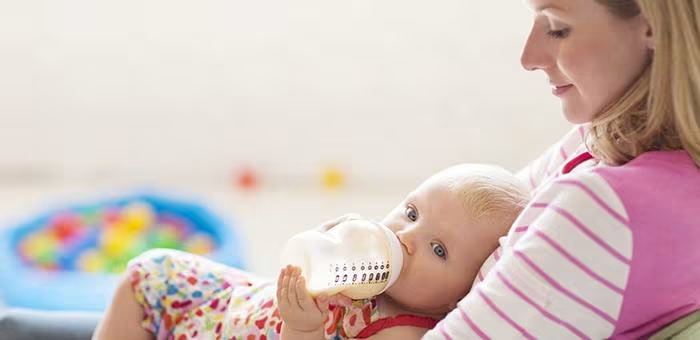
If you’re breastfeeding and you have mastitis, you may be wondering if you can still nurse with mastitis. Mastitis does not cause your milk to become infected, and your baby won’t be harmed by nursing. Although breastfeeding with mastitis may be uncomfortable at first, continuing to breastfeed will not only speed up recovery and help keep the mastitis from worsening, but it will also help keep your baby’s immune system stronger because of the antibacterial properties of breast milk.
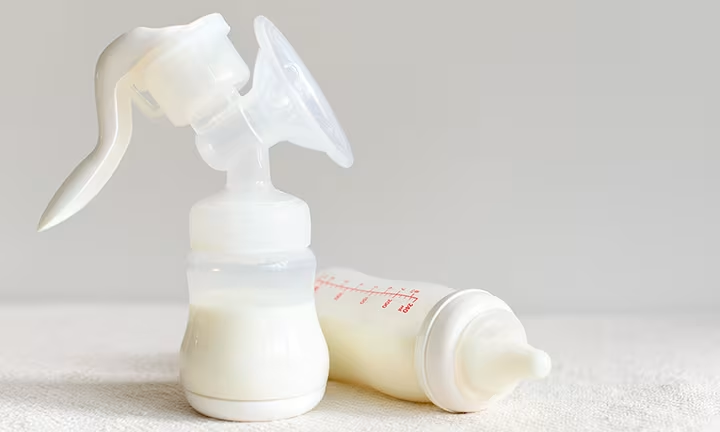
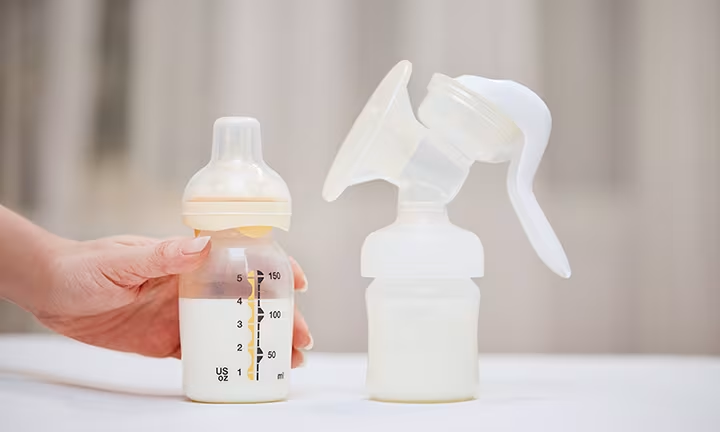
If you find breastfeeding on the infected breast too painful, one option is to allow the milk to flow out from the affected breast onto an absorbent cloth or towel while you have your baby nurse on the other breast. After relieving some of the pressure, you might be able to finish nursing on the affected breast without too much discomfort. Another option is to pump the breast and then either store the milk or feed it to your baby.
The discomfort of mastitis can be discouraging, but treatment can quickly help clear up the problem, allowing you to continue to enjoy the great benefits of breastfeeding. You can also refer to our complete downloadable breastfeeding guide to learn about mastitis and best practices for successful breastfeeding.
How Long Does Mastitis Last?
If treated appropriately, such as taking the prescribed antibiotics, using cold compresses, and getting plenty of rest, the symptoms of mastitis may ease within 24 to 72 hours. It may take about 10 to 14 days for a full recovery from inflammatory mastitis.
How to Prevent Mastitis
Here are some ways to help you avoid mastitis:
Eventually, when you decide it's time to stop breastfeeding and wean your baby, you may wonder how to dry up your milk supply without getting mastitis. The key is to wean gradually. Ask your lactation consultant or healthcare provider for guidance.
When Should You Contact Your Healthcare Provider?
Early treatment of mastitis is important. Speak with your healthcare provider or lactation consultant if the earliest signs of mastitis don’t clear up promptly after trying at-home remedies for a few days, or if your symptoms worsen after 24 hours of antibiotics. A spike in fever, pus or blood in your milk, and red streaks from your nipple to your underarm are signs that the mastitis infection has worsened. If left untreated, symptoms can worsen and an abscess can form.
FAQS AT A GLANCE
Yes. In fact, continuing to breastfeed will help clear the infection. Your breast milk also helps keep your baby’s immune system strong.
The Bottom Line
Breastfeeding or pumping with mastitis can be difficult and frustrating. Try to be patient and gentle with yourself during this time. With good at-home care under the direction of your healthcare provider, it won't be long until you're able to get back to enjoying this bonding time with your baby.
And if you want rewards on all those diapers your little one uses, download our free Pampers Rewards app today.
- American Academy of Pediatrics. Caring for Your Baby and Young Child: Birth to Age 5, 7th ed. (New York: Bantam Books, 2019).
- American College of Obstetricians and Gynecologists. Your Pregnancy and Childbirth: Month to Month, 7th ed. (Washington, DC: American College of Obstetricians and Gynecologists, 2021).
- Cleveland Clinic. “Mastitis.”
- Mayo Clinic. “Mastitis Symptoms & Causes.”
- Mayo Clinic. “Mastitis Diagnosis & Treatment.”
Read more about Baby







Join a World of Support
through Pregnancy and Parenthood.
TRACK WITH TOOLS
LEARN WITH EXPERTS
GET REWARDED



Where You Already Belong