Skip to main contentSkip to search
Stork Bite Birthmarks

Stork Bites in Newborns: Causes and Appearance

3 min readUpdated April 07, 2026

Key Takeaways

  • A stork bite (nevus simplex) is a common, harmless birthmark. Also called a salmon patch or angel kiss, it’s caused by small, dilated blood vessels under your baby’s skin.

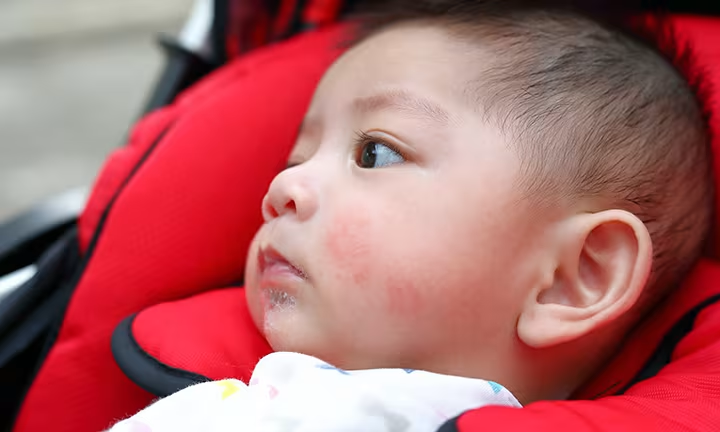
  • It appears as a flat pink or reddish patch, often on the forehead, eyelids, upper lip, or back of the neck.

  • The mark may look more noticeable when your baby cries or gets warm and can temporarily lighten with gentle pressure.

  • Most stork bites fade on their own. Many disappear within the first 1 to 2 years of life and usually don’t need treatment.

  • Stork bites are different from port-wine stains. Unlike port-wine stains, which are permanent, stork bites tend to lighten and resolve over time.

  • If a birthmark changes, doesn’t fade, or looks unusual, consult your baby’s healthcare provider for guidance and reassurance.

Notice a warm-toned patch on your newborn’s skin? It might be a stork bite—a common, harmless birthmark that typically fades. 

  • What is it? A flat birthmark caused by dilated blood vessels beneath the skin.

  • Where does it appear? Commonly on the forehead, eyelids, upper lip, or back of the neck.

  • Does it go away? Most fade naturally, within 1 to 2 years.

  • Is treatment needed? No treatment is usually needed.

While these marks may seem noticeable at first, they’re simply a natural part of your little one’s appearance—one that often fades as they grow. Keep reading to learn more about what causes stork bites, how they change over time, and when to consult a healthcare provider.

What Is a Stork Bite (Nevus Simplex) in Newborns?

A stork bite is a common type of birthmark that appears on newborns at birth. The medical term for a stork bite is nevus simplex, and it’s sometimes called a salmon patch birthmark or an angel kiss.  The term stork bite comes from the folklore myth that storks carry babies by the neck, leaving a mark (the birthmark) where they held the baby.

These harmless marks are caused by temporary changes in blood flow beneath the skin. They are not contagious and usually fade within the first year or two of life. If you’re wondering "What is a stork bite?" it’s simply a temporary birthmark that doesn’t require treatment and typically fades on its own.

Vascular birthmarks are common in neonates (prevalence: 20–30%) and mostly incidental findings sometimes with spontaneous regression (salmon patch and nevus simplex).

Source: Diociaiuti et al., 2021

Port Wine Stain vs. Stork Bite

A stork bite and a port wine stain may look similar at birth, but they differ in appearance, cause, and longevity.

A stork bite is a temporary birthmark caused by dilated blood vessels close to the skin’s surface. It appears as a light pink or red patch and typically fades within 1 to 2 years.

A port wine stain is a permanent birthmark caused by abnormally formed blood vessels. It shows up as a pink, light brown, or purple birthmark and may darken or thicken over time.

If you're comparing the port wine stain versus the stork bite, the key difference is that stork bites fade, while port wine stains are permanent. If you're unsure about a birthmark’s progression, consult your little one’s healthcare provider.

Baby Development Milestones Watching how your baby grows and develops is an important part of parenthood. Keep track of your little one's progress with our baby development milestones articles!

What do Stork Bites or Angel Kisses Look Like on Newborns?

If you notice a purple or red spot on your infant, it may be a stork bite. Also known as an angel kiss, it has a distinct appearance that sets it apart from other birthmarks. It appears as a flat, pink to reddish-purple mark without clearly defined borders, blending into the baby’s skin tone. 

These color patches may change in intensity based on your little one’s activity or environment:

  • They become more visible (turning bright red or purple) when your little one cries or gets too warm.

  • They fade temporarily when light pressure is applied, such as pressing a finger against the mark and releasing it.

What Causes Stork Bites on Newborns?

If you’re wondering what causes stork bites, they develop due to blood vessel dilation during fetal development. When tiny blood vessels stretch under the skin, blood flow increases in that area, resulting in a stork bite. This process is completely painless and does not indicate any underlying medical condition.

Stork Bite Birthmark Locations

The stork bite gets its name from folklore, which suggests that a stork carries babies by the back of the neck, where these birthmarks are commonly found. While this is just a myth, stork bites are real and completely harmless.

A stork bite may be found on different areas of a newborn’s body, including:

  • Stork bite on the back of the neck. The most common location is often slightly hidden by hair.

  • Stork bite on the forehead. Appears in the center of the forehead or along the hairline.

  • Stork bite on the eyelid. Light pink or brownish patches that may temporarily darken when the baby cries or becomes warm.

These marks are painless and harmless, typically fading over time. If you have concerns about their visibility or longevity, your little one’s healthcare provider can offer guidance.

Quiz duration is 3 minutes

Diaper Bag Essentials

What are your diaper bag must-haves? From essentials to just-in-case extras, every parent packs a little differently. Take our fun quiz to see how your diaper bag stacks up against other Pampers Parents.

  • Instant Results

  • Enjoyment Guaranteed

  • Personal Insights

Do Stork Bites Go Away?

If you're wondering, "Do stork bites go away?", the answer is yes—most fade over time. In most cases, stork bites fade within 12 to 24 months, but some may last into early childhood before becoming lighter. If a stork bite does not fade or appears in an atypical area, consult your little one’s healthcare provider to determine if it is a stork bite or another type of birthmark.

The vast majority of the cutaneous manifestations are transient or benign (salmon patch, nevus simplex, and stork bite) and reassuring the parents is sufficient.

Source: Diociaiuti et al., 2021

How Stork Bites Change Over Time

Many parents wonder how stork bites change over time and what they might look like as their baby grows. While each baby is different, most stork bites fade gradually, especially within the first 1 to 2 years. 

At birth, stork bites appear as a pink to reddish-purple color that stands out from your little one’s skin tone. Over time, they become less visible, often fading completely within 24 months. Some parents notice that the birthmark darkens temporarily when their child cries, gets too warm, or is irritated.

If you have concerns about the persistence or appearance of your child's birthmark, consult your little one’s healthcare provider.

FAQS AT A GLANCE

According to folklore, a stork carries babies by the back of the neck, leaving a mark where its beak "held" the baby. Stork bites are harmless birthmarks caused by dilated blood vessels beneath the skin.

The Bottom Line

Stork bites are nothing to be concerned about. Though these warm-colored patches may look prominent at birth, they typically fade over time, often disappearing within the first 1 to 2 years. This is just one more way your child will develop and change in their early years. For any concerns, don’t hesitate to ask your little one’s healthcare provider during their next health check

As your little one grows, so do their needs. With the Pampers Rewards App, you can earn exclusive discounts and digital offers on baby essentials while keeping up with your little one's journey.

Last Medically Reviewed:

March 11th, 2025


The information in this article is based on the expert advice found in trusted medical and government sources, such as the American Academy of Pediatrics and the American College of Obstetricians and Gynecologists. You can find a full list of sources used for this article below. The content on this page should not replace professional medical advice. Always consult medical professionals for full diagnosis and treatment.

About Christopher B. Peltier

Pediatrician at Pediatric Associates of Mount Carmel, Inc.; Cincinnati, OH

Read More

Related Articles

See more articles
See more articles
Slide 1 of 10
Pinkeye in babies
Conditions5 min read

Pinkeye (Conjunctivitis) in Babies: Causes and Treatment

By Christopher B. Peltier

Pinkeye in babies and newborns is usually caused by an infection or allergy. Find out what exactly pinkeye is, and how you can try to prevent and treat it.

Chicken Pox in Babies and Toddlers
Conditions7 min read

Chicken Pox in Babies and Toddlers, and During Pregnancy

By Terri L. Major-Kincade

Chicken pox is common for babies and toddlers—and even for you during your pregnancy. Read on to learn about symptoms, treatment, and when to visit the doctor.

Baby crying with dad
Conditions8 min read

Helping Your Baby with Constipation

By Christopher B. Peltier

Discover remedies for relieving your baby's constipation, signs to watch for, and tips on when to consult a healthcare provider.

Toddler medical check up
Conditions7 min read

Strep Throat in Babies and Toddlers: Signs and Treatment

Strep throat in toddlers and babies is rare and not usually serious for children under 3. Learn more about strep throat, its symptoms, and possible treatment.

Fifth disease rash
Conditions7 min read

FAQ: What Is Fifth Disease?

By Christopher B. Peltier

Fifth disease is a type of mild viral infection that can affect some young children. Learn more about its symptoms and treatment here.

Coughs in Babies
Conditions13 min read

Coughs in Babies and Toddlers: Causes, Symptoms, and Treatment

By Terri L. Major-Kincade

Discover what types of coughs there are, and what they may mean for your baby or older child. Learn remedies and when to see your child’s healthcare provider.

Baby with reflux (GERD)
Conditions5 min read

What to Do if Your Baby Has Reflux or GERD

Occasional acid reflux can be a common condition in your infant’s first year, but if it happens too frequently, it may be a condition called GERD. Learn about the symptoms of reflux and how it can be treated.

baby arching back
Conditions7 min read

Baby Arching Back: Why Do Babies Arch Their Backs?

By Terri L. Major-Kincade

Why is your baby arching their back? There are many reasons why babies arch their backs! Learn when it’s normal and when to contact your healthcare provider.

Mom holding baby to help prevent hiccups
Conditions4 min read

How to Prevent and Stop Baby Hiccups

By Christopher B. Peltier

Does your baby or newborn get hiccups frequently? Read to learn how to help prevent and stop hiccups and how to soothe your little one when they happen.

Whooping cough in babies
Conditions8 min read

Whooping Cough in Babies

Whooping cough, also known as pertussis, is a bacterial infection that may affect children and adults. Read more about the symptoms and treatment of whooping cough in babies.

Pinkeye in babies
Conditions5 min read

Pinkeye (Conjunctivitis) in Babies: Causes and Treatment

By Christopher B. Peltier

Pinkeye in babies and newborns is usually caused by an infection or allergy. Find out what exactly pinkeye is, and how you can try to prevent and treat it.

Chicken Pox in Babies and Toddlers
Conditions7 min read

Chicken Pox in Babies and Toddlers, and During Pregnancy

By Terri L. Major-Kincade

Chicken pox is common for babies and toddlers—and even for you during your pregnancy. Read on to learn about symptoms, treatment, and when to visit the doctor.

Baby crying with dad
Conditions8 min read

Helping Your Baby with Constipation

By Christopher B. Peltier

Discover remedies for relieving your baby's constipation, signs to watch for, and tips on when to consult a healthcare provider.

Toddler medical check up
Conditions7 min read

Strep Throat in Babies and Toddlers: Signs and Treatment

Strep throat in toddlers and babies is rare and not usually serious for children under 3. Learn more about strep throat, its symptoms, and possible treatment.

Fifth disease rash
Conditions7 min read

FAQ: What Is Fifth Disease?

By Christopher B. Peltier

Fifth disease is a type of mild viral infection that can affect some young children. Learn more about its symptoms and treatment here.

Coughs in Babies
Conditions13 min read

Coughs in Babies and Toddlers: Causes, Symptoms, and Treatment

By Terri L. Major-Kincade

Discover what types of coughs there are, and what they may mean for your baby or older child. Learn remedies and when to see your child’s healthcare provider.

Baby with reflux (GERD)
Conditions5 min read

What to Do if Your Baby Has Reflux or GERD

Occasional acid reflux can be a common condition in your infant’s first year, but if it happens too frequently, it may be a condition called GERD. Learn about the symptoms of reflux and how it can be treated.

baby arching back
Conditions7 min read

Baby Arching Back: Why Do Babies Arch Their Backs?

By Terri L. Major-Kincade

Why is your baby arching their back? There are many reasons why babies arch their backs! Learn when it’s normal and when to contact your healthcare provider.