How to Prevent and Stop Baby Hiccups



It’s not unusual for your newborn or older infant to get hiccups from time to time. Most babies do! Hiccups are usually nothing to worry about, and you can do a couple of simple things to help prevent them. When hiccups occur, they’ll usually go away on their own after a few minutes but read on to find out why newborns get hiccups, and how you can help alleviate or prevent them.
What Causes Hiccups in Newborns and Babies?
Babies get hiccups from time to time. You may have even noticed your baby hiccupping when you were pregnant. This may have felt like quick, rhythmic jerks in your uterus. In any case, hiccups are usually nothing to worry about.
So, why do newborns and older infants get hiccups? Hiccups are caused by your baby’s diaphragm moving in a twitchy way or having spasms when irritated. The diaphragm is a dome-shaped muscle at the bottom of your baby’s chest that relaxes and contracts to help them breathe.
When the diaphragm gets irritated, it might involuntarily contract, quickly causing air to get sucked in a little more forcefully than a usual breath. When this force of air hits your baby’s vocal cords, they close suddenly. That’s what can make that little “hiccup” sound.
You might notice that your newborn gets hiccups after feeding. This is because their diaphragm might become irritated if they eat too fast or too much or if they feel excited or nervous about something.

Baby Growth Chart Calculator
Keep an eye on your baby’s average growth by tracking height, weight, and head circumference with our simple tool.
This is a mandatory field.
This is a mandatory field.
This is a mandatory field.
This is a mandatory field.
*Input details of your baby’s last measurements. **Source: World Health Organization
How Long Do Newborn Hiccups Last?
In general, hiccups only last for a few minutes, before going away on their own. In some rare cases, hiccups may last for days or months. If you notice your baby’s hiccups aren’t going away and you’ve tried the tips below, contact your healthcare provider for more advice.
How to Get Rid of Baby and Newborn Hiccups
If your baby gets hiccups during feeding, stop and try to burp them or change their position. In general, try to help your little one relax.
Hiccups usually go away on their own, but if they haven’t gone away after about 5 or 10 minutes, begin feeding your baby again, which may help bring relief.
When your little one has hiccups, it probably won’t bother them too much. You can help your baby feel relaxed and as comfortable as possible by having some easy playtime, gently rocking them, and making sure their diaper is clean.
Best Positions to Get Rid of Newborn and Baby Hiccups
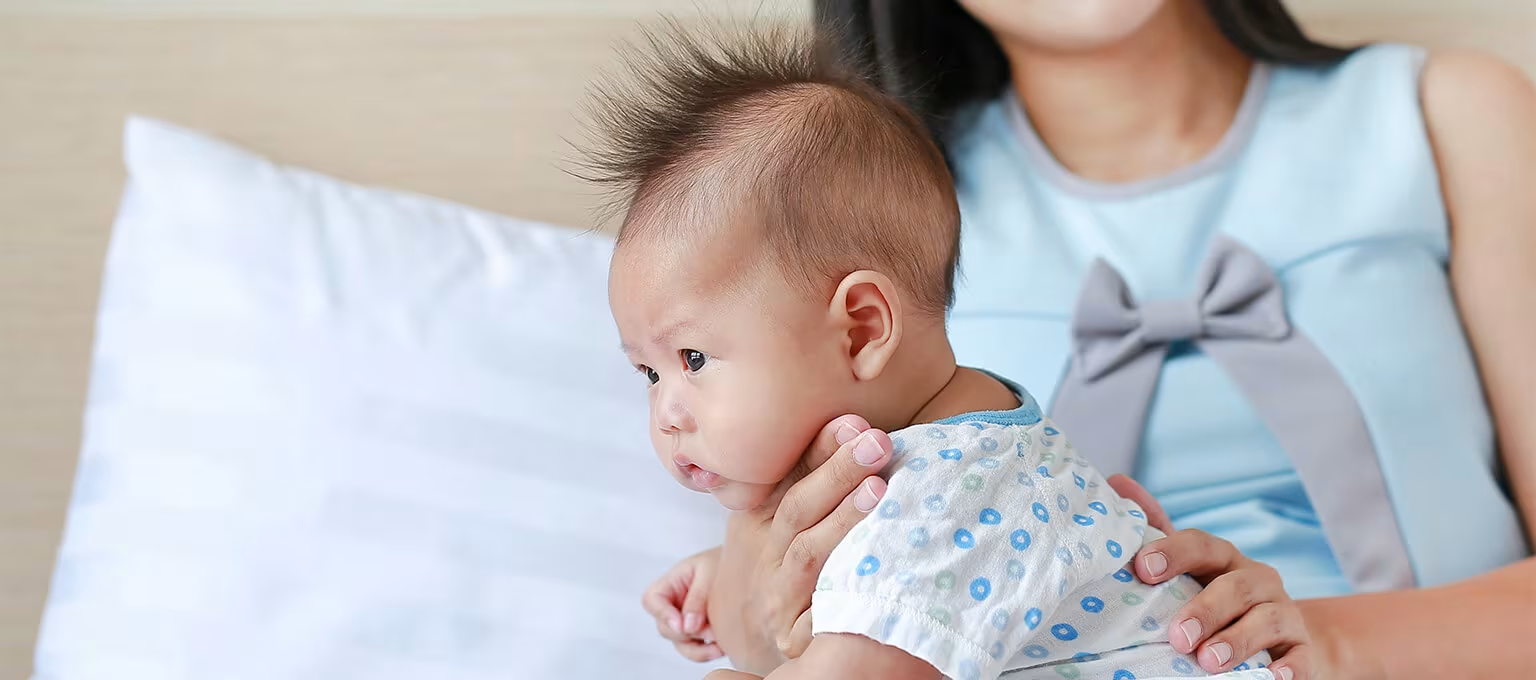
To help stop your baby’s hiccups during feeding, try positioning them in a more upright position. This may help them swallow less air while feeding. You could use a pillow to support and prop them up. Remember to never use a pillow in your baby’s crib or bassinet.

What is the right diaper size for your baby?
Not sure if your baby’s diaper fits quite right? From leaks to comfort, finding the right size makes all the difference! Take our quick quiz to discover the best diaper size for your little one and say goodbye to leaks. Let’s find that perfect fit!
Instant Results
Enjoyment Guaranteed
Personal Insights
How to Help Prevent Baby and Newborn Hiccups
If your baby tends to get hiccups at feeding times, make sure they are calm and not overly hungry when you feed them. This typically decreases the chances of getting hiccups during feeds.
You might also consider burping your baby more often, such as after every 2 to 3 ounces of formula or before switching sides while nursing.
Your baby’s healthcare provider can also provide guidance and reassurance about what to do to help prevent hiccups some of the time. If you have a well-baby checkup coming up soon, you could even ask about it then.

When to Contact Your Healthcare Provider
Hiccups in babies are generally normal and nothing to be concerned about. They usually go away on their own; however, if your baby’s hiccups last several hours without going away, or are accompanied by coughing and spitting up, contact your healthcare provider for more advice. If your baby stops breathing for more than 20 seconds or turns blue, seek immediate medical attention.
FAQS AT A GLANCE
If your baby gets hiccups around feeding times, try changing their feeding position and make sure they're calm. The hiccups will usually go away on their own. If they don’t, try feeding your baby a little, as this might help resolve the hiccups.
The Bottom Line
When your little one gets hiccups, remember that it’s usually nothing to worry about. Try to slow down their feeding and help them feel calm and relaxed. Maybe you can stop for a little tummy time.
While we’re on the topic of babies, turn your little one’s diapers into rewards and savings by downloading the Pampers Rewards app today.
- American Academy of Pediatrics. Caring for Your Baby and Young Child: Birth to Age 5, 6th ed. (New York: Bantam Books, 2009).
- Cleveland Clinic. “Here’s What to Do When Your Baby Has the Hiccups.”
- Cleveland Clinic. “Hiccups.”
- Kid’s Health. “What Causes Hiccups?”
- Mayo Clinic. “Hiccups.”
- UCSF Benioff Children’s Hospital. “Your Baby at 1 Week.”
Chicken Pox in Babies and Toddlers, and During Pregnancy
By Terri L. Major-Kincade
Chicken pox is common for babies and toddlers—and even for you during your pregnancy. Read on to learn about symptoms, treatment, and when to visit the doctor.
Read more
Helping Your Baby with Constipation
By Christopher B. Peltier
Discover remedies for relieving your baby's constipation, signs to watch for, and tips on when to consult a healthcare provider.
Read more
Strep Throat in Babies and Toddlers: Signs and Treatment
Strep throat in toddlers and babies is rare and not usually serious for children under 3. Learn more about strep throat, its symptoms, and possible treatment.
Read more
Baby Diarrhea: Causes, Symptoms, and Treatment
By Christopher B. Peltier
Find out what to do if your baby or toddler has diarrhea, signs to look out for, and the possible causes. Plus, learn how to prevent it from happening.
Read more
FAQ: What Is Fifth Disease?
By Christopher B. Peltier
Fifth disease is a type of mild viral infection that can affect some young children. Learn more about its symptoms and treatment here.
Read more
Coughs in Babies and Toddlers: Causes, Symptoms, and Treatment
By Terri L. Major-Kincade
Discover what types of coughs there are, and what they may mean for your baby or older child. Learn remedies and when to see your child’s healthcare provider.
Read more
What to Do if Your Baby Has Reflux or GERD
Occasional acid reflux can be a common condition in your infant’s first year, but if it happens too frequently, it may be a condition called GERD. Learn about the symptoms of reflux and how it can be treated.
Read more
Baby Arching Back: Why Do Babies Arch Their Backs?
By Terri L. Major-Kincade
Why is your baby arching their back? There are many reasons why babies arch their backs! Learn when it’s normal and when to contact your healthcare provider.
Read more
Whooping Cough in Babies
Whooping cough, also known as pertussis, is a bacterial infection that may affect children and adults. Read more about the symptoms and treatment of whooping cough in babies.
Read more
Pinkeye (Conjunctivitis) in Babies: Causes and Treatment
By Christopher B. Peltier
Pinkeye in babies and newborns is usually caused by an infection or allergy. Find out what exactly pinkeye is, and how you can try to prevent and treat it.
Read moreChicken Pox in Babies and Toddlers, and During Pregnancy
By Terri L. Major-Kincade
Chicken pox is common for babies and toddlers—and even for you during your pregnancy. Read on to learn about symptoms, treatment, and when to visit the doctor.
Read moreHelping Your Baby with Constipation
By Christopher B. Peltier
Discover remedies for relieving your baby's constipation, signs to watch for, and tips on when to consult a healthcare provider.
Read moreStrep Throat in Babies and Toddlers: Signs and Treatment
Strep throat in toddlers and babies is rare and not usually serious for children under 3. Learn more about strep throat, its symptoms, and possible treatment.
Read moreBaby Diarrhea: Causes, Symptoms, and Treatment
By Christopher B. Peltier
Find out what to do if your baby or toddler has diarrhea, signs to look out for, and the possible causes. Plus, learn how to prevent it from happening.
Read moreFAQ: What Is Fifth Disease?
By Christopher B. Peltier
Fifth disease is a type of mild viral infection that can affect some young children. Learn more about its symptoms and treatment here.
Read moreCoughs in Babies and Toddlers: Causes, Symptoms, and Treatment
By Terri L. Major-Kincade
Discover what types of coughs there are, and what they may mean for your baby or older child. Learn remedies and when to see your child’s healthcare provider.
Read moreWhat to Do if Your Baby Has Reflux or GERD
Occasional acid reflux can be a common condition in your infant’s first year, but if it happens too frequently, it may be a condition called GERD. Learn about the symptoms of reflux and how it can be treated.
Read moreBaby Arching Back: Why Do Babies Arch Their Backs?
By Terri L. Major-Kincade
Why is your baby arching their back? There are many reasons why babies arch their backs! Learn when it’s normal and when to contact your healthcare provider.
Read moreJoin a World of Support
through Pregnancy and Parenthood.
TRACK WITH TOOLS
LEARN WITH EXPERTS
GET REWARDED



Where You Already Belong