
Baby Ingrown Toenails



While giving your baby a bath or playing "This Little Piggy" with their adorable toes, you might notice something that looks like a baby ingrown toenail. Is it really an ingrown toenail? What should you do about it? And why did it happen in the first place? We've got the answers to these common questions right here.
What Is an Ingrown Toenail?
An ingrown toenail happens when the corners of the nail grow into the surrounding skin. It's more likely to occur with the big toe than the other toes.
Can Babies Get Ingrown Toenails?
Yes, babies can develop ingrown toenails, but sometimes the nail might just appear to be ingrown without actually being so. This is because baby nails are soft and pliable and may curve in at the edges. Unless the toenail is red and swollen, it might not be ingrown. If you're unsure, your little one's healthcare provider can take a look and let you know.
What Are the Signs and Symptoms of an Ingrown Toenail?
Here are some signs that your baby may have an ingrown toenail:
What Are the Causes of an Ingrown Toenail?
Ingrown toenails can develop when:
How Do You Treat Your Baby's Ingrown Toenail?
If the skin around your baby's toenail is red and swollen, indicating a possible baby ingrown toenail, but there's no oozing pus and your little one doesn't have a fever, you can try this home remedy:
How Can You Prevent Your Baby from Having Ingrown Toenails?
Here's how you can help prevent your baby from getting an ingrown toenail in the future:
What Can Happen If You Leave an Ingrown Toenail Untreated?
Besides being sore and uncomfortable for your little one, an ingrown toenail left untreated can lead to an infection. Infections can be serious, especially if your baby has other underlying health conditions.
When Should You See Your Baby’s Healthcare Provider?
You should see your baby's healthcare provider if the baby ingrown toenail gets infected. If the toenail is red, swollen, tender to touch, and seems to be draining pus, it's most likely infected.
Your baby's healthcare provider may remove the ingrown part of the nail so it can heal properly and may prescribe an antibiotic to treat the infection.
If your baby has a fever, the redness spreads beyond the toe, or their symptoms aren't getting better after a week of home care, get in touch with your pediatrician right away.
The Bottom Line
Noticing an ingrown toenail on your little one can be concerning, but it’s usually treatable at home or with help from a healthcare provider. Early treatment, like soaking the nail and gently lifting it, can prevent infection. If at-home care isn’t enough, a quick visit to your baby’s provider can resolve it in no time. While you focus on their care, the Pampers Rewards App can help you save on baby essentials with exclusive discounts and digital offers!
- American Academy of Pediatrics. Caring for Your Baby and Young Child: Birth to Age 5, 6th ed. (New York: Bantam Books, 2014).
- Healthy Children. “Toenail–Ingrown.”
- Healthy Children. “Nail Care: Fingers and Toes.”
- Health University of Utah. “What to Do About Your Child’s Ingrown Toenail.”
- Medline Plus. “Ingrown Toenail.”
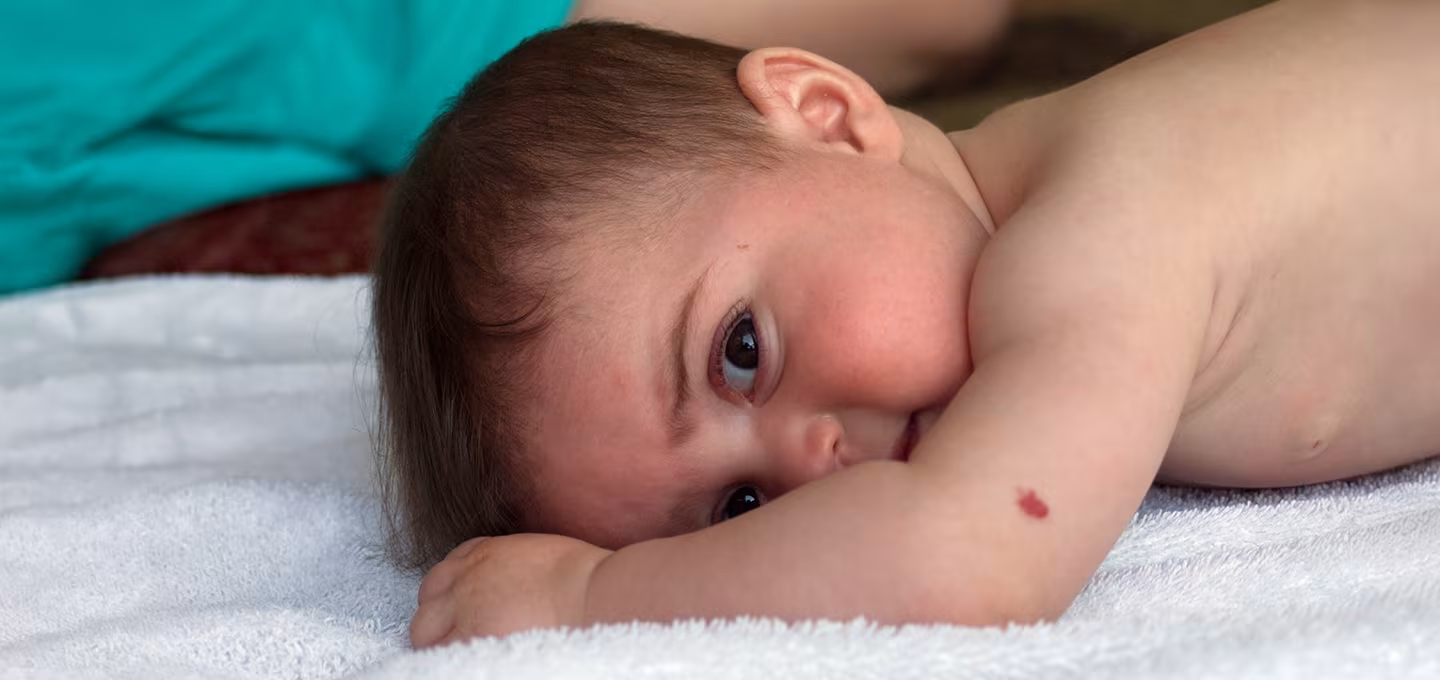
What Is a Birthmark, and What Types Are There?
By Terri L. Major-Kincade
Your baby might have birthmarks, such as hemangiomas or Mongolian spots. Find out what can cause birthmarks and which types need treatment.
Read more
Ringworm in Babies and Toddlers
By Christopher B. Peltier
Ringworm is a fungal infection that shows up as ring-shaped rashes on your child’s skin. Discover how babies get ringworm and what treatment can look like.
Read more
Baby Skin Care: Hygiene, Moisturizing, & Protection
By Christopher B. Peltier
Get expert baby skin care tips to keep your newborn’s skin soft, healthy, and irritation-free. Learn how to cleanse, moisturize, and protect delicate skin.
Read more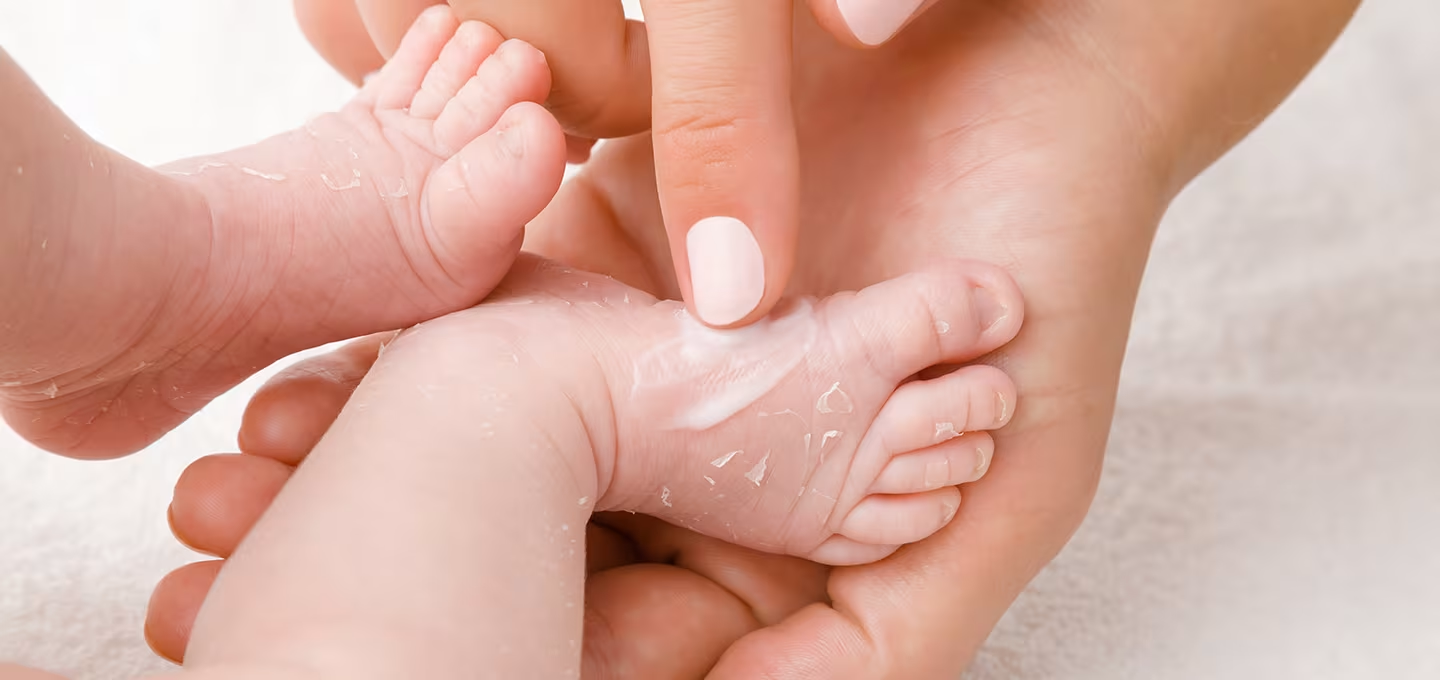
Dry, Peeling Skin in Newborns and Older Babies
By Lauren Heimall
Peeling skin is quite common in newborns and older babies. Find out what causes skin peeling and how to prevent it.
Read moreWhat Is a Birthmark, and What Types Are There?
By Terri L. Major-Kincade
Your baby might have birthmarks, such as hemangiomas or Mongolian spots. Find out what can cause birthmarks and which types need treatment.
Read moreRingworm in Babies and Toddlers
By Christopher B. Peltier
Ringworm is a fungal infection that shows up as ring-shaped rashes on your child’s skin. Discover how babies get ringworm and what treatment can look like.
Read moreBaby Skin Care: Hygiene, Moisturizing, & Protection
By Christopher B. Peltier
Get expert baby skin care tips to keep your newborn’s skin soft, healthy, and irritation-free. Learn how to cleanse, moisturize, and protect delicate skin.
Read moreDry, Peeling Skin in Newborns and Older Babies
By Lauren Heimall
Peeling skin is quite common in newborns and older babies. Find out what causes skin peeling and how to prevent it.
Read moreWhat Is a Birthmark, and What Types Are There?
By Terri L. Major-Kincade
Your baby might have birthmarks, such as hemangiomas or Mongolian spots. Find out what can cause birthmarks and which types need treatment.
Read moreRingworm in Babies and Toddlers
By Christopher B. Peltier
Ringworm is a fungal infection that shows up as ring-shaped rashes on your child’s skin. Discover how babies get ringworm and what treatment can look like.
Read moreBaby Skin Care: Hygiene, Moisturizing, & Protection
By Christopher B. Peltier
Get expert baby skin care tips to keep your newborn’s skin soft, healthy, and irritation-free. Learn how to cleanse, moisturize, and protect delicate skin.
Read moreDry, Peeling Skin in Newborns and Older Babies
By Lauren Heimall
Peeling skin is quite common in newborns and older babies. Find out what causes skin peeling and how to prevent it.
Read moreJoin a World of Support
through Pregnancy and Parenthood.
TRACK WITH TOOLS
LEARN WITH EXPERTS
GET REWARDED



Where You Already Belong