Cradle Cap in Babies



Understanding Cradle Cap: Causes, Symptoms, and Care
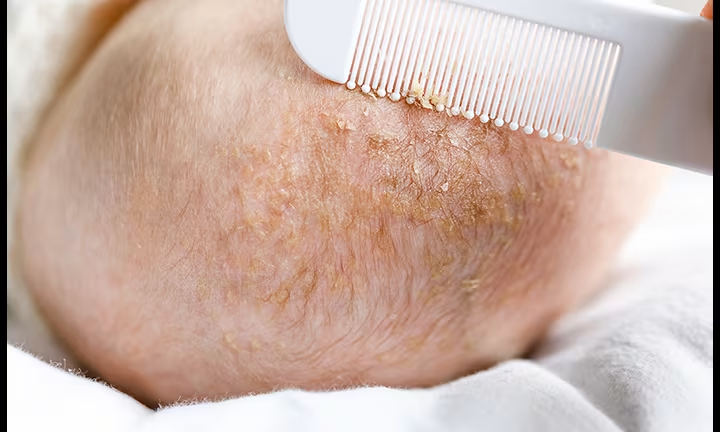
Cradle cap, also known as infantile seborrheic dermatitis, is a common and harmless skin condition affecting newborns and infants. It appears as scaly, crusty, or greasy patches on the scalp, often yellow or white in color. While it may look concerning, cradle cap is not painful, itchy, or contagious, and it usually resolves on its own within a few weeks or months.
Here are the key things to know about cradle cap:
Most cases can be managed at home with gentle care. In this article, we’ll explore simple ways to help manage cradle cap, when to consult your healthcare provider, and how to keep your baby comfortable.
What Is Cradle Cap?
Cradle cap is what seborrheic dermatitis is called when it appears on your baby’s scalp.
The cradle cap skin condition can show up elsewhere, too, such as on your baby’s face, ears, eyelids, eyebrows, and nose, or on the body, on the neck, armpit, belly button, legs, and groin.
When the symptoms of cradle cap appear anywhere other than the scalp, your provider will refer to it as seborrheic dermatitis.
So, do all babies get cradle cap? Cradle cap is very common in babies, with an estimated 70% of 3-month-old babies having the skin condition.
The good news is that cradle cap isn’t contagious, and it generally isn’t painful or itchy for your little one. Plus, it won’t leave any scars.

Baby Growth Chart Calculator
Keep an eye on your baby’s average growth by tracking height, weight, and head circumference with our simple tool.
This is a mandatory field.
This is a mandatory field.
This is a mandatory field.
This is a mandatory field.
*Input details of your baby’s last measurements. **Source: World Health Organization
When Does Cradle Cap Start?
Your baby is most likely to develop cradle cap between 2 weeks old and 12 months old. As we mentioned above, cradle cap is very common in babies and is unlikely to cause any discomfort.
When Does Cradle Cap Go Away?
How long does cradle cap last? Cradle cap is likely to clear up on its own within weeks or months or by the time your little one is about 1 year old. Although cradle cap generally doesn’t require any treatment to clear up, we have listed some options in our Cradle Cap Treatment section that you can do at home to help manage your little one’s cradle cap.
In some cases, cradle cap can return during your child’s first year, even after treatment. This skin condition can even return as dandruff when your child hits puberty.
Does Cradle Cap Come Back?
In some cases, cradle cap can return during your child’s first year, even after treatment. This skin condition can even return as dandruff when your child hits puberty.

What Causes Cradle Cap?
It’s not known exactly why babies get cradle cap, but experts say it’s not caused by poor hygiene or an allergy to something you’re using.
One factor may be that some of your pregnancy hormones have passed on to your baby before birth, causing the production of too much oil (sebum) in the oil glands and hair follicles, trapping dead skin cells. This is likely why the skin condition usually occurs wherever there are the most oil-producing sebaceous glands.
Another contributor may be Malassezia, a yeast (fungus) that grows in the sebum along with bacteria.
Cradle Cap Symptoms
The symptoms of cradle cap may include the following:
What Does Cradle Cap Look Like?
Cradle cap typically looks like skin that has red, moist patches. On darker skin tones, the rash may appear lighter or darker than the baby’s usual skin color. It commonly appears in skin folds near the neck or behind the ears. It can sometimes look yellowish with greasy patches, or it might appear scaly or flaky.
Cradle cap does often get confused with other conditions that look like seborrheic dermatitis, including eczema, but unlike eczema, cradle cap is mild and usually isn’t itchy or uncomfortable.
If seborrheic dermatitis appears on your little one’s groin, it’s easy to confuse with diaper rash but these conditions are not the same.
Cradle Cap Vs Dry Skin
Although dry skin and cradle cap can easily be confused on an infant, cradle cap is often characterized by patches or scales on the scalp that feel waxy or greasy rather than dry. If you’re unsure whether your baby has cradle cap or some other type of rash, you can consult their healthcare provider.
Cradle Cap Treatment
Cradle cap doesn’t usually require any specialized medical treatment. Healthcare providers usually recommend treating your baby’s cradle cap yourself at home using the tips we listed below.
In some cases, your healthcare provider might recommend using a stronger medicated shampoo, hydrocortisone cream, or an anti-fungal cream if the at-home tips aren’t working. You should always check with your healthcare provider before trying any medicated treatments for cradle cap, as they can be irritating to your baby’s skin.
Cradle Cap Self-Care
The scales that result from cradle cap aren’t easy to remove, but here’s how to help get rid of cradle cap with some simple home remedies that are recommended by healthcare providers:
Although you might have heard of a home remedy or two for cradle cap, such as coconut oil, it’s best to ask your provider before trying any of these.
How to Prevent Cradle Cap
There’s no guaranteed way to prevent cradle cap, but following the at-home tips mentioned above, like regularly washing your baby's hair with a gentle baby shampoo, and seeking advice from your healthcare provider, can help minimize the flakes and stop them from recurring.
When to See Your Healthcare Provider
Consult your provider if shampooing doesn’t help, if the cradle cap seems severe, or if it’s also present on your baby’s face or body. Your healthcare provider may prescribe a medicated shampoo, cream, or an anti-fungal treatment if your little one’s cradle cap doesn’t go away on its own.
FAQS AT A GLANCE
Shampooing and frequent combing can help loosen the scale buildup on the scalp and help improve your baby’s cradle cap over time.
The Bottom Line
Cradle cap can look a little concerning at first, but it will clear up in time. Following the tips above, as well as some general baby skin care tips, can help ensure your baby’s skin is protected and healthy.
To earn Pampers Cash for your purchases, download the Pampers Rewards app today. Get $10 savings after 10 diaper scans, then redeem at one of your favorite retailers.
- American Academy of Pediatrics. Caring for Your Baby and Young Child: Birth to Age 5, 7th ed. (New York: Bantam Books, 2019).
- American College of Obstetricians and Gynecologists. Your Pregnancy and Childbirth: Month to Month, 6th ed. (Washington, DC: American College of Obstetricians and Gynecologists, 2015).
- Cleveland Clinic. “Seborrheic Dermatitis.”
- Healthy Children. “Bathing Skin Care.”
- Healthy Children. “What Is Cradle Cap?”
- Kids health. “Cradle Cap (Seborrheic Dermatitis) in Infants.”
- Mayo Clinic. “Cradle Cap.”

Gassy Baby: How to Relieve Your Baby’s Gas
By Christopher B. Peltier
What are the signs that you have a gassy baby on your hands, and how can you help? Learn all about the causes, symptoms, and ways to relieve gas in babies.
Read more
What Is Vernix Caseosa? Benefits for Your Newborn’s Skin
By Christopher B. Peltier
Meet vernix caseosa—your baby’s natural skin protector. Learn how this creamy layer shields, soothes, and supports your newborn after birth.
Read more
Baby Congestion: Causes, Remedies, & When to See a Healthcare Provider
By Christopher B. Peltier
Stuffy nose or chesty cough? Discover what baby congestion means, how to ease it at home, and when it’s time to call your baby’s healthcare provider.
Read more
Jaundice in Newborns: What It Means & What to Do Next
By Christopher B. Peltier
Worried about your baby’s yellow skin or eyes? Find out what jaundice means, how to spot it, when it’s serious, and how your baby’s provider can help.
Read more
Benefits of Vitamin D for Babies
By Terri L. Major-Kincade
What are the benefits of vitamin D for babies? When should you start giving vitamin D supplements, and for how long are they needed? We've got all the details!
Read more
Newborn Sneezing Explained: What’s Normal, What’s Not?
Newborn sneezing is usually normal, but when is it a concern? Learn common causes, when to call your provider, and how to soothe a sneezing baby.
Read more
FAQ: What Is Torticollis in Infants?
By Christopher B. Peltier
Learn about the signs and symptoms of torticollis, what the causes may be, and the treatment your baby's healthcare provider may recommend.
Read more
What Causes an Outie Belly Button in Babies?
Discovering outie belly buttons in babies: causes, variations, and potential changes. Understand the factors behind innie vs. outie belly buttons.
Read more
Colic in Babies: Symptoms and Remedies
By Christopher B. Peltier
Colic is when a baby cries persistently for no apparent reason. Learn more about what colic is, the symptoms, and what you can do to try to stop colicky crying.
Read moreGassy Baby: How to Relieve Your Baby’s Gas
By Christopher B. Peltier
What are the signs that you have a gassy baby on your hands, and how can you help? Learn all about the causes, symptoms, and ways to relieve gas in babies.
Read moreWhat Is Vernix Caseosa? Benefits for Your Newborn’s Skin
By Christopher B. Peltier
Meet vernix caseosa—your baby’s natural skin protector. Learn how this creamy layer shields, soothes, and supports your newborn after birth.
Read moreBaby Congestion: Causes, Remedies, & When to See a Healthcare Provider
By Christopher B. Peltier
Stuffy nose or chesty cough? Discover what baby congestion means, how to ease it at home, and when it’s time to call your baby’s healthcare provider.
Read moreJaundice in Newborns: What It Means & What to Do Next
By Christopher B. Peltier
Worried about your baby’s yellow skin or eyes? Find out what jaundice means, how to spot it, when it’s serious, and how your baby’s provider can help.
Read moreBenefits of Vitamin D for Babies
By Terri L. Major-Kincade
What are the benefits of vitamin D for babies? When should you start giving vitamin D supplements, and for how long are they needed? We've got all the details!
Read moreNewborn Sneezing Explained: What’s Normal, What’s Not?
Newborn sneezing is usually normal, but when is it a concern? Learn common causes, when to call your provider, and how to soothe a sneezing baby.
Read moreFAQ: What Is Torticollis in Infants?
By Christopher B. Peltier
Learn about the signs and symptoms of torticollis, what the causes may be, and the treatment your baby's healthcare provider may recommend.
Read moreWhat Causes an Outie Belly Button in Babies?
Discovering outie belly buttons in babies: causes, variations, and potential changes. Understand the factors behind innie vs. outie belly buttons.
Read moreJoin a World of Support
through Pregnancy and Parenthood.
TRACK WITH TOOLS
LEARN WITH EXPERTS
GET REWARDED



Where You Already Belong