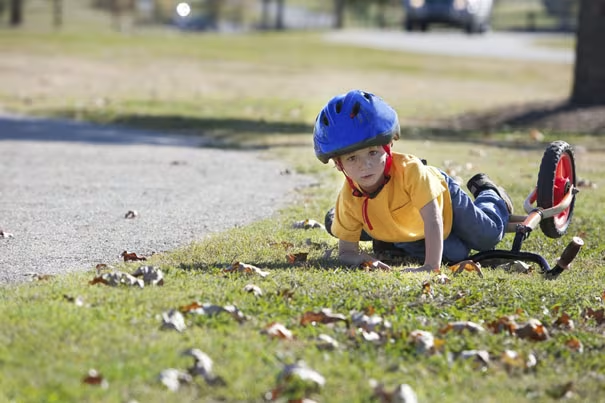
Cuts and Scrapes: How to Manage Skin Injuries


No matter how much we try to watch over our children and ensure their safety, it is inevitable that the average toddler, preschooler, and school-aged kid will get a cut, scratch, or abrasion from time to time. It is vital that parents and other caregivers understand when to seek medical attention and how to care for minor skin injuries.
Injuries that require medical attention include:
Caring for a Wound
Start by using pressure. Stop the bleeding by applying firm pressure with clean gauze or cloth over the area for 5 to 10 minutes. If bleeding continues even after applying pressure, you should contact your child's doctor.
Cleanse the wound. Once bleeding has been controlled, place the area under cool or lukewarm running water for a few minutes to flush away any small debris, and gently wash the wound with soap and water. You should avoid overly aggressive scrubbing (which is painful and may do more damage than good) and also avoid using iodine, alcohol, or other antiseptic solutions on open wounds because they can be uncomfortable for your child. You can control the pain by giving acetaminophen or ibuprofen by mouth, as needed. Aspirin should always be avoided because, among other reasons, it may encourage bleeding.
Apply antibiotic ointment. After the area has been cleansed, apply an antibiotic ointment followed by a non-stick bandage or dry gauze. Change the bandage daily or whenever it becomes soiled or wet. Once the area appears to be healing well, the bandage can be removed and the area left open to heal. Should your child develop a fever or the wound site show redness or oozing, contact your healthcare provider. These signs may indicate an infection, which may require a prescription antibiotic.
In the E.R.
Deep lacerations, which are linear tears or cuts of the skin, need to be treated by a medical professional. Most often this is done in the emergency room or urgent-care clinic.
What can you expect if your child needs such medical attention? For starters, the area will usually be anesthetized with some form of topical or injected medicine so there is no pain. The wound will then be cleansed, usually with cool water squirted into the area with a syringe, to remove any small debris.
The doctor will then decide on the best method of closing the wound. One method is to use stitches. These might be absorbable sutures, which do not have to be removed, or non-absorbable sutures, which do need to be removed, generally 5 to 12 days later. A newer treatment, which can be used in wounds that are not too large or deep in locations without significant skin tension, involves the use of a tissue adhesive. This substance is applied to the cleansed wound edges and seals them like a super-glue for the skin. The advantages are that it is fast, there are no stitches to remove, and there are no marks left on the skin. Unfortunately, tissue adhesive cannot be used for all wounds. Steri-strips, which are narrow adhesive strips placed over a cut to keep it closed, are another possible choice for smaller cuts.
Healing and Scar Management
Here are some guidelines for promoting healing and minimizing the appearance of scars.

Read more about Toddler

Diabetes in Toddlers: Causes, Signs, and Treatment
Learn about the early signs of diabetes in toddlers, and how diabetes can be diagnosed and treated.
Read more
What's Causing Your Toddler's Stomach Pain?
There are many causes of stomach pain in kids. Learn about the common culprits, what symptoms to look out for, and when to contact your healthcare provider.
Read more
Toddler Bath Time: How to Help Your Child Love Baths
Learn everything you need to know about toddler bath time, from the right temperature to tips on how to make it fun and easy for you and your child.
Read more
All About Warts on Kids
Warts are more common in children than adults. Discover the different types of warts, and where exactly they can appear on your child’s body.
Read moreDiabetes in Toddlers: Causes, Signs, and Treatment
Learn about the early signs of diabetes in toddlers, and how diabetes can be diagnosed and treated.
Read moreWhat's Causing Your Toddler's Stomach Pain?
There are many causes of stomach pain in kids. Learn about the common culprits, what symptoms to look out for, and when to contact your healthcare provider.
Read moreToddler Bath Time: How to Help Your Child Love Baths
Learn everything you need to know about toddler bath time, from the right temperature to tips on how to make it fun and easy for you and your child.
Read moreAll About Warts on Kids
Warts are more common in children than adults. Discover the different types of warts, and where exactly they can appear on your child’s body.
Read moreDiabetes in Toddlers: Causes, Signs, and Treatment
Learn about the early signs of diabetes in toddlers, and how diabetes can be diagnosed and treated.
Read moreWhat's Causing Your Toddler's Stomach Pain?
There are many causes of stomach pain in kids. Learn about the common culprits, what symptoms to look out for, and when to contact your healthcare provider.
Read moreToddler Bath Time: How to Help Your Child Love Baths
Learn everything you need to know about toddler bath time, from the right temperature to tips on how to make it fun and easy for you and your child.
Read moreAll About Warts on Kids
Warts are more common in children than adults. Discover the different types of warts, and where exactly they can appear on your child’s body.
Read moreJoin a World of Support
through Pregnancy and Parenthood.
TRACK WITH TOOLS
LEARN WITH EXPERTS
GET REWARDED




Where You Already Belong