Skip to main contentSkip to search
Baby safety around the house

Baby Safety Around the House

2 min readUpdated January 29, 2025

You're probably doing lots of baby proofing, and that's great. Here are some other important baby safety tips to help keep your little one safe at home.

Never Leave Your Baby Alone

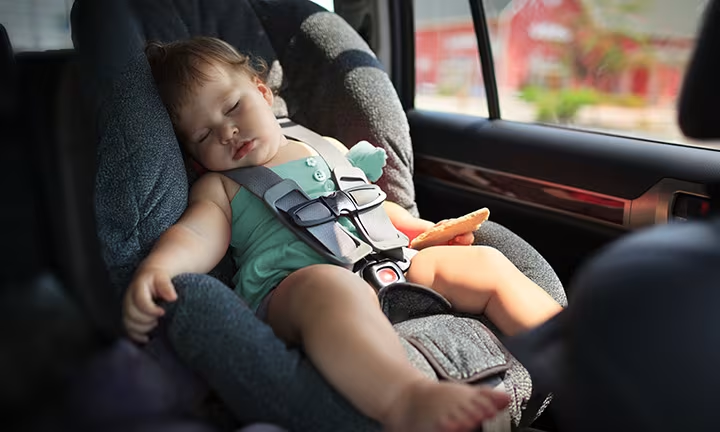
Even newborns can sometimes turn over or flip around, so never leave your baby alone in the tub, on a raised surface like a changing table, or on a big bed. One of the most important newborn safety tips is to ensure your baby is never left unattended. And never leave a baby alone in a car, even for a minute. Emergencies can happen in an instant, and your little one needs an adult with them at all times.

Use a Baby Monitor

Even when your baby is safely in another room, you'll appreciate the extra peace of mind an audio or visual baby monitor can give. It's one of the many baby safety tips that can help you keep an eye on your little one. Of course, a baby monitor can never replace your care, but it can let you see or hear how your baby is doing in the next room.

Never Shake a Baby

It's vital to grasp the significance of infant safety . Never shake a baby, even in play, as it can lead to brain bleeding and nerve or muscle damage. Shaken Baby Syndrome can lead to blindness, severe brain damage, or even be deadly. Taking care of a baby is a tough job, and in the early days, it's often hard to figure out why your baby is crying. Feeling angry and frustrated sometimes is normal, but no matter how frustrated you get, never shake or roughly handle your baby. If you feel yourself losing control, seek help from your partner, a friend or relative, or a professional. Never shake a baby as part of a game, either. It's just too dangerous.

Make Sure Your Baby's Gear Is Safe

There are lots of new safety standards for baby and child equipment. Before you purchase anything or accept used baby gear, make sure everything meets standards and hasn't been recalled. Following these baby safety tips can help ensure your baby's gear is secure and compliant with safety standards.

  • Before you buy any baby gear, look for safety information. Everything you buy should pass Consumer Product Safety Commission (CPSC) standards. Call 1-800-638-2772 or check the website to be sure.

  • Check the CPSC website for an updated list of product recalls.

  • Check all of your baby's equipment regularly for loose parts, sharp or rough edges, and peeling paint.

Install Smoke and Carbon Monoxide Detectors, and Check for Radon

Installing these detectors is essential to keep your baby safe at home.

  • Call the Radon Hotline at 1–800–767–7236 for information on reducing the risk of radon exposure in your home.

Prevent Choking

Preventing choking is a crucial aspect of infant safety.

  • Avoid foods that pose the greatest choking hazard. This includes hot dogs, whole grapes, peanuts, hard candy, and raw carrots.

  • Always feed your baby sitting up, in your lap, or in an infant chair. Make sure your toddler sits at the table and doesn't walk or run with food in their mouth.

  • Make sure your child's toys are safe. Soft toys should be washable, stuffed with fire-safe material, and have no loose pieces such as eyes, buttons, or latches. If toys break down into pieces, no piece should be smaller than 1. 75 inches (they should be too big to fit through a paper towel tube). Pieces smaller than that pose a choking hazard. Don't use any toys that have strings, fasteners, buttons, or chipping paint. Avoid latex balloons and small balls, and check all of your baby's toys regularly for rough edges, loose parts, or peeling paint.

  • Only dress your baby in safe clothing. Check clothes inside and out for loose strings or ribbons or anything that could wrap around your baby's neck, small fingers, or toes. Avoid drawstrings on clothes that can get caught in doors, cribs, or toy equipment like bicycle wheels. Remember, children can always pull off buttons that you think are securely attached.

Additional Safety Guidelines

Following these additional safety guidelines can help keep your infant safe.

  • Don't put pacifiers or necklaces around your young infant's neck. A cord or necklace can too easily get caught and strangle them.

  • Never refer to medicine as candy.

  • Put all visitors' handbags and luggage out of your child's reach.

  • Make sure carrying devices like packs and strollers fit your child's age and stage of development.


Related Articles

See more articles
See more articles
Slide 1 of 7
how long are car seats good for
Safety8 min read

Car Seat Expiration: How Long Are Car Seats Good For?

Since car seats expire, how long are they good for? Learn when and why car seats expire, how to find the expiration date, and what to do after expiration.

Top Car Safety Tips for Babies and Toddlers
Safety2 min read

Top Car Safety Tips for Babies and Toddlers

Keep your baby safe on the road with top car safety tips. Learn about proper car seats, essential precautions, and smart practices for every trip.

How to Properly Hold a Baby
Safety10 min read

How to Hold a Baby

It can take a little practice to get the hang of holding a newborn baby. Learn how to safely hold your newborn with these tips and positions.

baby nursery room
Safety6 min read

All About When to Move Your Baby to Their Own Room

Discover everything you need to know about transitioning your baby to a crib in their own room.

Baby in car seat
Safety4 min read

Keeping Your Baby Safe in the Car: Preventing Vehicular Heatstroke

In this article we cover what vehicular heatstroke is, and its causes. Plus we share our car safety tips!

Will the smell of paint harm my children?
Safety1 min read

Will the smell of paint harm my children?

Will the smell of paint harm my children? The paint smell is not really dangerous for brief exposures. Find out more.

Baby first-aid kit
Safety6 min read

What to Pack in Your Baby’s First-Aid Kit

You might be surprised at how simple it is to put together a baby first aid kit for your little one. Read on to find out what to include.

how long are car seats good for
Safety8 min read

Car Seat Expiration: How Long Are Car Seats Good For?

Since car seats expire, how long are they good for? Learn when and why car seats expire, how to find the expiration date, and what to do after expiration.

Top Car Safety Tips for Babies and Toddlers
Safety2 min read

Top Car Safety Tips for Babies and Toddlers

Keep your baby safe on the road with top car safety tips. Learn about proper car seats, essential precautions, and smart practices for every trip.

How to Properly Hold a Baby
Safety10 min read

How to Hold a Baby

It can take a little practice to get the hang of holding a newborn baby. Learn how to safely hold your newborn with these tips and positions.

baby nursery room
Safety6 min read

All About When to Move Your Baby to Their Own Room

Discover everything you need to know about transitioning your baby to a crib in their own room.

Baby in car seat
Safety4 min read

Keeping Your Baby Safe in the Car: Preventing Vehicular Heatstroke

In this article we cover what vehicular heatstroke is, and its causes. Plus we share our car safety tips!

Will the smell of paint harm my children?
Safety1 min read

Will the smell of paint harm my children?

Will the smell of paint harm my children? The paint smell is not really dangerous for brief exposures. Find out more.

Baby first-aid kit
Safety6 min read

What to Pack in Your Baby’s First-Aid Kit

You might be surprised at how simple it is to put together a baby first aid kit for your little one. Read on to find out what to include.

how long are car seats good for
Safety8 min read

Car Seat Expiration: How Long Are Car Seats Good For?

Since car seats expire, how long are they good for? Learn when and why car seats expire, how to find the expiration date, and what to do after expiration.