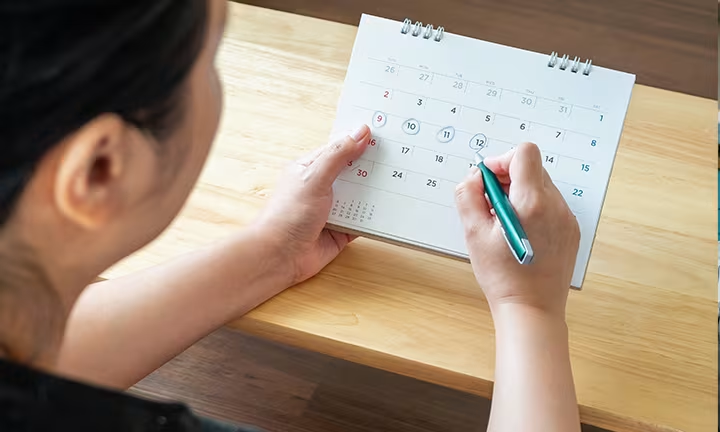
When Does Your Period Return After Birth? Postpartum Guide


Key Takeaways
Your first period after having a baby may feel unpredictable—timing, flow, and symptoms often change as your hormones adjust, and your body recovers from pregnancy and birth. Most people experience their first menstrual bleed within 6 to 8 weeks, while others won’t see a true period for several months, especially if breastfeeding. It’s also common to wonder what’s normal versus what needs a call to your healthcare provider.
What you’ll learn in this guide:
Understanding how long after birth you get your period and potential postpartum menstruation symptoms helps you track your body’s recovery and seek guidance if bleeding or pain seems unusually heavy or prolonged.
When Do You Get Your First Period After Birth?
The timing can vary widely, and feeding choices play a major role. If you aren’t breastfeeding, the first period after giving birth often returns around 6 to 8 weeks postpartum, which is the typical postpartum recovery window. So if you’re wondering how long after giving birth do you get your period, this timeframe is common—but not universal.
So, when do you get your period after birth while breastfeeding? Frequent nursing, especially from exclusive breastfeeding, can delay menstruation through a natural process called lactational amenorrhea. If you’re exclusively breastfeeding, you may not get your period for about 3 to 6 months or longer, and some don’t menstruate again until they begin weaning.
That’s why questions like “When does menstruation resume after childbirth?” don’t have one clear answer. Even the first period after a C-section usually follows the same hormone-driven pattern and depends more on feeding than on delivery type.
As your cycle returns, you may notice light spotting or irregular, non-ovulatory bleeding—sometimes before six months postpartum, especially if your baby starts going longer between feeds. Tracking changes can be helpful, and if bleeding feels unusually heavy or delayed, consult your healthcare provider for personalized guidance.
In Summary
Your period can return weeks or months after birth, and feeding makes a difference. Parents who aren’t breastfeeding often menstruate again around 6 to 8 weeks postpartum. Breastfeeding may delay your period due to lactational amenorrhea, a natural hormonal response to frequent nursing that temporarily pauses ovulation. If bleeding feels unusual or concerning, consult your healthcare provider.
What to Expect From Your First Menstrual Period After Childbirth
The first period after pregnancy—also called the first menses after childbirth—often feels different from what you remember before having a baby. Some parents notice a heavier flow during their first menstrual period after birth, while others experience a lighter, shorter bleed. Both can be normal as your body adjusts.
It’s also common to have irregular periods postpartum in the early weeks and months of menstruation. Your cycle may be unpredictable at first, with changes in timing, flow, or cramping. A typical menstrual period after childbirth lasts about three to seven days and involves roughly two to three tablespoons of blood. Bleeding that’s heavier or lasts longer may simply reflect hormonal shifts as your body recovers.
Over several cycles, most people find that their period after labor gradually returns to a pattern similar to what they experienced before pregnancy. If you’re using birth control after pregnancy, keep in mind that some hormonal options may lead to lighter or shorter periods and fewer cramps.
If you experience an abnormal period after birth, such as soaking a pad every hour or ongoing irregular bleeding that concerns you, consult your healthcare provider for personalized guidance.
| Parents also ask… |
|---|
Is spotting between periods normal after childbirth? Some light spotting between cycles is common in the first few months as your body adjusts hormonally. Persistent or heavy spotting should be discussed with a healthcare provider.
Is it normal to experience clots during the first postpartum period? Small clots can be normal during your first period after childbirth. Large clots or very heavy bleeding should be evaluated by a healthcare professional. |
How Long “Should” Your First Period Last After Giving Birth?
How long does your period last after birth? There’s no single answer. The first period after giving birth may last anywhere from a few days up to a full week, whether you had a vaginal birth or a cesarean section.
Just like before pregnancy, some people naturally have longer periods, while others have shorter ones. It may take a few cycles for your period to settle into a regular rhythm.
Expect a duration similar to your pre-pregnancy period over time. If your first period after your baby lasts longer than seven days, feels unusually heavy, or includes large clots, consult your healthcare provider for guidance.
Painful or Heavy Period After Birth
A heavy period after birth can happen, but experiences vary. Some parents—even those who had painful periods before pregnancy—notice that cramps feel milder during their first period after childbirth. Others may have a heavy or painful period after pregnancy, especially during the first few cycles.
This can happen because pregnancy stretches the uterus and widens the cervix, leaving more uterine lining to shed. That extra tissue can lead to heavier bleeding or stronger cramps during early menstrual periods after birth.
If you experience heavy periods post-pregnancy that feel unusually painful, last longer than expected, or interfere with daily life, talk with your healthcare provider. They can evaluate for treatable causes, such as fibroids or adenomyosis, and discuss appropriate treatment options if needed.
In Summary
Your first period after childbirth may look or feel different from before pregnancy. Irregular timing, heavier or lighter flow, and changes in cramping are common at first. For most, menstrual cycles gradually settle into a more familiar pattern over a few months. If bleeding feels unusually heavy, painful, or prolonged, consult your healthcare provider.
Lochia vs The First Period Postpartum
It’s important to distinguish between postpartum bleeding (lochia) and your first period after having a baby to better understand what’s going on in your body:
If bleeding spikes again after tapering off or you’re past six weeks and still experience heavy bleeding during your period after birth, consult your healthcare provider to confirm whether it’s lochia or the return of your menstrual cycle.
Supporting Your Menstrual Cycle Post-Pregnancy
Your menstrual cycle after pregnancy may take some time to find its rhythm again—and that’s completely normal. Hormonal shifts, recovery from birth, feeding patterns, sleep changes, and stress can all influence when and how regularly your period returns, as well as how it feels.
While there’s no quick fix for regulating your cycle, a few everyday habits may help support hormonal balance and reduce discomfort over time.
If your periods remain very painful, unusually heavy, or irregular for an extended time, consult your healthcare provider. They can rule out underlying causes and help you find a plan that fits your needs.
| Parents also ask… |
|---|
Can my mood or emotions change with my first period after birth? Yes, hormonal shifts during your first postpartum period can affect mood, causing irritability, tearfulness, or heightened emotions. This is normal and usually settles as hormones balance.
Can stress or lack of sleep change my first postpartum period? Yes, fatigue and stress can temporarily affect your cycle, making periods irregular or heavier. Prioritizing rest and support can help stabilize cycles over time. |
Can You Get Pregnant Before Your First Menstrual Period Postpartum?
Because ovulation can commence in the absence of menstruation, it’s common to wonder how soon after giving birth you can get pregnant. Pregnancy is possible before your first postnatal bleed. If you’re not exclusively breastfeeding, your hormones may rebound by six to eight weeks postpartum, allowing an egg to release even without a period.
To avoid an unexpected pregnancy, discuss birth control options with your healthcare provider early. Non-breastfeeding parents may consider contraception as soon as three weeks after delivery, while breastfeeding parents may wait until three months postpartum.
How Is Your Milk Supply Affected During Your Period?
It’s possible to have a period while breastfeeding, even though nursing often delays the return of menstruation. When your postpartum menstrual cycle does resume, you may notice temporary changes in how your body feels during feeds.
Some parents experience a short-term dip in milk supply during their period, along with increased nipple sensitivity or discomfort. This usually happens from mid-cycle through the start of bleeding and is linked to normal hormonal shifts—particularly changes in estrogen and progesterone. If you’re wondering, “Does milk supply drop during your period?” the good news is that any decrease is typically mild and temporary.
To help support your body during this time, some healthcare providers suggest calcium and magnesium supplementation. A daily supplement of about 500 to 1,000 milligrams, taken from the middle of your cycle through the first few days of your period, may help minimize supply changes and discomfort for some breastfeeding parents. Always consult your healthcare provider before starting any supplement, especially while breastfeeding.
If you notice ongoing supply concerns or feeding challenges, your healthcare provider or a lactation consultant can offer personalized support.
When to Contact Your Healthcare Provider
Contact your provider immediately if you experience:
an extremely heavy postpartum period, such as soaking through more than one pad an hour for several hours
passing blood clots larger than a plum
foul-smelling discharge.
These might be a sign of postpartum hemorrhage.
It’s natural to worry when you have no period after pregnancy; however, remember that it could take about six to eight weeks for your first menstrual period to return after giving birth, and even longer if you’re exclusively breastfeeding. If you’re not breastfeeding and your period hasn’t returned after three or more months, contact your provider for more advice.
FAQS AT A GLANCE
Your first period after a C-section may bring uterine cramps tugging at your scar, bright red to brown bleeding for three to seven days with clots, and PMS symptoms like bloating, breast tenderness, and mood changes. Contact your provider if the pain is severe.
The Bottom Line
Understanding your postpartum period helps you know when you may get your period after birth, recognize the difference between lochia and true menstrual bleeding, and notice any heavy flow or severe cramps that deserve medical attention. While most cycles settle back to your pre-pregnancy pattern within a few months, tracking changes—whether you’re exclusively nursing or not—lets you feel more in control of your body’s recovery.
Read our postpartum articles to find out more about what happens in the postpartum period and the healing process after childbirth.
For easy access to digital offers on Pampers products and more as you navigate postpartum life, download the Pampers Rewards App.
- American College of Obstetricians and Gynecologists, Your Pregnancy and Childbirth: Month to Month, 7th ed. (Washington, DC: American College of Obstetricians and Gynecologists, 2021).
- Cleveland Clinic. “Do Your Periods Change After Pregnancy?”
- Cleveland Clinic. “Irregular Periods.”
- Cleveland Clinic. “Lochia.”
- Cleveland Clinic. “Menstrual Cycle.”
- Cleveland Clinic. “Physical Changes After Delivery.”
- Cleveland Clinic. “Postpartum.”
- Cleveland Clinic. “Your Menstrual Cycle: What’s Normal, What’s Not
- La Leche League International. “Menstruation and Breastfeeding.”
- NCBI Bookshelf. “Physiology, Postpartum Changes.”
- NCBI Bookshelf. “Postnatal Care of the Mother and Newborn.”
- NCBI Bookshelf. “Postpartum Care of the New Mother.”
- Women’s Health. Your Menstrual Cycle and Your Health
Postpartum Weight Loss
By Maria Striemer
Many new parents want to lose those extra pounds after giving birth. Here’s how to lose weight in the postpartum period safely and effectively.
Read more
The Postpartum Period (Puerperium): How Long It Lasts, Symptoms, and Tips
The postpartum period consists of the weeks after you give birth. Learn about the postpartum period and read our tips to help ease the transition.
Read more
Postpartum Depression: Symptoms, Treatment, and Support
Explore postpartum depression symptoms, causes, and treatments, along with ways to support loved ones experiencing PPD.
Read more
FAQ: Lochia (Postpartum Bleeding)
Postpartum bleeding, or lochia, is a normal part of recovery after birth. Learn how long it lasts, what to expect, and when to consult your healthcare provider.
Read more
Postpartum Recovery Timeline: Recovering From Labor and Delivery
Explore your postpartum recovery week by week. Learn about healing, symptoms, emotional changes, and tips from birth to 2+ months.
Read more
Postpartum Workout: When and How to Start Safely
Ease back into fitness with a safe postpartum workout plan. Get expert tips, gentle exercise ideas, and recovery guidance after a vaginal or C-section birth.
Read more
Postpartum Hair Loss: Cause, Timeline, and Care Tips
By Maria Striemer
Learn why postpartum hair loss happens, when it starts, and how to manage it. Discover tips to promote hair regrowth after pregnancy.
Read more
Postpartum Belly: Week-by-Week Changes and Recovery Tips
By Charlotte Wool
Discover all about the postpartum belly after giving birth, including what it looks and feels like, plus tips and exercises for a healthy recovery.
Read morePostpartum Weight Loss
By Maria Striemer
Many new parents want to lose those extra pounds after giving birth. Here’s how to lose weight in the postpartum period safely and effectively.
Read moreThe Postpartum Period (Puerperium): How Long It Lasts, Symptoms, and Tips
The postpartum period consists of the weeks after you give birth. Learn about the postpartum period and read our tips to help ease the transition.
Read morePostpartum Depression: Symptoms, Treatment, and Support
Explore postpartum depression symptoms, causes, and treatments, along with ways to support loved ones experiencing PPD.
Read moreFAQ: Lochia (Postpartum Bleeding)
Postpartum bleeding, or lochia, is a normal part of recovery after birth. Learn how long it lasts, what to expect, and when to consult your healthcare provider.
Read morePostpartum Recovery Timeline: Recovering From Labor and Delivery
Explore your postpartum recovery week by week. Learn about healing, symptoms, emotional changes, and tips from birth to 2+ months.
Read morePostpartum Workout: When and How to Start Safely
Ease back into fitness with a safe postpartum workout plan. Get expert tips, gentle exercise ideas, and recovery guidance after a vaginal or C-section birth.
Read morePostpartum Hair Loss: Cause, Timeline, and Care Tips
By Maria Striemer
Learn why postpartum hair loss happens, when it starts, and how to manage it. Discover tips to promote hair regrowth after pregnancy.
Read morePostpartum Belly: Week-by-Week Changes and Recovery Tips
By Charlotte Wool
Discover all about the postpartum belly after giving birth, including what it looks and feels like, plus tips and exercises for a healthy recovery.
Read moreJoin a World of Support
through Pregnancy and Parenthood.

Where You Already Belong