
Frequently Asked Questions: Pampers Quality, Safety, and Ingredients


Key Takeaways
We understand you want the very best for your baby—and so do we! That’s why we’ve pulled together answers to all your frequently asked questions about Pampers safety and diapers—everything from quality and safety to ingredients.
Below you’ll find clear and straightforward information to help you make confident choices for your little one. Got a question we didn’t cover? Our support team is always here to help.
Have a question we didn’t answer about Pampers diapers or wipes? Contact our support team. |
Pampers Diapers and Wipes: Safety and Ingredients
Are Pampers Diapers Safe?
Yes. Pampers diapers are designed with your baby’s safety in mind. Every material and ingredient is carefully selected, and each diaper undergoes rigorous safety and quality checks. Pampers diapers are also hypoallergenic, dermatologically tested, and certified by the Skin Health Alliance.
What Materials Are Diapers Made Of, and How Do They Affect Safety and Comfort?
The diaper materials we use are always carefully chosen with your baby's safety and comfort in mind, helping to keep your baby’s skin dry and happy.
Pampers diapers are made from materials such as:
Our diapers are hypoallergenic, dermatologically tested, and certified according to the Skin Health Alliance.
Every diaper goes through a series of quality checks, from materials sourcing to production and daily monitoring. That’s how we ensure each Pampers diaper is designed to protect against leaks and support your baby’s delicate skin health while prioritizing safety.
Are Pampers Products Supported by Scientific or Clinical Data?
Pampers has published over 100 clinical and safety studies and abstracts. Recent studies showed that using a Pampers super-absorbent diaper with protective balm, along with Pampers baby wipes with pH-balancing lotion, helps restore the skin’s natural pH and supports healthy skin. We work closely with dermatologists and independent laboratories to make sure Pampers safety standards are always met. For more on Pampers’ scientific credentials, see our safety accreditations.
What is in Pampers Baby Wipes?
Our baby wipes are made from a combination of safe fibers like cotton, viscose, polyester, lyocell, and polypropylene that give the wipe its soft, flexible shape. Our wipes contain a pH-buffering lotion to help restore the skin to its natural pH level.
How Pampers Ensures Product Safety
How Does Pampers Ensure Products Are Safe for My Baby?
Here’s how Pampers prioritizes safety for your baby:
What Are the 4 Steps in the Pampers Safety Promise
The Pampers Safety Promise ensures that every element of our product is safe for your baby.
Step 1: Ensure Safety at the Source
Step 2: Assess Manufactured Components
Step 3: Evaluate Every Product
Step 4: Monitor Again (and Again)
How Does Pampers Choose Ingredients?
Our ingredients are selected based on their safety profiles and their intended function in the product. Ingredients and materials are assessed before use, manufactured components are reviewed, finished products are evaluated, and products continue to be monitored after manufacturing.
What Certifications and Accreditations Does Pampers Have?
Pampers diapers and wipes undergo independent evaluation and third-party validation as part of the Pampers safety process. Products are hypoallergenic and dermatologically tested, with independent organizations such as the Skin Health Alliance helping verify that they meet high skin-safety standards. In the United States, Pampers products undergo material reviews, dermatological assessments, and third-party certification before reaching you and your baby. Learn more about Pampers safety certifications and accreditations.
Diaper Performance and Skin Safety
Do Diapers Cause Diaper Rash?
While diaper rash is one of the most common pediatric conditions, it is not caused by diapers. Diaper rash is caused by a combination of factors like excessive moisture on the skin, an increase in skin pH, and irritants in bowel movements and friction.
How Do Diapers Absorb All the Moisture?
Pampers diapers use a super absorbent material. Each granule is able to hold up to 30 times its weight in liquid. This helps absorb moisture and lock it away into the diaper core, reducing wetness on your baby’s skin.
Will Diaper Adhesives Come Into Contact With My Baby’s Skin?
No. Adhesives are used throughout the diaper to keep the parts of the diaper together and avoid leakage. These adhesives are solvent-free and do not come into direct contact with your baby’s skin.
What Are Gel Beads? Are They Safe if They Touch My Baby’s Skin?
Gel beads are made from the superabsorbent material used in the diaper core to absorb and lock away moisture. This material, sodium polyacrylate, has a long history of safe use in diapers and is evaluated for safety as part of Pampers’ safety assessment process. If you notice a small amount on your baby’s skin, you can gently wipe it away.
Are the Colorful Designs on Pampers Safe for My Baby’s Skin?
Absolutely! Each color and design on Pampers products is checked for safety. The pigment-based inks are used on the outer layer of the diaper rather than the layer against your baby’s skin. Pampers products are also independently evaluated by the Skin Health Alliance.
Is It Ok If Spandex Touches My Baby’s Skin?
The spandex Pampers uses is latex-free and carefully covered by soft polypropylene, meaning it never contacts your baby’s skin directly—helping make every diaper fit securely while prioritizing safety.
What is the Wetness Indicator in Pampers, and is it Safe for My Baby?
Yes, the color-changing wetness indicator on Pampers diapers is safe. It reacts to moisture only, stays away from your baby’s skin, and is present in most Pampers diapers for easy changing—reflecting our ongoing Pampers safety commitment.
Are Pampers Sensitive Wipes Safe for Newborns or Sensitive Skin?
Yes! Pampers baby wipes, including Sensitive wipes, are clinically tested and shown to have no allergens or skin irritants. They’re hypoallergenic, dermatologically accredited by the Skin Health Alliance, and as gentle as water and a soft cloth, making them suitable for every diaper change and safe to use from day one.
Do Pampers Sensitive Wipes Cause Diaper Rash?
No, Pampers baby wipes are all designed to be gentle on delicate skin. Pampers Sensitive Wipes are made with at least 97% water, a mild cleanser, and a pH-balancing lotion to help restore the skin's natural pH and support healthy skin.
Are Pampers Sensitive Wipes Fragrance-Free?
Yes, Pampers Sensitive Wipes are fragrance-free and have been tested and dermatologically accredited as skin-safe by the Skin Health Alliance. Even in varieties not marked fragrance-free, Pampers carefully avoids fragrance allergens to support our safety promise for sensitive skin.
Materials Used in Pampers Diapers
Does Pampers Use Elemental Chlorine Bleaching Processes in Products?
No, Pampers never uses elemental chlorine bleaching. Instead, our suppliers choose Elemental Chlorine Free (ECF) or Total Chlorine Free (TCF) processes. These well-established methods help keep every component safe for your baby’s skin, following our safety promise every time. You may notice that some Pampers diapers look a little different as we transition the pulp in our diapers to Total Chlorine Free, or TCF as of October 2026.
We’re always listening to parents and through the depth of our consumer research, we continuously track evolving preferences and let those insights guide us. That’s why Pampers is introducing diapers with TCF pulp as part of our ongoing commitment to evolving with parents’ needs and preferences while continuing to deliver the same trusted protection, comfort and performance families rely on.
Pampers have also long been free from parabens and latex (no natural rubber) and remain hypoallergenic. TCF pulp can naturally have an off-white or yellowish color, so this difference in appearance is normal. It does not affect the diaper’s safety or performance, and Pampers continues to deliver the trusted comfort and protection families expect. Because the transition is happening over time, families may temporarily see both ECF and TCF versions in stores.
What Does Cellulose Do in a Diaper?
Cellulose is a natural fiber from wood that helps absorb and distribute moisture in the diaper. The cellulose Pampers uses is processed by Elemental Chlorine Free technology and comes from FSC® certified forests, all in line with our safety standards.
What is a Protective Balm?
Protective balm acts as a gentle moisture barrier in some Pampers diapers. It contains emollients (like in skincare) to reduce friction and protect your baby’s skin, providing comfort while focusing on Pampers safety.
Why is Polypropylene Included in Pampers Diapers?
This soft fiber forms part of the lining next to your baby’s skin and helps move moisture away from the skin and into the absorbent core. Polypropylene is widely used in medical fabrics and has a strong safety record, helping us deliver comfort and confidence in every diaper.
Why is Polyester Used in Pampers Diapers?
This technical fiber is specially designed to acquire and spread wetness horizontally on the diaper.
Why is Polyethylene Used in Pampers Diapers?
Polyethylene is used as a thin, protective film in the outer cover of Pampers diapers. It helps prevent wetness from leaking through while allowing air to circulate. Like other materials used in Pampers diapers, polyethylene is assessed for safety before use and undergoes quality checks as part of the Pampers safety process.
Pampers Manufacturing and Brand Information
Is There Any Expiry Date for Your Diapers and Wipes?
While diapers don’t officially expire, Pampers recommends using them within 12 months of opening to ensure safety and performance. Wipes have a printed expiration date—check your package and use within 3 months of opening for optimal care. Learn more about our diapers and expiration.
Who Manufactures Pampers Diapers?
Pampers and our trusted partners around the globe manufacture our diapers and wipes. We have more than 30 manufacturing facilities across 25 countries, and we shepherd the process from sourcing, production, and distribution to ensure quality every step of the way. Our diapers are available in more than 100 countries around the world. Discover more about our manufacturing process.
What is the Origin of Pampers, and How Has the Brand Evolved?
Pampers was born in 1961 – you can explore the history of Pampers to see how the brand has grown over time. After several redesigns, tests, and manufacturing developments, Pampers was granted its first patent in 1964. While other disposable diapers existed, Pampers stood out for its combination of strong performance and accessible pricing, helping to shape the disposable diaper category in the U.S. Today, the brand continues to evolve through ongoing research, innovations in comfort and protection, and steps toward more sustainable materials—supporting babies’ needs at every stage.
The Bottom Line
Here at Pampers, our whole team works every day to design diapers that are safe, absorbent, and soft for your baby. Through our trusted partners and comprehensive standards, every Pampers product puts your baby’s wellbeing first—and upholds the highest level of Pampers safety and care at every step.
Still need help?
Contact our team if you have any questions or concerns. We’re here to help you and your baby.
How We Wrote This Article The information in this article is based on the expert advice found in trusted medical and government sources, such as the American Academy of Pediatrics and the American College of Obstetricians and Gynecologists. You can find a full list of sources used for this article below. The content on this page should not replace professional medical advice. Always consult medical professionals for full diagnosis and treatment.
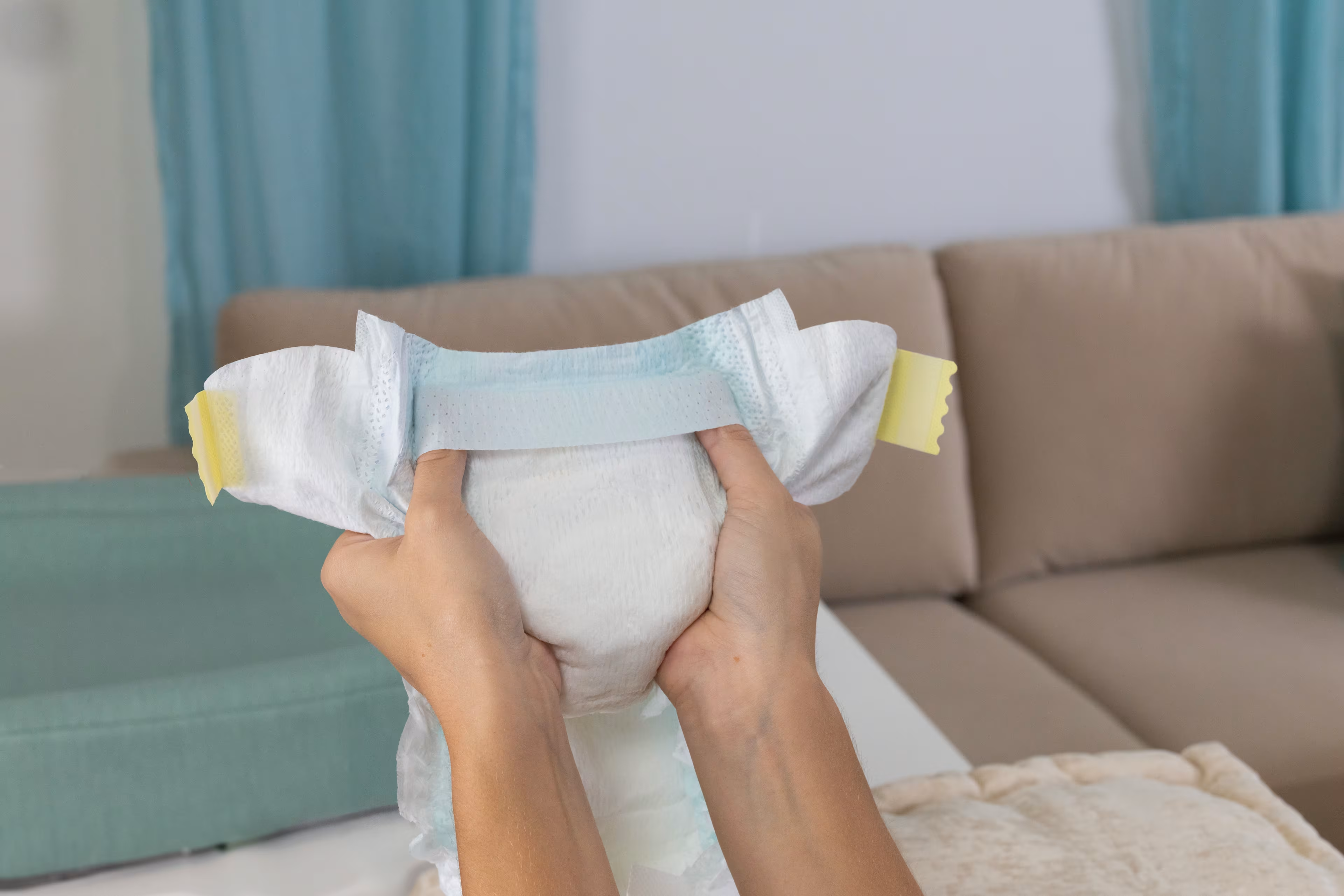
Do Diapers Expire? Shelf Life Explained
Wondering if Pampers diapers expire? Learn shelf life, proper storage tips, and safety signs for your baby's protection.
Read more
Pampers Portfolio Backed by Experts
Discover how Pampers diapers and wipes are checked for safety—learn about the experts behind the products, dermatological testing, and the research that goes into every Pampers product.
Read more
Absorbent Materials in Diapers: Keeping Your Baby Dry
Curious what’s inside a diaper? Learn about diaper absorption materials, how they work, and why Pampers absorbent layers help keep babies dry.
Read more
Parents And Health Care Professionals: Expert Advice For New Parents
Find professional advice covering important topics in caring for your baby. Pampers is dedicated to supporting parents and providing tools to take care of their baby.
Read moreDo Diapers Expire? Shelf Life Explained
Wondering if Pampers diapers expire? Learn shelf life, proper storage tips, and safety signs for your baby's protection.
Read morePampers Portfolio Backed by Experts
Discover how Pampers diapers and wipes are checked for safety—learn about the experts behind the products, dermatological testing, and the research that goes into every Pampers product.
Read moreAbsorbent Materials in Diapers: Keeping Your Baby Dry
Curious what’s inside a diaper? Learn about diaper absorption materials, how they work, and why Pampers absorbent layers help keep babies dry.
Read moreParents And Health Care Professionals: Expert Advice For New Parents
Find professional advice covering important topics in caring for your baby. Pampers is dedicated to supporting parents and providing tools to take care of their baby.
Read moreJoin a World of Support
through Pregnancy and Parenthood.
TRACK WITH TOOLS
LEARN WITH EXPERTS
GET REWARDED




Where You Already Belong