
Baby Talk: Understanding Your Baby


Even as an infant, your baby's sounds can tell you a lot about what's going on in his little world. Talking to your newborn can help you understand these early vocalizations. Wondering what "goo" and "gaa" mean?
This Stage-by-Stage Guide to Baby Talk Should Help Clear Up Confusion.
1 month
After spending around nine months in a peaceful environment, your baby might be surprised by all the new sounds and sensations. At 1-month-old your little one's crying, quick movements, and even baby shrieking can all mean he's experiencing something new. They can also help you understand when he's hungry or tired.
4 months
At this 4 months, your baby may begin imitating the noises he's been hearing since birth. Some babies start even earlier; baby talking at 3 months isn't uncommon. If you've been wondering when do babies start mimicking sounds , now's the time to watch for those first babbles. Listen for your baby to drop and raise the pitch of his voice when babbling, a sure sign that he's copying the inflection in your voice. Encourage this by talking slowly and carefully to him as much as possible.
6 to 8 months
At 6 months, your child may begin to crawl at this age. You might notice him pointing at his toys while simultaneously babbling, a prime example of early communication. Many parents ask, " what age do babies start talking ? " Some babies speak their first words at this stage, often "mama" or "dada."
12 to 18 months
Your baby will probably pick up a few more words over the next few months. He may also start mimicking conversation by babbling with pauses and "responding" to questions. Even though his vocabulary is still limited at this age, he understands a lot of what you say. Keep chatting to boost his language development.
18 to 24 months
Now that your child has mastered a good number of words, he'll start stringing them together to create simple sentences. As he progresses, you'll find it becomes easier to communicate, which will be a welcome milestone for both of you.

Baby Growth Chart Calculator
Keep an eye on your baby’s average growth by tracking height, weight, and head circumference with our simple tool.
This is a mandatory field.
This is a mandatory field.
This is a mandatory field.
This is a mandatory field.
*Input details of your baby’s last measurements. **Source: World Health Organization
Individual Milestones
As with all baby milestones, children develop language skills at their own pace. Your little one is unique and may need more or less time than others to start making sounds and gestures. Before you know it, your child will hit the chatty preschool stage, and peace and quiet will be a thing of the past!

All About Separation Anxiety in Babies, Toddlers, and Older Kids
Separation anxiety can start as early as 8 months in babies and toddlers. Explore common symptoms and learn what to do when your child worries about separation.
Read more
Tips for Reducing Baby Separation Anxiety at Night
Get tips on how to support your baby with their separation at night Separation anxiety in babies at bedtime is completely normal as your baby develops and these tips can help you support them through it.
Read more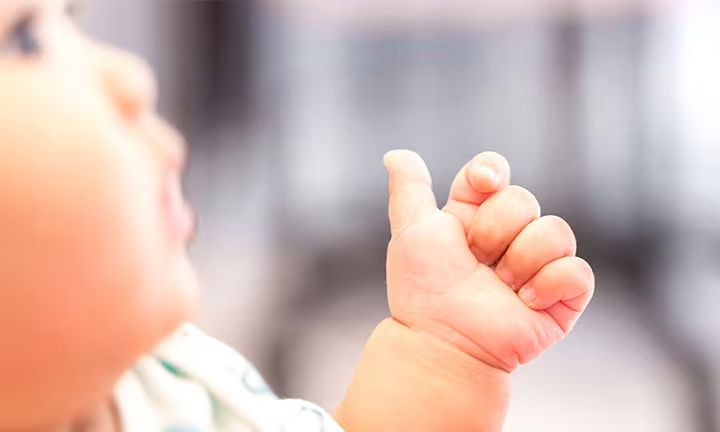
Tips for Teaching Baby Sign Language
By Christopher B. Peltier
Teach your baby sign language to communicate before speaking. Begin at 6-7 months with simple signs like “milk” and “more” for easier daily interactions.
Read more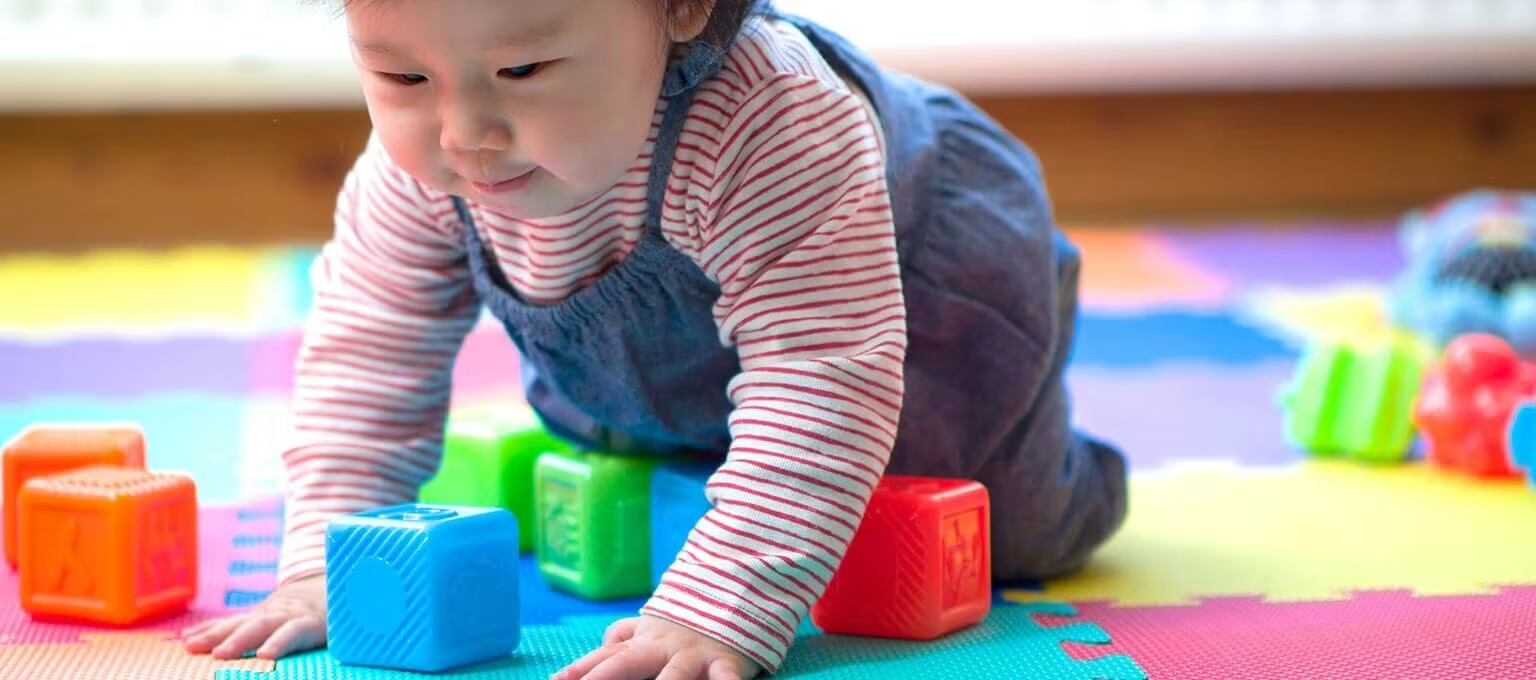
How to Encourage Independence From a Young Age
Asking yourself how to encourage independence from a young age? Read about how you can give your child the gift of independence by following these guidelines.
Read more
When Do Babies Start Cooing? All About Your Baby’s First Sounds
During the first few weeks of their lives, babies start making sounds and learn to communicate. Read all about when babies start cooing, and how to encourage it.
Read more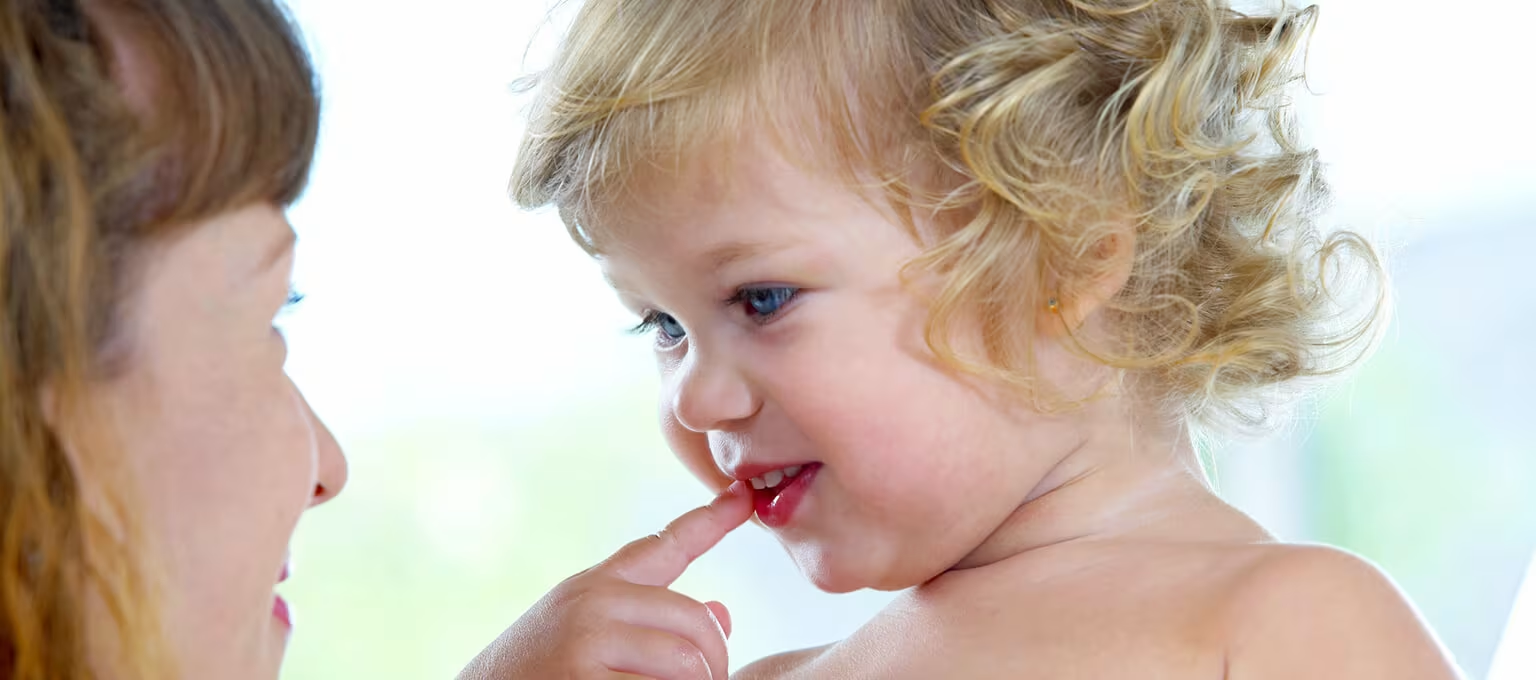
How Positive and Proactive Discipline Can Help Change Your Child’s Behavior
Read about how to settle your child’s outbursts with four major tools: understanding power, setting boundaries, consistency and positive and proactive discipline.
Read more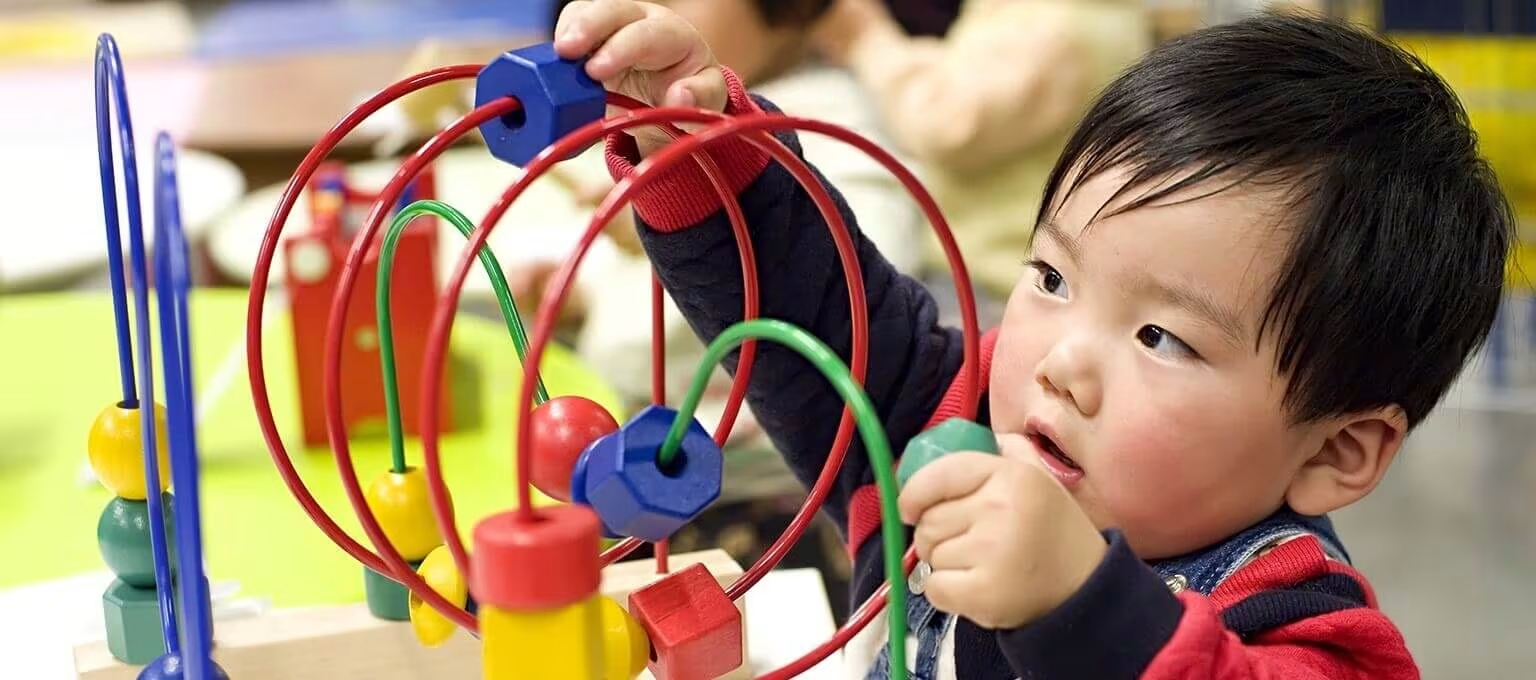
True Grit: How Babies Learn to Be Persistent
Persistence isn’t a personality trait that is often associated with babies, assumed to be innately known rather than learned. A new piece of research, however, suggests that babies as young as 13 months can learn to be persistent. Read our summary of this fascinating development here.
Read more
Surprise, Surprise! Babies Understand More Than We Think
Communicating with babies is crucial for their development. They understand more than we think. Get advice on talking to your little one.
Read more
Your 11-Month-Old's Language Development
Explore your 11-month-old's language development! Learn how many words to expect, joint attention skills, and ways to support language development.
Read more
When Do Babies Start Laughing?
Do you ever wonder when babies start laughing? Learn all about your baby’s first laugh, when it might happen, and how to encourage it.
Read moreAll About Separation Anxiety in Babies, Toddlers, and Older Kids
Separation anxiety can start as early as 8 months in babies and toddlers. Explore common symptoms and learn what to do when your child worries about separation.
Read moreTips for Reducing Baby Separation Anxiety at Night
Get tips on how to support your baby with their separation at night Separation anxiety in babies at bedtime is completely normal as your baby develops and these tips can help you support them through it.
Read moreTips for Teaching Baby Sign Language
By Christopher B. Peltier
Teach your baby sign language to communicate before speaking. Begin at 6-7 months with simple signs like “milk” and “more” for easier daily interactions.
Read moreHow to Encourage Independence From a Young Age
Asking yourself how to encourage independence from a young age? Read about how you can give your child the gift of independence by following these guidelines.
Read moreWhen Do Babies Start Cooing? All About Your Baby’s First Sounds
During the first few weeks of their lives, babies start making sounds and learn to communicate. Read all about when babies start cooing, and how to encourage it.
Read moreHow Positive and Proactive Discipline Can Help Change Your Child’s Behavior
Read about how to settle your child’s outbursts with four major tools: understanding power, setting boundaries, consistency and positive and proactive discipline.
Read moreTrue Grit: How Babies Learn to Be Persistent
Persistence isn’t a personality trait that is often associated with babies, assumed to be innately known rather than learned. A new piece of research, however, suggests that babies as young as 13 months can learn to be persistent. Read our summary of this fascinating development here.
Read moreSurprise, Surprise! Babies Understand More Than We Think
Communicating with babies is crucial for their development. They understand more than we think. Get advice on talking to your little one.
Read moreJoin a World of Support
through Pregnancy and Parenthood.
TRACK WITH TOOLS
LEARN WITH EXPERTS
GET REWARDED




Where You Already Belong