
First trimester
of pregnancy
You are 3% through your pregnancy, with your due date in 39 weeks
Fetal development
Height
~2.5 in
Weight
~2 oz
Highlights: First Trimester
- 1Baby’s Development. From weeks 1 to 13, your baby grows from a cluster of cells into a fully formed fetus. The placenta and umbilical cord begin nourishing your baby, the heart starts beating by weeks 6–7, and fingers and toes separate around week 10. By the end of the trimester, all major organs and body parts are formed. Cardiac activity may be heard on a Doppler between weeks 10–12.
- 2Bodily Changes & Symptoms. Throughout weeks 1–13, you may notice fatigue, mood swings, breast tenderness, acne, bloating, and frequent urination. Nausea and vomiting are common—try small, frequent meals and avoid trigger foods.
- 3Health & Wellness. Take prenatal vitamins with folic acid, stay hydrated, and eat a balanced diet. Avoid alcohol, tobacco, drugs, hot tubs, and unsafe foods like raw fish, unpasteurized dairy, or undercooked meats. Limit caffeine to under 200 mg daily. Gentle exercise, rest, and stress management can help you feel your best during these first 13 weeks.
- 4Tips & To-Dos. Confirm your pregnancy and schedule prenatal visits. Ask your provider about optional screenings, update vaccines if needed, and review medication safety. Decide when to share your news, and enjoy tracking your pregnancy or brainstorming baby names.
You are 3% through your pregnancy, with your due date in 39 weeks
Checklist for the first trimester
- Find a good prenatal healthcare provider who can help you throughout your pregnancy and during childbirth. Make your first appointment as soon as you know you're pregnant.
- Ask your provider what tests or scans are recommended for you based on your medical history, and mark these in your calendar.
- Get a flu shot and get caught up on any other immunizations you're missing.
- Consider whether genetic testing like nuchal translucency screening and chorionic villus sampling (CVS) are tests you may like to have during the first trimester of pregnancy.
- Consult your healthcare provider about taking folic acid and prenatal vitamins.
- Ask your healthcare provider if the medications you currently take for things such as headache relief are safe during the first trimester of pregnancy.
- Find out what maternity or paternity leave you and your partner may be eligible for.
- Review your health insurance policies to check you have the coverage you want and need. If you don't have insurance for yourself or your baby, go to HealthCare.gov to learn what's available in your area.
- Make an appointment with your dentist to ensure you get good dental care during your pregnancy.
- As your breasts grow, go for a bra fitting to ensure you’re in the right size.
- Start a pregnancy journal or memory book if this is something you think you would like to look back on in the years to come.
- If you would like to, take your first belly picture and perhaps pick a day of the month for taking monthly progress photos.
- Just for fun, take our quiz about the early signs of pregnancy.
- Start brainstorming name ideas and putting a short list of baby names together.

Loyalty program
Are you starting to think about buying the first diapers for your baby?
Get exclusive recommendations and offers just for you to save hundreds of $$$ on Pampers

Get the Pampers Rewards app
Welcome to the first trimester of pregnancy. You're at the beginning of a wonderful journey, and it’s natural to have lots of questions about what’s in store in the weeks and months ahead. We’ve compiled some essential information on what’s considered the first trimester, fetal development during this period, and common early pregnancy symptoms, as well as some tips to help you make your way through the first trimester.
Highlights From the First Trimester of Pregnancy
| 1st Trimester Highlights | |
|---|---|
| Fetal Development |
|
| Potential Symptoms |
|
| 1st Trimester Tip | Make some healthy lifestyle choices— eating well, getting regular exercise, and avoiding smoking and alcohol. |
First Trimester Weeks: How Long Is the First Trimester and When Does It End?
Are you wondering what is the first trimester of pregnancy, how many weeks are in this trimester, and when it’s over? Well, the 1st trimester is about 13 weeks long, and it actually starts before you become pregnant. This is because your estimated due date is usually calculated from the first day of your last menstrual period (LMP). A full-term pregnancy is roughly 40 weeks long, so your healthcare provider will calculate 40 weeks from the start of your last period to estimate your due date. If you haven't been to your provider yet, you can use our Due Date Calculator located above to get a quick estimate.
Keep in mind that most babies aren’t born on their due date, which is only an estimate. Rather, they’re typically born in the two-week period before or after the date. Your pregnancy is considered full-term at the start of 39 weeks. The three trimesters of pregnancy are composed of 40 weeks. Take a closer look at what happens during each individual week of pregnancy in our pregnancy calendar article, including the weeks in the first trimester. You may not have learned your baby’s gender just yet, but even if you have, why not have a little (non-scientific) fun with our Chinese Gender Prediction tool:
Your Baby’s Development in the First Trimester
During the first trimester of pregnancy, what starts as a tiny bundle of cells quickly turns into an embryo and then a fetus that's about the size of a large plum. In these first couple of months of pregnancy, your little one’s brain, spinal cord, heart, and tiny limbs—complete with fingers and toes—will form. Meanwhile, your uterus is becoming a comfortable home for your little one, who will be nourished by the developing placenta and umbilical cord. By the end of the third month of pregnancy, all essential organs and body parts will be in place—albeit in teeny-tiny size. There’s a lot happening in the first trimester. Keep reading to learn about a few of the most exciting fetal development milestones during the first trimester weeks.

Chinese Gender Predictor
Can't wait to know whether your little one's a boy or a girl? Try our fun tool!4 Weeks: Implantation
The ball of rapidly dividing cells, called a blastocyst, implants in the uterus. This is when some pregnant people experience implantation bleeding in the first trimester, which is generally a light spotting. The inner cells will become the embryo, and the outer cells will become the placenta. The placenta will provide nourishment to your baby from now until delivery.
6 Weeks: Taking Shape
Around weeks 6 and 7, the heart, lungs, and other key organs start to develop, and the head and limbs also take shape. What was a ball of cells just weeks ago is forming a more recognizable C-shape.
9 Weeks: In Motion
At about 9 weeks, your little one, now known as a fetus, may start moving around. However, you probably won't be able to feel any movement until the second trimester.
10 Weeks: Fingers and Toes
This week, your baby's fingers and toes begin to lose their webbing and continue to grow longer. It won't be long until you're able to count them!
10 to 12 Weeks: Cardiac Activity
At around 10 to 12 weeks, you and your healthcare provider may be able to hear your baby’s cardiac activity with a handheld Doppler device during one of your checkups.
Illustration of Fetal Development Week by Week
Take a look at the illustration below to understand how your little one may develop week to week during the first trimester:
What’s in Store for You in the First Trimester?
During the first trimester, you may make some discoveries and decisions and experience various changes. Here are a few examples:
What Weeks and Months Are in the First Trimester?
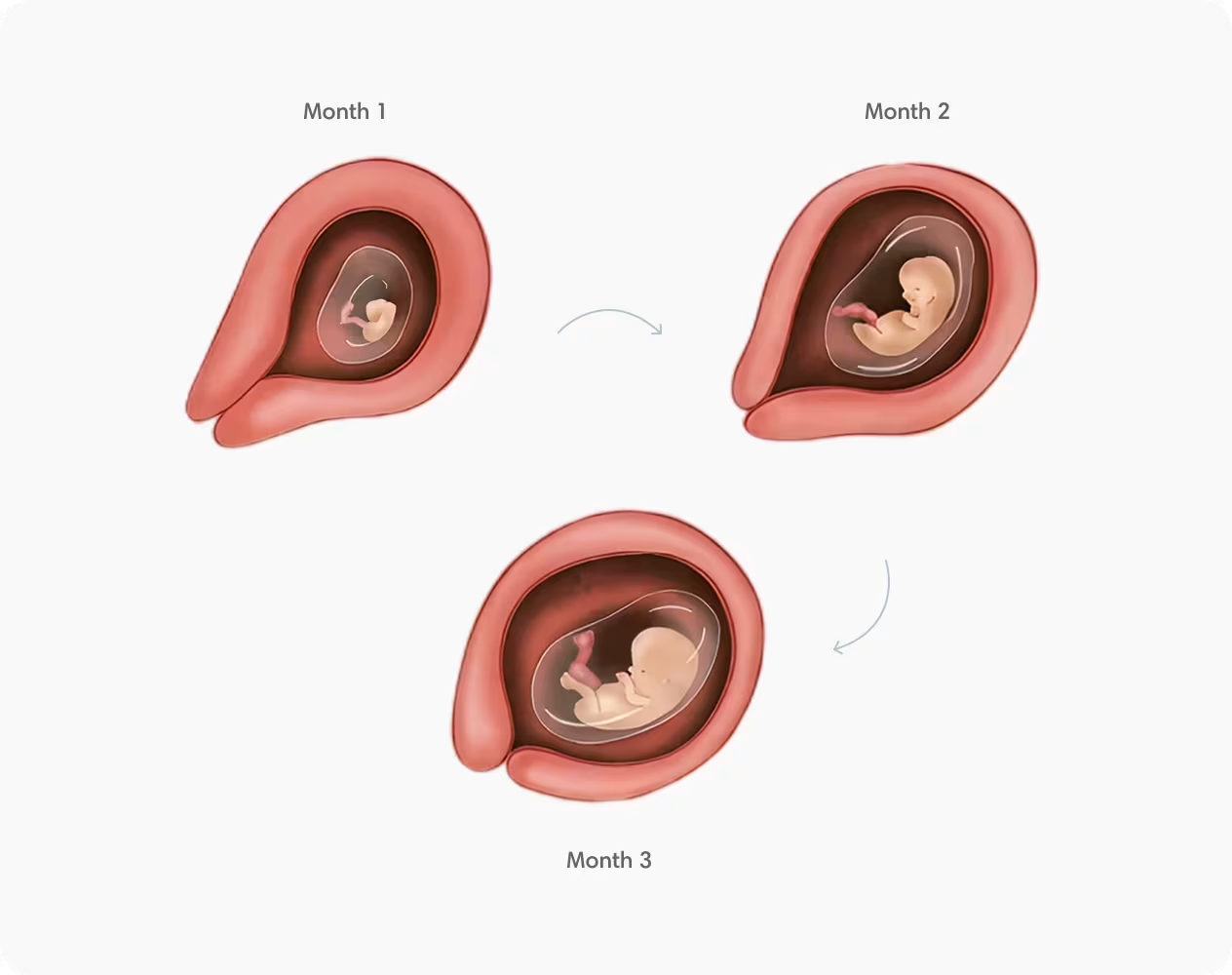
You may be wondering which weeks and months make up the first trimester. When the weeks of pregnancy are grouped into months, there’s some variance in how this is done. This is because 40 weeks can't be divided neatly into nine months and because months typically are a little longer than four weeks. But if you’re wondering how many months is the first trimester, it’s generally considered to be about three months long, or 13 weeks, as we mentioned above. Check out our visual below to see what’s included and to get an idea of how your belly may be growing:
First Trimester Symptoms
Although every pregnancy is unique, here are some of the most common signs and symptoms of the first trimester:
Precautions to Take During the First Trimester of Pregnancy
During your 1st trimester of pregnancy, it’s important to take precautions and prioritize your health and that of your developing baby. Here are some considerations to keep in mind now and throughout your pregnancy journey:
Remember, your healthcare provider is there to support you during this important time. Don't hesitate to reach out if you have any concerns or questions.
When to Contact Your Healthcare Provider
It’s essential to stay in touch with your healthcare provider throughout your pregnancy, particularly during the critical first trimester, and to go to all of your prenatal checkups. While some discomforts, like morning sickness or fatigue, are considered normal during the first trimester of pregnancy, certain symptoms may warrant immediate contact with your healthcare provider. These include the following:
Remember, your healthcare provider is your best resource for any questions or concerns you may have during your first trimester of pregnancy. It's better to be safe and reach out, even if you're unsure whether your symptoms are cause for concern.
Checklist for the First Trimester
Here’s a checklist of things you may wish to do in your first trimester of pregnancy:
FAQS AT A GLANCE
Some good foods to eat in your first trimester of pregnancy if you’re suffering from morning sickness include easy-to-digest foods like bananas, rice, applesauce, and toast. Taking a daily prenatal vitamin may also help reduce the risk of severe pregnancy-induced nausea. You can also try ginger in the form of ginger ale, tea, or candies to help settle your stomach during periods of nausea.
The Bottom Line
The first trimester of pregnancy is full of excitement and anticipation. By following our guidelines and your healthcare provider's advice, you can make your pregnancy a little easier. Listen to your body, prioritize self-care, maintain open communication with your provider, and don't hesitate to reach out if you have any concerns or uncertainties. This beautiful journey is just beginning, and now is a great time to create a nurturing environment that will support your baby’s growth and development.
How We Wrote This Article The information in this article is based on expert advice found in trusted medical and government sources, such as the American Academy of Pediatrics and the American College of Obstetricians and Gynecologists. You can find a full list of sources used for this article below. The content on this page should not replace professional medical advice. Always consult medical professionals for full diagnosis and treatment.
- American College of Obstetricians and Gynecologists, Your Pregnancy and Childbirth: Month to Month, 7th ed. (Washington, DC: American College of Obstetricians and Gynecologists, 2021).
- ACOG. “Exercise During Pregnancy.”
- Cleveland Clinic. “First Trimester.”
- Kids Health. “Sleeping During Pregnancy.”
- Mayo Clinic. “Pregnancy nutrition.” Foods to avoid during pregnancy
- Mayo Clinic. “Symptoms of pregnancy: What happens first.”
- OWH. “Body changes and discomforts.”

Second trimester
Enjoy the second trimester, known as the "honeymoon period" of pregnancy! Learn about fetal development, ultrasounds, symptoms, and more.
Read more
Third trimester
You’ve made it to the final stretch! Learn about fetal development in the third trimester, common symptoms, and how to prepare for your baby’s birth.
Read moreSecond trimester
Enjoy the second trimester, known as the "honeymoon period" of pregnancy! Learn about fetal development, ultrasounds, symptoms, and more.
Read moreThird trimester
You’ve made it to the final stretch! Learn about fetal development in the third trimester, common symptoms, and how to prepare for your baby’s birth.
Read moreSecond trimester
Enjoy the second trimester, known as the "honeymoon period" of pregnancy! Learn about fetal development, ultrasounds, symptoms, and more.
Read moreThird trimester
You’ve made it to the final stretch! Learn about fetal development in the third trimester, common symptoms, and how to prepare for your baby’s birth.
Read more