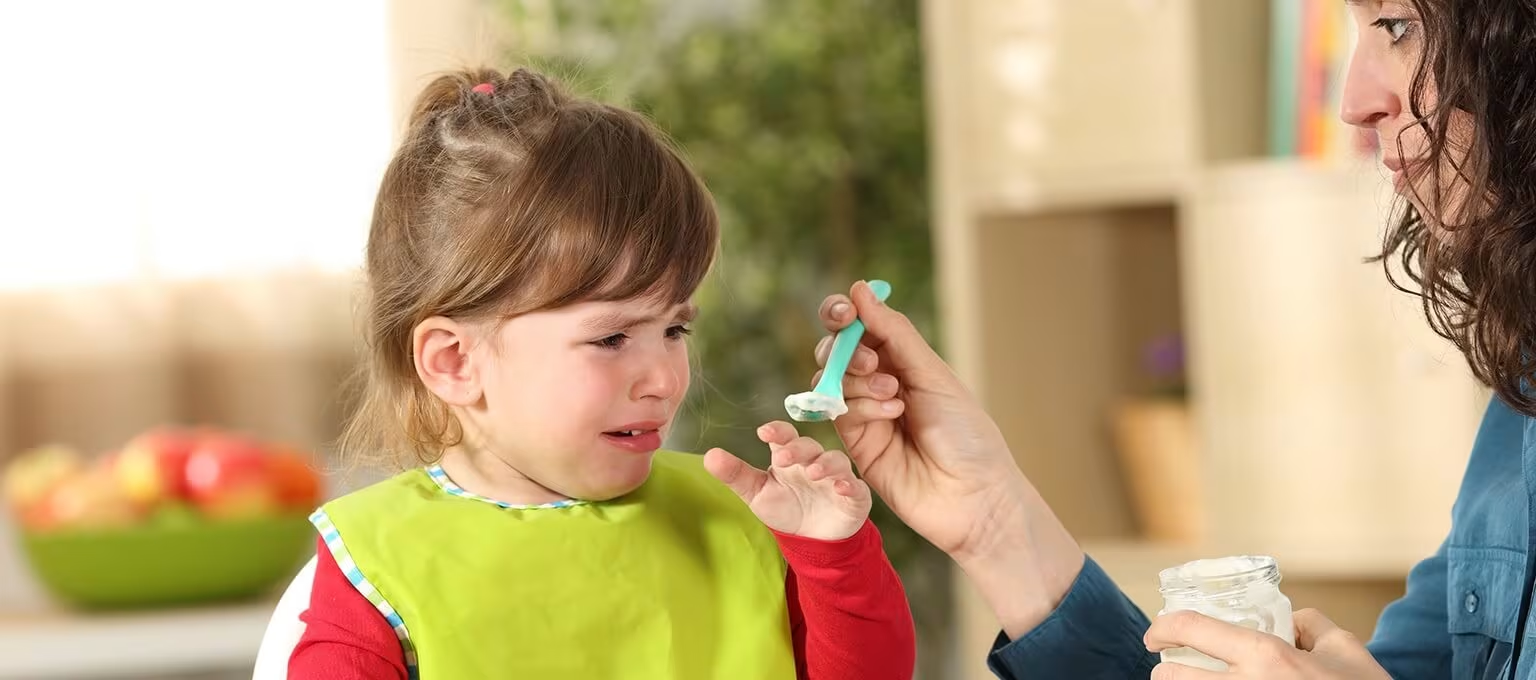
You've likely been waiting for it: your once sweet toddler suddenly turns into a whirlwind of tantrums and defiance, only to calm down just as quickly. It's hard to believe, but this tough phase is a normal part of growing up as your child becomes more independent. Discover what’s behind the terrible twos, how long it lasts, and tips for handling the tantrums and defiance.
What’s Behind the Terrible Twos?
Around the age of 2, your child is starting to show more independence and might resist your instructions or the limits you've set. These power struggles can lead to tantrums, defiance, and a lot of "no's."
One minute your toddler is happily sticking by your side or playing quietly, and the next they're testing limits, stomping around, or shouting at the top of their lungs. Your little one is still figuring out how to handle emotions, which can lead to outbursts that sometimes turn into full-on temper tantrums. Welcome to the world of the terrible twos!
For your 2-year-old, the terrible twos might feel more like the terrific twos. They're learning to take charge of situations, stand up for what they want, and explore a bit of independence. But this stage can be tough for your little one. They might push back against compromise, causing clashes with you, and they haven't quite mastered handling disappointment when things don't go their way.
These new behaviors are part of big changes in their intellectual, social, and emotional growth. Interestingly, what seems like troublesome behavior might show that your child is developing just fine.
related baby tool
Baby Growth Chart Calculator
Keep an eye on your baby’s average growth by tracking height, weight, and head circumference with our simple tool.
The terrible twos might be brief, or they could linger for a while. You'll need patience, as this phase generally begins around your child's second birthday and can last into their third year or beyond, until it finally concludes.
It's smart to recognize that this is a normal stage in your child's growth and to guide them through it. Your reactions in certain situations are crucial, as you need to support their growing independence while also keeping the boundaries for their safety and well-being in check.
Timeline and Intensity of the Terrible Twos
Understanding how this phase usually progresses can help you stay patient:
Around 18–24 months: Early signs of defiance and mood swings may appear.
Around 2 years: Generally peak intensity—you may experience frequent tantrums and testing limits.
Up to 3+ years: Tantrums may gradually decrease as your child gains better emotional control.
Quick tip: Keeping routines consistent can help reduce tantrum frequency.
Signs of the Terrible Twos
When your child starts exhibiting some of these behaviors, you can assume that they have entered the terrible twos phase:
Says "no" much more often than before
May be clingy one minute, and then want their independence the next
Doesn't interact well with other children, and may show signs of aggressive behavior, such as pushing and shoving
Becomes frustrated easily
Has frequent temper tantrums
May have rapid mood swings, going from happy to mad to happy again in what can seem like the blink of an eye
Might try testing your limits to see how far they can get
May express that he’s upset or frustrated by crying, screaming, hitting, biting, or kicking.
Causes of the Terrible Twos
To help you understand your toddler's behavior, it's useful to know the developmental changes your 2-year-old is experiencing:
Intellectual changes. Your child's language skills are improving, but they likely understand much more than they can express. At the same time, they’re beginning to have strong ideas and preferences. When they can’t find the words to explain what they want—or why they’re upset—it can quickly lead to crying, screaming, or a full-blown tantrum.
Social changes. Your child is starting to see themselves as separate from you and is developing a strong desire for independence. They want to make choices, explore, and have some control over their environment. However, they’re still learning how the world works. This can show up as possessiveness around other kids, difficulty sharing toys, or grabbing something they want without understanding how it affects others. Seeing the world mainly from their own perspective is a normal part of development at this age.
Emotional changes. Your child can be happy one moment and upset the next. These rapid mood shifts are common during the terrible twos. They’re learning to manage big feelings like frustration and disappointment, but their ability to regulate emotions is still developing. When you set boundaries—which are important for their safety and growth—they may strongly resist. They might argue with you and then immediately seek your comfort and approval. Tantrums over seemingly small things often happen because they’re overwhelmed, not because they’re trying to be difficult.
Reassurance: Although this stage can be exhausting, these challenges are actually positive signs. Your toddler’s push for independence, emotional ups and downs, and reactions to limits all reflect healthy social, emotional, and intellectual growth. They’re learning how to communicate, make choices, and understand the world around them—and you’re their most important guide along the way.
10 Tips for Navigating the Terrible Twos
During the terrible twos, don't take your little one’s behavior personally, and try not to see the tantrums as reflective of your child being "bad. " Your child is just frustrated and overwhelmed by the changes he’s going through.
Here are some additional guidelines and techniques for dealing with the terrible twos phase:
Be consistent. It's crucial to recognize your child's good behavior and gently guide them away from misbehavior without being harsh or physical. Stay consistent in your reactions so your child understands the routine and knows the consequences of their actions. This consistency can help build their confidence and reduce bad behavior.
Be straightforward. Trying to reason with your 2-year-old can feel like talking to a brick wall. At this age, they mix up fantasy and reality. So, it's best to keep things simple. Avoid saying things like "Keep making that face, and it'll stay that way. They won't get the joke. Instead, explain things in the clearest way possible, especially when it comes to discipline and behavior.
Be ready to distract your child. If you see them getting all worked up about something, try to redirect their attention before a full-blown tantrum can start. If that doesn't work, let them be. Often, trying to reason with them or punish them for their emotional outbursts may have the opposite effect and reinforce the bad behavior.
Establish some simple rules. Straightforward, age-appropriate rules can help your child control impulsive behaviors; for example, saying "No pushing or hitting. " But be sure that the rules you develop aren't too restrictive and that there aren't too many. You can always add more rules once your child better understands the basic ones. Don’t change the rules unexpectedly as that can be confusing for them.
Be affectionate. Loving, physical contact is very important during this time, as it is during each stage of your child's development. Hugs and kisses can help your child develop a strong sense of security and self-worth.
Show that you're paying attention. Make sure to listen when your child talks, and offer more than just a nod or a quick "Okay. They'll notice if you're not paying attention. Being genuinely attentive sets a great example for them about expressing feelings and shows that they can rely on you to listen. Down the line, they might not feel the need to throw a fit just to get your attention if they know they can simply talk to you.
Help your child verbally express their feelings. Have conversations with your child regularly, and help them describe their feelings in words. Giving your little one the tools to express themself verbally can help ward off emotional outbursts in the future. You should also model this by verbalizing your feelings; for example, you might say something like "Mommy is upset because you ran away from me in the store."
Offer options. Instead of always making decisions for your child, give them some choices that you're comfortable with. So, rather than asking an open-ended question like, "What do you want to wear today? and then arguing when they pick shorts in the middle of winter, ask, "Would you like to wear the blue or red shirt? At snack time, you might say, "Do you want carrot sticks or celery sticks? Giving them a say in these matters boosts their confidence and keeps them in good spirits.
Set limits with positive discipline. Guide your child with firm but loving discipline. If your child misbehaves during a playdate, let them know their favorite toy might be off-limits for a while. Avoid physical punishment, as it sends the wrong message—that it's okay to handle problems with violence. Instead, calmly explain that misbehavior has consequences, like losing a favorite toy temporarily. Whatever you do, steer clear of physical punishment. It only teaches that violence is an acceptable solution to problems. Whatever you do, don't turn to physical punishment, which conveys the wrong message—that it's okay to solve an issue through violence.
Use time-outs when needed. This can be an effective strategy if your child is in the middle of a tantrum, for instance. Remove them from the scene of action and take their to a designated area for a time-out. Once there, have them spend a few quiet and still minutes (the recommended time is one minute for each year of your child's age) before they can return to you. Afterward, hug them and say "All done!"
Practical Parent Strategies for the Terrible Twos
Here are simple ways to manage tantrums and support your toddler:
Stay calm and model emotion control. Example: If your toddler screams, take a deep breath and respond gently.
Validate feelings while setting limits. Say: “I see you’re upset because you can’t play with that right now, but hitting isn’t allowed.”
Offer limited choices. Example: “Do you want the red cup or the blue cup?” This gives a sense of control.
Use distraction and redirection. Engage your toddler in a different activity before frustration escalates.
Consistent, age-appropriate rules. Keep them simple: “No hitting” or “Toys stay on the table.”
Affection and attention. Hugs, high-fives, and praise for positive behavior reinforce security and confidence.
Time-outs for serious outbursts. One minute per year of age is recommended. Follow with reassurance: “All done! Let’s play.”
Mini Scenarios for Real Life
Here are some common real-life moments you might experience with your toddler, and how you can respond:
Scenario 1: Refusing to share a toy
Behavior: Your toddler grabs a toy from a friend.
Parent Response: “I see you want it. You can play with it after your friend is done.”
Scenario 2: Meltdown in the store
Behavior: Tantrum over wanting candy.
Parent Response: Offer a choice: “You can pick a healthy snack or wait until we get home.”
Scenario 3: Bedtime resistance
Behavior: Screaming and running around.
Parent Response: Keep a consistent bedtime routine, use calm explanation, and hug before sleep.
Dealing With Tantrums
The occasional tantrum is not only characteristic but also inevitable during the terrible twos phase. It's easy to see one coming: Your child may be upset or more irritable than usual, and they may be tired, lonely, or hungry.
Watch your child's moods to help dodge some of these outbursts, and try to avoid situations that might trigger a tantrum. For example, running several errands with your toddler without play or snack breaks can lead to a meltdown.
If you feel a tantrum coming, here are some tips to redirect your child's energy or nip it in the bud:
Distract your child with a fun activity to shift their focus.
If distraction fails, let them be. Ignoring them might prevent a longer tantrum.
If they become physical, like hitting or biting, calmly tell them it's unacceptable and put them in a time-out. Skip detailed explanations; just make it clear that their behavior is wrong.
In public, remove your child from the situation, like to your car or a restroom, to give a time-out.
Tantrums usually decrease between ages 3 and 4. If they persist or you struggle with managing them, consult your healthcare provider.
FAQS AT A GLANCE
One secret to getting through the terrible twos is not taking anything personally. Your child is not being terrible on purpose: They don't hate you and are not inherently naughty. Your child is going through changes that make it difficult for them to control their actions and emotions. The best thing to do is to set clear boundaries, curb bad behavior, and praise good behavior regularly.
They may act more independently and defiantly
They may behave selfishly
They may have emotional outbursts like tantrums
They may have mood swings: One minute they may cling to you, and the next, they might throw a tantrum.
From a parent's perspective, the terrible twos are terrible because your child may be temperamental, defiant, and prone to outbursts when they dont get their own way.
The tantrums that characterize the terrible twos can last up until your child is about 3 years old. After that the tantrums usually start to peter out. If you’re still seeing regular tantrums beyond this, consult with your child's healthcare provider.
The Bottom Line
Sure, the terrible twos can be a wild ride, but hang in there—it won't last forever. Teaching your child to manage their emotions and rewarding good behavior can make this phase smoother for both of you.
Once you're through this stage, you'll finally get a breather—at least until the next challenge, like the teenage years. By then, you might look back and think your little one was a real sweetheart as a toddler, making this phase seem not so bad after all!
Did you know that you can learn more interesting facts about your child's development in the Pampers Rewards app? You can also use the app to earn Pampers Cash for those Pampers diaper purchases. Redeem your Pampers Cash for Pampers savings at one of your favorite retailers!
The information in this article is based on the expert advice found in trusted medical and government sources, such as the American Academy of Pediatrics and the American College of Obstetricians and Gynecologists. You can find a full list of sources used for this article below. The content on this page should not replace professional medical advice. Always consult medical professionals for full diagnosis and treatment.