
How to Handle Toddler Temper Tantrums



Temper tantrums are a normal part of toddlerhood, but they can still be frustrating and overwhelming for parents. Whether you’re wondering why two-year-olds throw tantrums, when tantrums start and stop, or how to handle toddler tantrums, understanding the causes and strategies can make a big difference.
Key Takeaways
It’s an emotional outburst caused by frustration, fatigue, or unmet needs.
Lack of communication skills, tiredness, hunger, and overstimulation.
Tantrums are generally goal-driven, while meltdowns result from sensory overload.
Overtiredness, resistance to routine, and separation anxiety can trigger outbursts.
Around 12-18 months.
Most improve by age 4.
Stay calm, set clear boundaries, and use distraction or validation techniques.
With patience and the right approach, you can help your toddler manage big emotions more effectively. Read on for expert tips on preventing tantrums and navigating outbursts like a pro!
Why Do Toddlers Throw Tantrums?
Toddler tantrums are a normal part of emotional development. They’re a common response when toddlers feel frustrated, overwhelmed, or unable to get what they want—especially during the second year, when emotions are big but coping skills are still limited.
Even when you’re enforcing a rule or keeping your toddler safe, your child may experience it as a major conflict. A tantrum may include yelling “no,” crying, dropping to the floor, kicking, or pounding fists. Some toddlers may even hold their breath. While this behavior can feel dramatic or intentional, it’s usually the result of internal struggle rather than defiance.
If you’re wondering why 2-year-olds throw tantrums, the answer often lies in normal developmental changes, such as:
Tantrums are rarely dangerous, though they can be distressing—especially when they happen in public. After a tantrum, your toddler may seem worn out and even fall asleep, then wake up calm and pleasant, as if nothing happened. This quick emotional reset is typical at this age.
Tantrums also tend to happen more often when toddlers are anxious, ill, tired, temperamentally sensitive, or under stress at home.
It’s important to remember that tantrums are not a reflection of your parenting and are not usually a sign of a serious emotional problem. They’re a typical phase of toddlerhood and often improve as your child’s communication skills and emotional regulation continue to develop.
In Summary
Toddler tantrums are a normal part of your toddler’s emotional development. Hearing your child say “no” to your requests will be the rule during this stage in their life. At this point, your child doesn’t yet have the tools to deal with frustration or conflict like an adult would, and may react by crying, screaming, or kicking.
When Do Tantrums Start and Stop?
Almost every child has temper tantrums occasionally, particularly between the ages of 2 and 3 years old. This period is often referred to as the “terrible twos.” However, that doesn’t mean your toddler will throw temper tantrums only or mostly at the age of 2, as tantrums can crop up before or after that. Toddler tantrums might start around 1 year and continue until they’re about 3 years old. It’s common for these tantrums to stop by the time your child reaches 4 years old, often coinciding with their start in preschool.
Remember, every child has a unique temperament and develops at a different rate.
Tantrums at 5 Years Old: Is It Normal?
Yes, it’s normal for 5-year-olds to occasionally have tantrums, though they may look different from those of younger toddlers. At this age, children are still developing emotional regulation skills, and frustration, fatigue, hunger, or overwhelming situations can trigger outbursts. While tantrums may become less frequent as their communication skills improve, big emotions can still be challenging to manage.
It’s important to respond with patience, helping them express their feelings in words and guiding them toward calming strategies. If tantrums are extreme, frequent, or impact daily life, it may be helpful to seek guidance from your child’s healthcare provider.

Baby Growth Chart Calculator
Keep an eye on your baby’s average growth by tracking height, weight, and head circumference with our simple tool.
This is a mandatory field.
This is a mandatory field.
This is a mandatory field.
This is a mandatory field.
*Input details of your baby’s last measurements. **Source: World Health Organization
Toddler Tantrums Vs. Meltdowns: The Differences
While tantrums and meltdowns may look similar, they have different triggers and require different approaches.
Unlike tantrums, meltdowns are not about seeking attention or getting something; instead, they reflect a child’s struggle to self-regulate. During a meltdown, a toddler may seem unable to calm down, and soothing techniques like reducing stimulation, offering comfort, and giving them space to reset are often more effective than discipline.
Recognizing the difference between tantrums and meltdowns may help you respond appropriately, ensuring your toddler feels supported as they develop emotional regulation skills.
Extreme Temper Tantrums in 2-Year-Olds
As mentioned earlier, tantrums are common in 2-year-olds as they learn to manage big emotions and assert independence. Most tantrums are short-lived and gradually improve with age. However, some tantrums may be considered more severe when they’re more intense, frequent, or disruptive than what’s typically expected for a toddler’s developmental stage.
A tantrum may be considered severe if it:
Severe tantrums are not necessarily a sign that something is “wrong,” but they may indicate that your child needs extra support learning how to cope with strong emotions.
If your toddler’s tantrums consistently show these characteristics or continue beyond age 4, it’s a good idea to contact your child’s healthcare provider. They can help rule out underlying concerns and offer guidance on strategies to support your child’s emotional development.
Tip: Handling a Severe Tantrum in the Moment
When a tantrum becomes intense, the goal is to keep your toddler safe and help them regain control. These strategies may help in the moment:
Toddler Temper Tantrums at Bedtime
Bedtime can often be a challenging period for toddlers, leading to tantrums that disrupt the evening routine. Understanding the causes and implementing effective strategies can help ease these nighttime struggles.
Common causes of bedtime tantrums include:
Tantrums can also occur after naps or when a toddler wakes up from a nap, often due to grogginess or disrupted sleep cycles.
Reducing Toddler Tantrums at Bedtime
If your toddler often wakes up from a nap throwing a tantrum, help them by sticking to a regular nap schedule, and provide gentle transitions by engaging in calm activities to help your toddler adjust smoothly from sleep to wakefulness.
You can discover more about your toddler’s sleep and strategies for sleep training in our dedicated guide.
13 Ways of Dealing with Toddler Tantrums
You know your toddler better than anyone, so you can often predict what might trigger a tantrum and prepare accordingly. While there is no guaranteed way to prevent every temper tantrum, you can take steps to reduce their frequency and intensity.

Here are some guidelines for managing tantrums. Try different methods to see what works best for you and your child. Once you find an effective strategy, share it with other caregivers, such as babysitters or grandparents. Consider using one or more of these approaches on how to handle and deal with your toddler’s tantrums:
Once your toddler’s tantrum is over, simply move on. If the tantrum was the result of something you told your child to do, repeat the request calmly and firmly; in time, they’ll realize that acting out again won’t have any effect. Resist the urge to overreact to their behavior, because that response may likely reinforce these episodes. Act like it’s no big deal and this behavior may go away in time.
In Summary
There’s no surefire way to stop a tantrum from happening, but there are ways you can manage the progression of your toddler’s temper tantrum, and, perhaps, prevent one from happening in the future. Here are 13 tips for managing your toddler’s temper tantrums:
Toddler Tantrums: When to Worry
Temper tantrums are common throughout your child’s toddler and preschool years; they typically become less frequent and intense around their fourth year. However, there are some signals that suggest a child may need intervention from a healthcare professional.
If you see any of the following, consult your child’s healthcare provider:
If passing out occurs during tantrums, your child’s healthcare provider may examine your toddler to see if the fainting spells may be due to something like seizures. The provider may also offer recommendations on effective discipline or suggest a parent support group that you may attend for guidance.
If the provider believes your child’s temper tantrums are a result of extreme emotional disturbances, they may refer your child to a psychiatrist or psychologist.
FAQS AT A GLANCE
Yes, it’s common for toddlers to exhibit increased tantrums following a divorce or separation. This behavior often stems from confusion, stress, or difficulty expressing their emotions about the changes in their family structure. Providing consistent routines, reassurance, and open communication can help your child adjust during this challenging time. If concerns persist, consider consulting your child’s healthcare provider for guidance.
The Bottom Line
Temper tantrums are a normal part of toddler development, typically occurring between 1 and 3 years old. Toddlers are unable to clearly verbalize their emotions at this stage of development; instead, they may burst into a temper tantrum that may include crying, screaming, kicking, and sometimes breath-holding and fainting.
Your toddler’s tantrums can range in frequency and severity. After a while, you may notice a pattern. For example, a tantrum may happen when your child doesn’t get a favorite toy or when they’re tired from an eventful day. Or the tantrums may happen at the same time every day, such as at bedtime or during a meal. Anticipating a tantrum can greatly help you prepare for one.
No matter how intense your toddler’s tantrum may be, the most important thing is not to overreact, but to stay calm and resolute in how you respond. Try distracting your child or adding some humor to the situation. Avoid bribery or deal-brokering, neither of which will help the tantrums improve. You might also consider short time-outs.
If your toddler still has frequent tantrums past the age of 4, it may be a good idea to consult their healthcare provider, especially if there are other disruptive and self-destructive behaviors. Children will outgrow temper tantrums eventually, but in the meantime, be prepared with our list of tips provided in this article.
While you’re here, why not download the Pampers Rewards app to earn discounts and rewards when you purchase your toddler’s pull-on pants or potty training pants.
- American Academy of Pediatrics. Caring for Your Baby and Young Child: Birth to Age 5, 7th ed. (New York: Bantam Books, 2019).
- Mayo Clinic. Guide to Your Baby’s First Years, 2nd ed. (Rochester, MN: Mayo Clinic Press, 2020).
- AAP Publications. “Helping Children and Families Deal With Divorce and Separation.”
- Cleveland Clinic. “Have an Aggressive Toddler? Here’s How To Manage Their Behavior.”
- Cleveland Clinic. “How To Deal With Toddler Tantrums: Tips From an Expert.”
- Cleveland Clinic. “How to Help Your Child After a Breakup or Divorce.”
- Cleveland Clinic. “Temper Tantrums.”
- Healthy Children. “Early Signs of ADHD in Children.”
- Healthy Children. “Toddler Bedtime Trouble: 7 Tips for Parents.”
- Healthy Children. “Top Tips for Surviving Temper Tantrums.”
- Healthy Children. “10 Tips to Prevent Aggressive Behavior in Young Children.”
- Kids Health. “Parenting a Child with ADHD.”
- Kids Health. “Temper Tantrums.”
- Mayo Clinic. “Autism Spectrum Disorder.”
- Mayo Clinic. “Temper tantrums in toddlers: How to keep the peace.”
- Understood.Org. “The Difference Between Tantrums and Meltdowns.”
Read more about Toddler

How to Help a Child Who Is Shy
What causes shyness? How can we help a young child overcome these feelings?
Read more
Fighting Toddlers: Handling Aggressive Behavior
Does your child fight a lot? Some toddlers and preschoolers get into repeated and escalating tussles. Get some tips and insight on helping kids cope with aggressive behavior.
Read more
Manners for Toddlers
Are you struggling with getting your little one to say please and thank you? A few smart strategies and techniques may help this go more smoothly. Learn more about teaching manners.
Read more
Potty Talk: Curbing Bad Language in Toddlers
Poo-poo head! Sometimes, the words toddlers and preschoolers use are not as innocent as you might hope. What does this bad language really mean to them?
Read more
How Understanding ‘Power’ Can Help With Toddler Behavior
Back to basics parenting consists of four major tools that parents can learn to resolve 90% of behavior issues with your little ones at home. Mastering the first principle, power, is an important step to conquering these challenges and reducing tantrums. Read more about it here!
Read more
Why Some Children Cry More Than Others
You might ask yourself why your baby cries so much. Here’s what you can do to soothe your baby and relieve your own stress.
Read more
Toddler Biting: How to Help a Child Who Bites
Ouch! Biting is a common behavior among toddlers and preschoolers, who often have strong feelings and limited language ability. Get some tips on dealing with biting.
Read more
Why Does Your Child Suck Her Thumb and Should You Stop It?
Most babies suck their thumbs, but should you be trying to stop it when they get older? Learn why your child sucks her thumb and when to break the habit.
Read more
Pincer Grasp Development
Find out at what age your baby may start developing the pincer grasp, the type of hold that’s used for fastening and holding a pencil.
Read more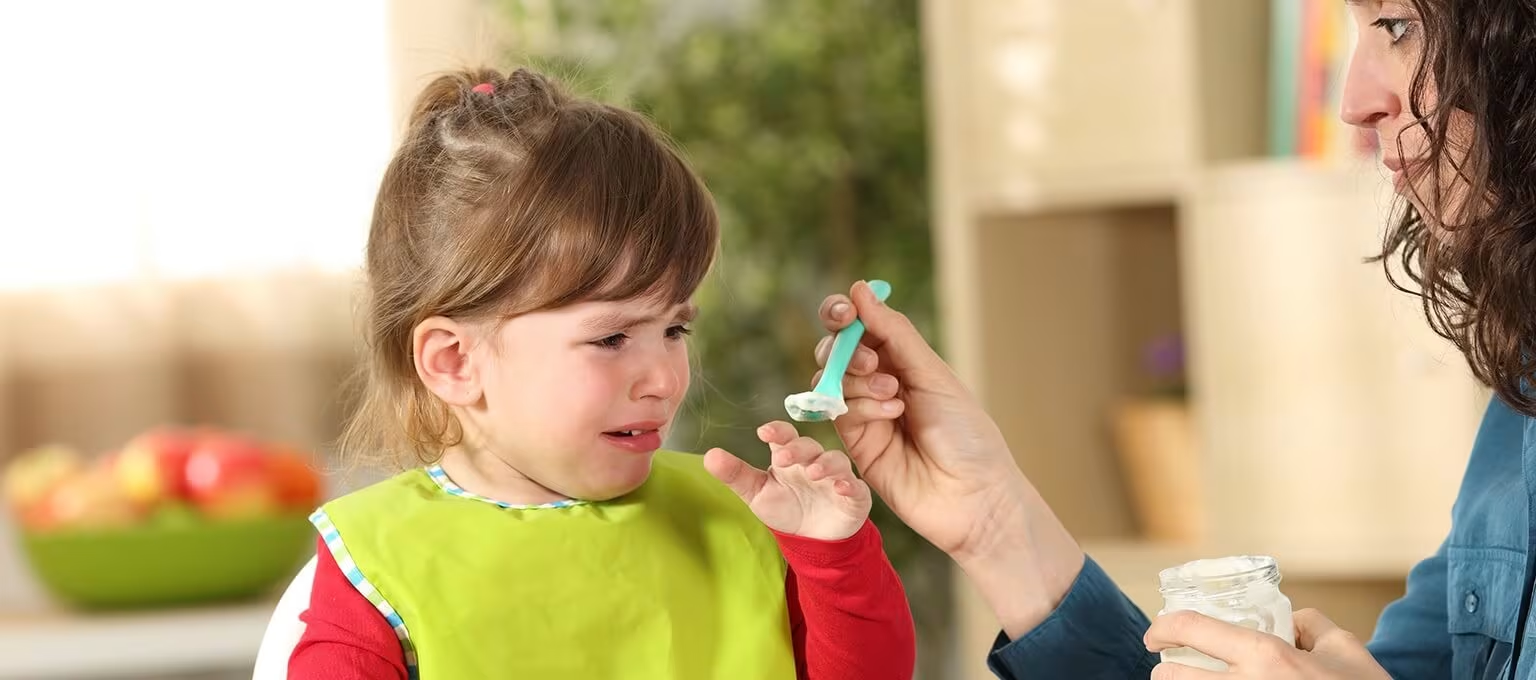
Toddler Pushing Boundaries? Learn Techniques to Help you Best Handle the Situation
Set boundaries for kids' behavior. Without them, they won't know what's acceptable. Learn effective responses as parents. More info.
Read moreHow to Help a Child Who Is Shy
What causes shyness? How can we help a young child overcome these feelings?
Read moreFighting Toddlers: Handling Aggressive Behavior
Does your child fight a lot? Some toddlers and preschoolers get into repeated and escalating tussles. Get some tips and insight on helping kids cope with aggressive behavior.
Read moreManners for Toddlers
Are you struggling with getting your little one to say please and thank you? A few smart strategies and techniques may help this go more smoothly. Learn more about teaching manners.
Read morePotty Talk: Curbing Bad Language in Toddlers
Poo-poo head! Sometimes, the words toddlers and preschoolers use are not as innocent as you might hope. What does this bad language really mean to them?
Read moreHow Understanding ‘Power’ Can Help With Toddler Behavior
Back to basics parenting consists of four major tools that parents can learn to resolve 90% of behavior issues with your little ones at home. Mastering the first principle, power, is an important step to conquering these challenges and reducing tantrums. Read more about it here!
Read moreWhy Some Children Cry More Than Others
You might ask yourself why your baby cries so much. Here’s what you can do to soothe your baby and relieve your own stress.
Read moreToddler Biting: How to Help a Child Who Bites
Ouch! Biting is a common behavior among toddlers and preschoolers, who often have strong feelings and limited language ability. Get some tips on dealing with biting.
Read moreWhy Does Your Child Suck Her Thumb and Should You Stop It?
Most babies suck their thumbs, but should you be trying to stop it when they get older? Learn why your child sucks her thumb and when to break the habit.
Read moreJoin a World of Support
through Pregnancy and Parenthood.
TRACK WITH TOOLS
LEARN WITH EXPERTS
GET REWARDED




Where You Already Belong