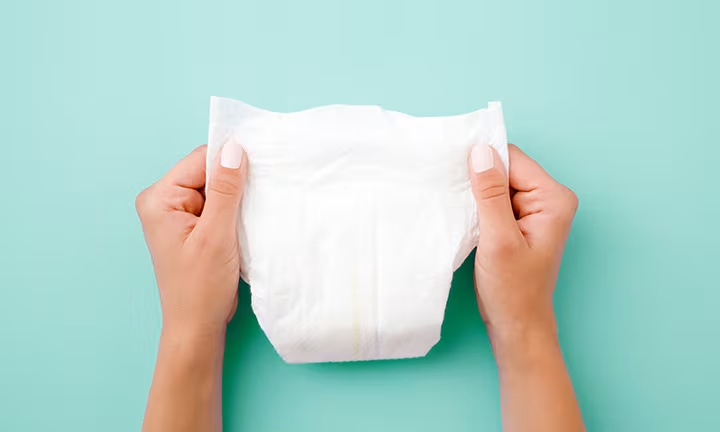
What Ingredients Are NOT In Pampers Products


Key Takeaways
As parents ourselves, we know that understanding what’s in your baby’s products can be intimidating, but it doesn’t have to be. We’re glad you’re here and we’re here to help if you have any questions about our products. We’re proud to take as much time and care determining what is not included in our products as we spend evaluating the materials that go in them. Read more about our safety standards and our no-go ingredients below.
Are Pampers Ingredients Safe?
YES! All ingredients, materials, formulation processes, and final products are extensively evaluated to ensure that your baby’s health is never compromised and intentionally selected and created to provide your baby with the best possible protection. At each stage of product design, we evaluate ingredients to ensure its safety before it comes in contact with your baby’s skin.
Tip Pampers products are specially designed with your baby’s comfort and safety in mind. Check out our FAQs page for information on product ingredients. |

Baby Growth Chart Calculator
Keep an eye on your baby’s average growth by tracking height, weight, and head circumference with our simple tool.
This is a mandatory field.
This is a mandatory field.
This is a mandatory field.
This is a mandatory field.
*Input details of your baby’s last measurements. **Source: World Health Organization
Thoughtfully Chosen Ingredients
All Pampers diapers, wipes, and training pants are made from ingredients that are carefully selected and evaluated for safety and to keep baby’s skin dry. The ingredients we use are common in most diapers and wipes that are used by millions of babies around the world.

The No-Go Ingredients
The following ingredients are never used in any Pampers products:*
*Remember that some of these substances are present in everyday life, and therefore may be present in trace amounts of everyday household items, such as drinking water, air or dust. What’s important to remember is that every substance has a safe threshold, and we’ve spent decades working with health care professionals and regulatory agencies to define those thresholds. We will NEVER use an ingredient that poses harm to your baby. Have more questions about what we include in Pampers products? Visit our FAQ page or contact us for more information.
In Summary Pampers rigorously tests products and ingredients at every stage of development to ensure our products are safe and effective for your baby. |
How We Wrote This Article The information in this article is based on the expert advice found in trusted medical and government sources, such as the American Academy of Pediatrics and the American College of Obstetricians and Gynecologists, as well as Pampers’ own safety and product experts. When applicable, you can find a full list of sources used for this article below. The content on this page should not replace professional medical advice. Always consult medical professionals for full diagnosis and treatment.
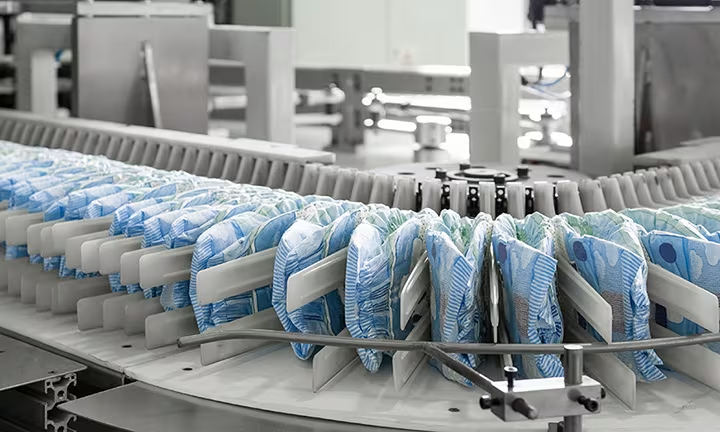
How Are Pampers Diapers And Wipes Manufactured?
Learn more about the manufacturing process of Pampers products, including diapers. Pampers diapers are monitored for safety once in market.
Read more![Discover The Pampers Safety Promise]](https://images.ctfassets.net/2ql69mthp94m/287avtdivzt4XJ0EcEiCed/c61799238a2e717a9a84938a940ab0be/4_steps_of_safety_assessment_720x432.jpg?fm=avif&w=3840&q=75)
Discover The Pampers Safety Promise
Pampers works to provide safe, high-quality products for your baby. To accomplish this, all products are tested using the Pampers 4-step safety promise.
Read more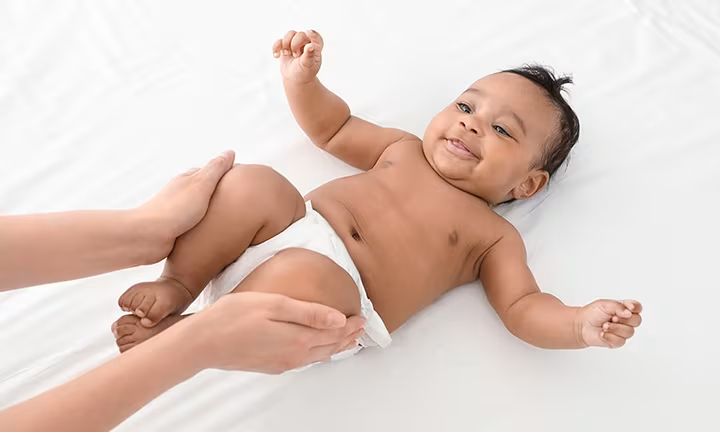
What’s In A Pampers Diaper?
Pampers diapers are made of many different layers and materials. Learn more about what the absorbent material is made of and the ingredients.
Read more
Our Pampers Safety Promise
Discover how Pampers keeps your baby safe with hypoallergenic materials, expert testing, and ingredient transparency. No PFAS, no parabens, just trusted protection.
Read more
Our Dedication To Safety
Your baby's safety is a top priority for us at Pampers. Find out about high quality products and smart practices that keep your family safe.
Read moreHow Are Pampers Diapers And Wipes Manufactured?
Learn more about the manufacturing process of Pampers products, including diapers. Pampers diapers are monitored for safety once in market.
Read moreDiscover The Pampers Safety Promise
Pampers works to provide safe, high-quality products for your baby. To accomplish this, all products are tested using the Pampers 4-step safety promise.
Read moreWhat’s In A Pampers Diaper?
Pampers diapers are made of many different layers and materials. Learn more about what the absorbent material is made of and the ingredients.
Read moreOur Pampers Safety Promise
Discover how Pampers keeps your baby safe with hypoallergenic materials, expert testing, and ingredient transparency. No PFAS, no parabens, just trusted protection.
Read moreOur Dedication To Safety
Your baby's safety is a top priority for us at Pampers. Find out about high quality products and smart practices that keep your family safe.
Read moreHow Are Pampers Diapers And Wipes Manufactured?
Learn more about the manufacturing process of Pampers products, including diapers. Pampers diapers are monitored for safety once in market.
Read moreDiscover The Pampers Safety Promise
Pampers works to provide safe, high-quality products for your baby. To accomplish this, all products are tested using the Pampers 4-step safety promise.
Read moreWhat’s In A Pampers Diaper?
Pampers diapers are made of many different layers and materials. Learn more about what the absorbent material is made of and the ingredients.
Read moreJoin a World of Support
through Pregnancy and Parenthood.

Where You Already Belong