Week 4
of pregnancy

You are 10% through your pregnancy, with your due date in 36 weeks
Fetal development
Height
~0.04 in
Weight
Weekly highlights
- 1Baby’s Development. The fertilized egg has implanted in your uterus and is now rapidly dividing into the embryo and support tissues. The placenta and yolk sac are beginning to form, and the amniotic fluid is just starting to develop.
- 2Bodily Changes & Symptoms. Some early symptoms may start this week, such as light spotting (from implantation), breast tenderness, fatigue, bloating, or mood changes. Nausea might begin, too, but many still feel no symptoms. If you experience heavy bleeding, persistent spotting, or pain, check in with your healthcare provider.
- 3Health & Wellness. If your period is late, a home pregnancy test may show a positive result. For confirmation, schedule a visit with your healthcare provider. Most due dates are calculated from the first day of your last period—not the day of conception.
- 4Tips & To-Dos. Begin taking a prenatal vitamin with at least 400 micrograms of folic acid, eat nutrient-rich foods (especially those with calcium and iron), and stay well-hydrated. Avoid alcohol, smoking, and hot tubs or saunas, and talk to your provider before starting any new workouts or treatments like massage.
You are 10% through your pregnancy, with your due date in 36 weeks
Checklist for week 4
- Schedule a pregnancy confirmation appointment, if needed.
- Though it’s common to wait until after your first trimester to make the big announcement (as that’s when the risk of miscarriage is much lower), you might want to share the good news with your partner or a close family member to have a little support from the start.
- Think about what lifestyle changes you may need to make (like adjusting your diet, for example), and plan how you will implement them.
Loyalty program
Are you starting to think about buying the first diapers for your baby?
Get exclusive recommendations and offers just for you to save hundreds of $$$ on Pampers

Get the Pampers Rewards app
Key Takeaways
At four weeks, you’re officially pregnant and might even experience a few common early pregnancy symptoms, such as implantation bleeding, bloating, nausea, or fatigue. It’s also possible you won’t notice anything just yet, which is totally normal! Keep reading to learn about what happens at 4 weeks pregnant, including signs and symptoms, your baby’s development, and what you might want to ask your healthcare provider.
Highlights at 4 Weeks Pregnant
Here are a few important points to consider and highlights to look forward to during your fourth week of pregnancy:
Confirming Your Pregnancy at 4 Weeks
If you've just found out you’re pregnant, congratulations! Perhaps you received this exciting news after missing your period, which might make you wonder if you can get a positive pregnancy test at 4 weeks?
At 4 weeks pregnant, a home pregnancy test could show a positive result if you have high enough levels of the pregnancy hormone hCG (human chorionic gonadotropin), which is present in your urine about 10 days after conception. If your hCG levels are still too low to detect, you might see a false negative test when just 4 weeks pregnant. For the most accurate results, it’s best to wait until after you’ve missed your period to take a pregnancy test —when your hCG levels will be higher—and confirm your pregnancy with your healthcare provider.
When is my due date if I'm 4 weeks pregnant? After confirming your pregnancy, the first question on your mind might be when to expect your little one’s arrival! Your healthcare provider can confirm that exciting date, but in the meantime, try our Due Date Calculator.
How Many Months Is 4 Weeks Pregnant?
Your healthcare provider will usually refer to your pregnancy in terms of weeks, but it’s also common to hear a reference to months. Most of the time, what's considered the first month of pregnancy includes the first four weeks (though this can vary, as the weeks of pregnancy don't fit evenly into months). So, at 4 weeks pregnant, you’re in your first month of pregnancy, even if you haven’t noticed any belly bump or symptoms!
Are you asking yourself, “If I'm four weeks pregnant, when did I conceive?” This is another common question that your healthcare provider can help you answer. Pregnancy is measured as 280 days or 40 weeks, beginning with the date you started your last period. If you have an average 28-day cycle, you probably conceived during the second or third week of your pregnancy.
4 Weeks Pregnant: Your Baby's Development
While you’ve been adjusting to being pregnant, the new life inside you has been busy. Here’s what’s going on inside your uterus at 4 weeks pregnant:
During the upcoming weeks, your little one will also start forming a neural tube, which is the main building block for the brain and spine. All the activity at 4 weeks pregnant sets your baby up to start all this important development.
How Big Is a Baby at 4 Weeks Pregnant?
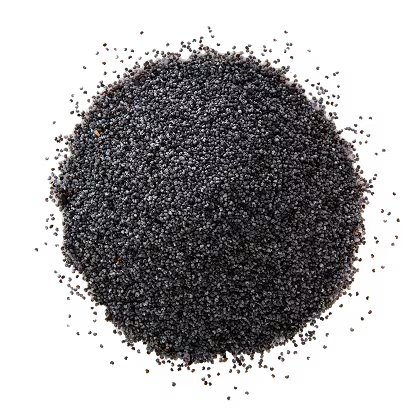
At 4 weeks pregnant, your baby is very tiny, as the newly implanted embryo is only about 0.04 inches long. For comparison, this is just about the size of a poppy seed!
Your Baby: What Does 4 Weeks Pregnant Look Like?
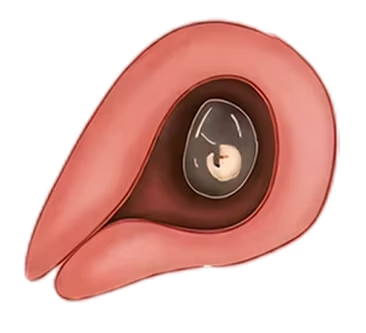
So, if the embryo is just a poppy seed, what does that look like at 4 weeks pregnant? For a sneak peek, look at this illustration of the gestational sac at 4 weeks to get a glimpse of what’s happening in your belly:
Your Body at 4 Weeks Pregnant
A few pregnancy symptoms may appear at 4 weeks pregnant, though it’s completely normal if you’re experiencing no symptoms at all—or, at least, haven’t noticed them. Generally, pregnancy symptoms will be minor at 4 weeks pregnant, so you might feel some cramping and see a little bit of spotting, both of which can happen as the fertilized egg implants itself in your uterus.
As mentioned above, your body is now starting to make the pregnancy hormone hCG, which tells your ovaries to stop releasing an egg each month, thus stopping your monthly period. HCG also increases the production of other hormones, such as estrogen and progesterone, so even at 4 weeks pregnant, you could experience some of those hormone-related symptoms. Keep reading to learn the most common signs that you’re pregnant during this exciting week.
4 Weeks Pregnant: Your Symptoms
Every pregnancy is unique, and what you experience during this pregnancy may be different than what you experienced during a previous pregnancy. To help you feel more prepared for whatever may come, look at this list of possible symptoms of pregnancy at four weeks:
Less Common Pregnancy Symptoms at 4 Weeks
Listed above are common signs of pregnancy during the first couple of months, but many wonder about typical symptoms, like trouble sleeping or food cravings. These are less common during early pregnancy, so if you’re 4 weeks pregnant and hungry all the time (or craving strange food combinations) or can’t sleep, it’s best to consult your healthcare provider.
Symptoms at 4 weeks pregnant shouldn’t be severe or cause a lot of pain, so other symptoms not to ignore include feeling pelvic pain, pain in your ovary, lower back pain, or pain on your side (right or left), or experiencing diarrhea or feeling more constipated than usual. There’s a lot going on during pregnancy and hormones can trigger many different feelings, but if you’re in pain or experience anything unusual, consult your healthcare provider right away.

How Big Is a Pregnant Belly at 4 Weeks?
Everyone and every pregnancy is unique, but it’s safe to say that you probably won’t see any difference in your pregnant belly’s size at 4 weeks. Remember, your little one is only the size of a poppy seed! Still, slight bloating around your abdomen may accompany your pregnancy at four weeks, so you might notice what appears to be a small belly. Just know that, typically, a baby bump doesn’t usually show until around weeks 12 to 16, when your uterus starts to move outside your pelvis area.
What Does 4 Weeks Pregnant Look Like?
To get a better idea of what your belly might look like around 4 weeks pregnant, when you’re in your first month of pregnancy, check out the image below.
4 Weeks Pregnant: Things to Consider
It’s still early in your pregnancy journey, but there are plenty of important things to consider. From adapting your lifestyle to writing down milestones, check out our list below.
Tip for Partners If you've just found out that your partner is pregnant, it’s time to celebrate! Take some time together as a couple and treat your partner to something they enjoy doing. Keep in mind that your partner might feel some pregnancy symptoms right now, so be supportive if they decide on an early night. |
4 Weeks Pregnant: Questions for Your Healthcare Provider
Even if you’ve just found out you’re pregnant, you may already have questions that you'd like to put to your healthcare provider. Some common questions at 4 weeks pregnant include:
FAQS AT A GLANCE
It’s quite possible to feel no pregnancy symptoms at 4 weeks, but if you do experience some of those common signs, you could feel tired, bloated, moody, and/or a little nauseated.
How We Wrote This Article The information in this article is based on expert advice found in trusted medical and government sources, such as the American Academy of Pediatrics and the American College of Obstetricians and Gynecologists. You can find a full list of sources used for this article below. The content on this page should not replace professional medical advice. Always consult medical professionals for full diagnosis and treatment.
- American College of Obstetricians and Gynecologists. Your Pregnancy and Childbirth: Month to Month, 6th ed. (Washington, DC: American College of Obstetricians and Gynecologists, 2015).
- Mayo Clinic. Guide to a Healthy Pregnancy, 2nd ed. (Rochester, MN: Mayo Clinic Press, 2018).
- ACOG. “Can I Get a Massage While Pregnant?”
- ACOG. “How Your Fetus Grows During Pregnancy.”
- ACOG. “Smoking Cessation During Pregnancy.”
- ACOG. “Tobacco, Alcohol, Drugs, and Pregnancy.”
- ACOG. “Bleeding During Pregnancy.”
- CDC. About Folic Acid
- FDA. “Medicine and Pregnancy.”
- KidsHealth. “Pregnancy Week 4.”
- KidsHealth. “Pregnancy.”
- KidsHealth. “Eating During Pregnancy.”
- KidsHealth. “Exercising and Pregnancy.”
- KidsHealth. “Medical Care During Pregnancy.”
- ACOG. Can I use a sauna or hot tub early in pregnancy?
- Mayo Clinic. “Pregnancy Week by Week.”
- Mayo Clinic. “Symptoms of Pregnancy.”
- Medline Plus. “Pregnancy and the Flu.”
- OASH. “Pregnancy Tests.”
- PubMed. “Surviving Morning Sickness Successfully.”
Week 27
At 27 weeks pregnant, your baby’s heart rate may slow down when they hear your voice. Learn all baby development and your symptoms at 27 weeks pregnant.
Read more
Week 14
At 14 weeks, your fetus is developing a sense of taste and smell. Find out more about baby development, and common pregnancy symptoms at 14 weeks pregnant.
Read more
Week 15
Discover the most common pregnancy symptoms at 15 weeks pregnant, and all the exciting ways your fetus is developing this week.
Read more
Week 16
At 16 weeks pregnant, you may have an ultrasound where you could learn your baby’s gender. Discover more about this exciting week of pregnancy.
Read more
Week 20
By 20 weeks pregnant you may have found out the gender of your baby via an ultrasound. Learn more about what takes place at 20 weeks.
Read more
Week 11
At 11 weeks pregnant, you might be experiencing some unusual food cravings. Find out why this happens and catch up on baby development at 11 weeks.
Read more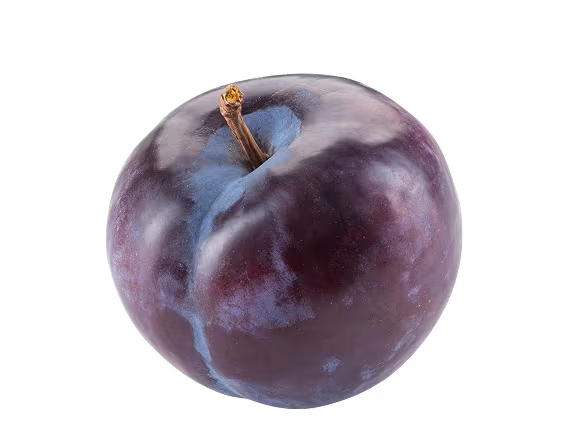
Week 13
At 13 weeks pregnant, you’ve almost made it to the “honeymoon” period of pregnancy—the second trimester. Find out what else is exciting about this pregnancy week.
Read more
Week 12
At 12 weeks pregnant, there’s a lot going on with your baby’s development and your body. Read on to learn about what happens during this week of pregnancy.
Read more
Week 34
At 34 weeks, you might feel more pressure on your pelvis as your baby drops down. Read on for more about what might happen during this week of pregnancy.
Read more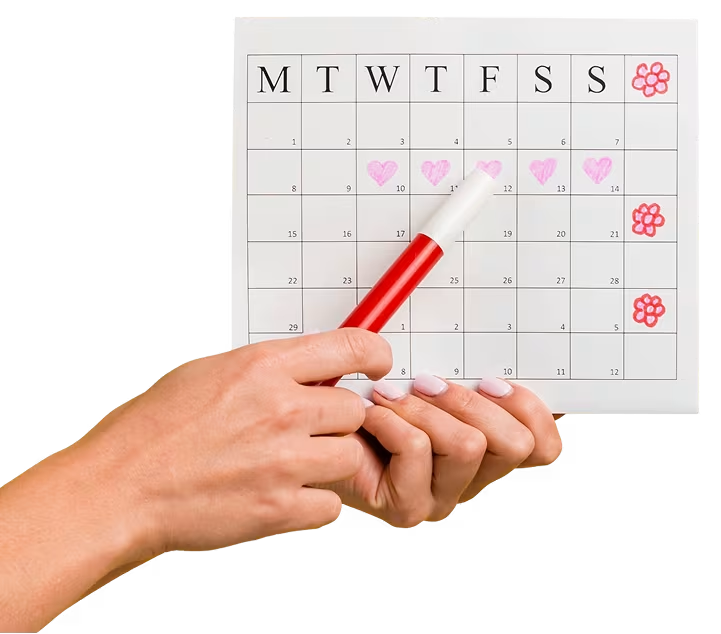
Weeks 1 to 2
Will you really notice those very early signs of pregnancy in weeks 1 to 2? Read on to learn what’s happening in your body at the start of your pregnancy.
Read moreWeek 27
At 27 weeks pregnant, your baby’s heart rate may slow down when they hear your voice. Learn all baby development and your symptoms at 27 weeks pregnant.
Read moreWeek 14
At 14 weeks, your fetus is developing a sense of taste and smell. Find out more about baby development, and common pregnancy symptoms at 14 weeks pregnant.
Read moreWeek 15
Discover the most common pregnancy symptoms at 15 weeks pregnant, and all the exciting ways your fetus is developing this week.
Read moreWeek 16
At 16 weeks pregnant, you may have an ultrasound where you could learn your baby’s gender. Discover more about this exciting week of pregnancy.
Read moreWeek 20
By 20 weeks pregnant you may have found out the gender of your baby via an ultrasound. Learn more about what takes place at 20 weeks.
Read moreWeek 11
At 11 weeks pregnant, you might be experiencing some unusual food cravings. Find out why this happens and catch up on baby development at 11 weeks.
Read moreWeek 13
At 13 weeks pregnant, you’ve almost made it to the “honeymoon” period of pregnancy—the second trimester. Find out what else is exciting about this pregnancy week.
Read moreWeek 12
At 12 weeks pregnant, there’s a lot going on with your baby’s development and your body. Read on to learn about what happens during this week of pregnancy.
Read more