Month 9
of pregnancy
You are 80% through your pregnancy, with your due date in 8 weeks
Fetal development
Height
~18 to 20 in
Weight
~7.5 to 9 lb
Monthly highlights
- 1Baby’s Development. By month 9, your baby is nearly ready for birth, likely weighing around 6–9 pounds and measuring 18–20 inches. Lungs mature until delivery, and weight gain continues at about half a pound per week. Most babies turn head-down, though breech positions may require monitoring or intervention.
- 2Bodily Changes & Symptoms. Frequent urination, swelling, back pain, pelvic pressure, stretch marks, and tingling hands are common. Relief can come from elevating your feet, using good posture and supportive shoes, resting when possible, and wearing liners for leaks.
- 3Health & Wellness. Expect Group B strep screening, with antibiotics during labor if positive. Learn to distinguish Braxton Hicks from true labor, and call your provider if contractions become regular, your water breaks, or bleeding occurs. Fundal height usually matches your weeks of pregnancy.
- 4Tips & To-Dos. Pack your hospital bag, practice the route, and finalize baby gear and nursery prep. Review pain relief and induction options with your provider, stock newborn essentials, and arrange meals, childcare, and home help for after birth.
You are 80% through your pregnancy, with your due date in 8 weeks
Checklist for month 9
- Ask your healthcare provider under what circumstances your labor might be induced.
- Find out whether you’ll have access to things like a birthing bed, stools, chairs, balls, and pools during labor.
- Pack your hospital bag and practice your route to the hospital. Download our hospital bag checklist for tips on what to pack.
- Put any finishing touches on your baby’s nursery, double check you have all of these baby gear essentials, and finish any early baby proofing work you want to get out of the way now.
- Read up on what may happen in the moments after you give birth like skin to skin contact with your newborn, and the APGAR test.
- Start preparing for what you’ll need in the first few weeks and months after you bring your newborn baby home. Consider freezing some meals for later, asking friends and family for help with chores, and organizing child care for your older children.
- By the time your baby is born you’ll have been through a lot with pregnancy, labor, and childbirth all behind you. Read up on postpartum recovery so you’ll know what kinds of things are in store for you as your body heals after bringing a new life into the world.
- Learn more about the diapers and wipes you’ll need when you bring your little one home. Our diaper size and weight chart can help you decide what to buy and how many diapers you’ll need when your little one makes her debut.
- Check out the baby products that Pampers Parents recommend.
- Because you’ve got a lot of diapers in your future, download the Pampers Club app to make sure you’re getting benefits from all those diapers you’ll be buying!

Loyalty program
Are you starting to think about buying the first diapers for your baby?
Get exclusive recommendations and offers just for you to save hundreds of $$$ on Pampers

Get the Pampers Rewards app
Key Takeaways
Yes! The end of your pregnancy is in sight now, and the big day approaches. Keep in mind that your little one isn’t technically considered full term and ready for birth until 39 weeks and that only about 1 in 20 women give birth on their exact due date. So, you both may have a few more weeks of growing to do, but you’re almost there! Read on to learn more about the kinds of things that are in store for you when you’re nine months pregnant.
Common Pregnancy Symptoms at 9 Months Pregnant
When you’re nine months pregnant, some of the normal pregnancy symptoms you might experience include:
How Is Your Baby Developing This Month?
Your baby’s lungs develop right up until birth as they get ready for her first breath and that all-important first cry. Soon you’ll be amazed by how much noise she can make! She’s also continuing to pack on a little more weight — as much as half a pound each week until she’s born.
At 39 weeks, your pregnancy is considered full term. Read our explainer on full term pregnancy for all the information you need on what terms like preterm, early term, and late term mean.
How Is Your Baby Positioned When You’re 9 Months Pregnant?
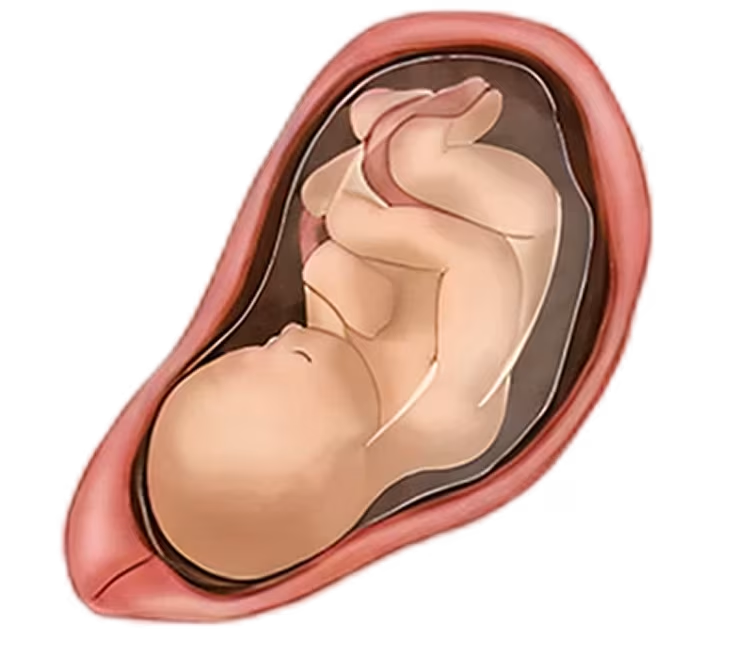
At some point this month, most babies move into a head-down position, if they haven't done so already. This is called a vertex presentation. If your baby is positioned with her buttocks or feet first, this is known as a breech position. If your baby is breech close to your due date, your healthcare provider may attempt to turn her into a head-down position manually; in some cases, you could be offered a cesarean birth if your provider thinks this is the safest option for you and your baby. It’s also possible that your little gymnast may change positions on her own more than once before she’s born. Your provider will be keeping an eye on her positions at your weekly checkups.
How Big Is Your Baby When You’re 9 Months Pregnant?
By the time you give birth, your baby will be about 18 to 20 inches long and weigh 6 to 9 pounds. Read more about the average baby birth weight and what factors can affect it.
What Does a Fetus Look Like at 9 Months?
Check out these illustrations for a glimpse at what your baby might look like when you’re nine months pregnant:
9 Months Pregnant: Your Body’s Changes
You might be feeling big, tired, and impatient at this point, and rightfully so! At this stage of pregnancy, your healthcare provider may recommend a screening for GBS (group B streptococci), which are bacteria that can lead to urinary tract infections in moms-to-be, and, on rare occasions, can be passed to the baby as she moves through the birth canal during delivery. If your test is positive, you’ll likely be given an antibiotic during labor to help prevent passing the bacteria to your baby. Cramps or contractions can be signs of labor at nine months pregnant, so it’s important to remember that there’s a difference between Braxton Hicks contractions, which are practice contractions, and the real thing. Here are a few of the main differences you might notice:
| Braxton Hicks contractions | True labor contractions |
|---|---|
| Contractions occur at irregular intervals and don't get closer together. Learn how to time your contractions so you'll see how often they're coming. | These come at regular intervals. Over time, they occur more frequently and become more intense. Download our Contraction Tracking Chart to help monitor your progress. |
| Contractions are usually weak, and don't increase in intensity over time. | They get stronger over time and might feel more painful. |
| Contractions stop when you move or change positions. | Contractions don't stop, even if you move around. |
| They're usually felt only in the front of your abdomen. | The sensation often starts in the back, radiating around to the front. |
If your water breaks, or you notice mucus plug discharge, these are two other signs that your body is getting ready to go into labor.
How Far Along Are You at 9 Months Pregnant?
At nine months pregnant, you’re so close to the end of your third trimester and your pregnancy! You might still be wondering how many weeks nine months pregnant is. There is no simple answer, as the weeks of pregnancy don't fit evenly within nine distinct months. This final month could start anywhere from 33 weeks to 36 weeks and "end" somewhere around 40 weeks with the birth of your baby.
FAQs at a Glance
At this point in pregnancy, your healthcare provider will measure your fundal height, which is the distance between the pubic bone and the top of your uterus. When the fundal height is measured in centimeters, it usually correlates to how far into your pregnancy you are. So, for example, if you're 35 weeks pregnant, it's likely that your fundal height will be about 35 centimeters.
Checklist for When You’re 9 Months Pregnant
- Book: Your Pregnancy and Childbirth: Month to Month, Sixth Edition Paperback – January 1, 2016 by American College of Obstetricians and Gynecologists (Author)
- Cleveland Clinic: Fetal positions for birth
- Mayo Clinic: 2nd trimester pregnancy: What to expect
- Mayo Clinic: Carpal tunnel syndrome
- Mayo Clinic: What causes ankle swelling during pregnancy — and what can I do about it?

Month 8
At eight months pregnant, you might have some uncomfortable symptoms and also be busy preparing for your baby’s birth. Learn more about what’s in store this month.
Read more
Month 2
At two months pregnant, you might get symptoms like morning sickness. Learn more about this as well as baby development and what else is in store this month.
Read more
Month 3
By Leigh Lindsey
At three months pregnant, you’re nearing the end of the first trimester. Learn about some of the common symptoms, and about your baby’s development.
Read more
Month 1
By Leigh Lindsey
At one month pregnant, mood swings, cramps, and nausea may strike. Find out more about early pregnancy symptoms and how your baby is developing.
Read more
Month 4
You’ve made it to the “honeymoon” trimester of pregnancy. At four months pregnant, some of your early pregnancy symptoms may subside. Learn more here.
Read more
Month 5
At five months pregnant, you’re at the halfway mark and might even have an ultrasound scheduled. Discover everything that happens in the coming weeks.
Read more
Month 6
At six months pregnant, use the tail-end of the second trimester to get the nursery ready or take a babymoon. Learn more about this exciting month here.
Read more
Month 7
At seven months pregnant, your growing bump may be causing you some discomfort. Find out more about pregnancy symptoms and baby development here.
Read moreMonth 8
At eight months pregnant, you might have some uncomfortable symptoms and also be busy preparing for your baby’s birth. Learn more about what’s in store this month.
Read moreMonth 2
At two months pregnant, you might get symptoms like morning sickness. Learn more about this as well as baby development and what else is in store this month.
Read moreMonth 3
By Leigh Lindsey
At three months pregnant, you’re nearing the end of the first trimester. Learn about some of the common symptoms, and about your baby’s development.
Read moreMonth 1
By Leigh Lindsey
At one month pregnant, mood swings, cramps, and nausea may strike. Find out more about early pregnancy symptoms and how your baby is developing.
Read moreMonth 4
You’ve made it to the “honeymoon” trimester of pregnancy. At four months pregnant, some of your early pregnancy symptoms may subside. Learn more here.
Read moreMonth 5
At five months pregnant, you’re at the halfway mark and might even have an ultrasound scheduled. Discover everything that happens in the coming weeks.
Read moreMonth 6
At six months pregnant, use the tail-end of the second trimester to get the nursery ready or take a babymoon. Learn more about this exciting month here.
Read moreMonth 7
At seven months pregnant, your growing bump may be causing you some discomfort. Find out more about pregnancy symptoms and baby development here.
Read more