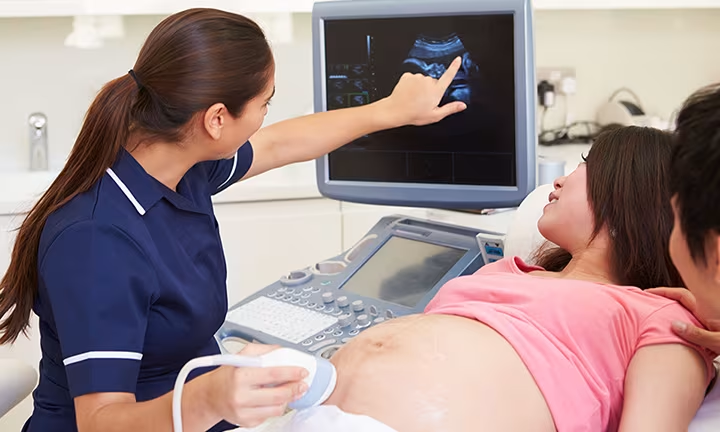
An Overview of the Pregnancy Trimesters


Being pregnant is an unforgettable experience for parents-to-be. As you make your way through each of the three pregnancy trimesters, we'll introduce you to the changes and symptoms you're likely to encounter, as well as the many ways your baby will grow and develop. Read on for a breakdown of some of the developmental highlights, symptoms, and things to consider during the weeks of your first, second, and third trimesters of pregnancy. Read on to discover what's coming up in each stage of your exciting pregnancy journey!
What are the Trimesters of Pregnancy?
Let’s start with the common question, “How many trimesters are in a pregnancy?” Pregnancies consist of 3 stages, commonly referred to as trimesters. Your healthcare provider will likely refer to your pregnancy in weeks. The weeks of pregnancy are grouped into trimesters, each of which is about 12 or 13 weeks long. Here’s how the weeks of pregnancy are split into trimesters:
How Long Is a Pregnancy?
So, how many weeks is a pregnancy? The average pregnancy is about 40 weeks long. The weeks of pregnancy are counted from the first day of your last menstrual period, which means an extra two weeks are counted at the beginning when you aren’t actually pregnant yet.
Wondering how long a pregnancy is in months? A typical pregnancy is also actually about 10 months long, not the 9 months that most people think of. Your healthcare provider is more likely to refer to the weeks instead of the months.
Determining how far along you are in your pregnancy helps your healthcare provider check the progress of your baby’s growth, guides the timing of certain prenatal tests, and allows your provider to more accurately assess your pregnancy symptoms.
Your healthcare provider will assess when your baby is due, but you can get an approximate date using our Due Date Calculator tool below. Remember that though a typical pregnancy lasts about 40 weeks, most pregnant people give birth within about two weeks of their estimated due date.
First Trimester: Weeks 1 to 13
Congratulations—the first trimester is here and you’re going to have a baby! This is exciting news and we’re happy to help guide you as you begin your pregnancy journey.
Now let’s get down to the details: How long is the first trimester and when does it end? The first trimester starts from the first day of your last menstrual period and lasts until 13 weeks and 6 days. This means your first trimester starts when you’re not technically pregnant. Don’t worry if this seems confusing, your healthcare provider will help explain it to you and give you your estimated due date.
Your Baby’s Development
What are the developmental stages of a fetus in the first trimester? In the first few weeks, all the things your baby needs to grow in the uterus will form, including the placenta, the umbilical cord, and the amniotic sac that will fill with amniotic fluid. Starting off as a bundle of cells, your little one will soon begin to develop a spine; the major organs such as the brain, heart, and lungs; basic facial features like the nose, eyes, and mouth; and buds that will grow into arms and legs. Your baby's skin will still be thin and transparent at the end of the trimester, but will soon thicken, and soft nails will also begin to grow. Although your baby’s muscles will begin to develop and your little one will be able to move, it’s still too early for you to feel these flutters just yet.
And it’s still too early to find out whether you’re having a little boy or girl, but that doesn’t mean you can’t have a little fun guessing! Try our fun (and unscientific) quiz to guess your baby’s gender.
First Trimester Symptoms
Some of the early signs of pregnancy that you might be experiencing during the weeks of the first trimester include:
Things to Keep in Mind for This Trimester
Second Trimester: Weeks 14 to 27
If you’re experiencing some uncomfortable symptoms in the early stages of pregnancy, you may be wondering “When does the second trimester start?”. The good news is that the second trimester, starting at week 14, which is month 4 of pregnancy, may be much more enjoyable than the first! This is sometimes called the “honeymoon period,” when some pregnancy symptoms subside and many pregnant individuals experience a surge in energy.
Your Baby’s Development
Your baby is busy in there! So, which fetal developments occur during the second trimester? During this trimester your little one will begin to hear sounds and will even respond to loud or familiar sounds. A waxy coating called vernix will cover the skin, protecting it from the fluids in the amniotic sac. Downy hair called lanugo will grow all over your baby’s body—in fact, some babies are even born with patches of lanugo.
By the end of this trimester, your baby’s fingers and toes will be completely formed, and your little one will have unique fingerprints! You will likely begin to feel your baby moving around during this trimester. This sensation is known as quickening.
Towards the end of this stage, your baby will start to grow more rapidly, including putting on more fat.
Second Trimester Symptoms
Although this is a much more comfortable time for many pregnant people, there may still be some discomfort! Here are some of the potential symptoms in the second trimester of pregnancy:
Things to Keep in Mind for This Trimester

Labor pain management
Every birth journey is unique, and opinions on managing labor pain vary widely. Maybe you're considering an epidural, planning to go natural, or are still undecided. Take our poll to share your thoughts and see how other parents feel about pain management during childbirth.
Instant Results
Enjoyment Guaranteed
Personal Insights
Third Trimester: Weeks 28 to 40
As you draw nearer to your final trimester (and meeting your baby!), you may wonder “When does the third trimester start?” The third trimester starts at week 28 and ends when your baby is born! Your baby is considered full-term at week 39. Once you’re in this stage of pregnancy, you’re in the final stretch, both literally and figuratively! Enjoy the last few months of pregnancy and use this time to rest and get ready.
Your Baby’s Development
During the past few months, your baby’s eyes have been fused shut, but early in this trimester your baby will be able to open and close their eyelids and sense bright lights. Your baby’s brain, lungs, and nervous system are maturing rapidly and finishing their development by the end of this trimester.
Your little one’s bones are hardening, though their skull remains soft. They may be gaining about half a pound per week and are putting on extra fat too, so their skin is less wrinkly by the middle of this trimester.
As your baby grows, they won’t have as much room for somersaults, but you’ll still feel them kicking and maybe even hiccupping.
Toward the end of this trimester, your baby will have dropped lower into your pelvis in preparation for birth. By week 40, many babies weigh between 6 to 9 pounds and measure 18 to 20 inches long.
Third Trimester Symptoms
As you prepare for your new arrival, you may be feeling busy yet excited, and you’ll likely be experiencing certain discomforts as your baby and uterus grow and your body prepares for labor. You’re carrying an extra load right now, so remember to get plenty of rest and take care of yourself. Here are some symptoms in the third trimester of pregnancy:

Things to Keep in Mind for This Trimester
FAQS AT A GLANCE
The first trimester includes weeks 1 to 13, the second trimester lasts from weeks 14 to 27, and the third trimester goes from weeks 28 until you give birth.
The Bottom Line
Now that you have an overview of the trimesters, for more detail on the stages of pregnancy take a look at our Pregnancy Calendar where you can choose whether to get more info on a week-by-week, month-by-month, or trimester-by-trimester basis. There are so many exciting and interesting things happening during pregnancy and we’ve got you covered!
- American College of Obstetricians and Gynecologists. Your Pregnancy and Childbirth: Month to Month, 7th ed. (Washington, DC: American College of Obstetricians and Gynecologists, 2021).
- American College of Obstetricians and Gynecologists. “How Your Fetus Grows During Pregnancy.”

Your Guide to Pregnancy Hormones
To answer your questions about the physical and emotional changes you may experience during pregnancy, we've created a complete guide to pregnancy hormones.
Read more
When Do You Start Showing?
When do you start showing in pregnancy? Explore factors influencing when your baby bump becomes noticeable and why it might start to show a little earlier.
Read more
What Are the Signs and Symptoms of Preterm Labor?
By Christopher B. Peltier
Preterm labor happens when your body is getting ready for labor too early. Read on to discover the causes, signs, and how to avoid premature labor.
Read more
Fetal Development Week by Week
Learn about the stages of fetal development throughout your pregnancy. Each week, your baby is growing and changing rapidly. Find out more.
Read more
Full-Term Pregnancy Explained
By Leigh Lindsey
A pregnancy reaches full term at 39 weeks, reducing the risk of health and development issues for babies. Learn about terms like preterm, early term, late term, and post term.
Read more
Human Chorionic Gonadotropin (hCG) Levels Explained
During pregnancy, hCG hormone levels increase sharply. Discover why, what exactly hCG is, how it’s measured, and what are the typical levels during pregnancy.
Read moreYour Guide to Pregnancy Hormones
To answer your questions about the physical and emotional changes you may experience during pregnancy, we've created a complete guide to pregnancy hormones.
Read moreWhen Do You Start Showing?
When do you start showing in pregnancy? Explore factors influencing when your baby bump becomes noticeable and why it might start to show a little earlier.
Read moreWhat Are the Signs and Symptoms of Preterm Labor?
By Christopher B. Peltier
Preterm labor happens when your body is getting ready for labor too early. Read on to discover the causes, signs, and how to avoid premature labor.
Read moreFetal Development Week by Week
Learn about the stages of fetal development throughout your pregnancy. Each week, your baby is growing and changing rapidly. Find out more.
Read moreFull-Term Pregnancy Explained
By Leigh Lindsey
A pregnancy reaches full term at 39 weeks, reducing the risk of health and development issues for babies. Learn about terms like preterm, early term, late term, and post term.
Read moreHuman Chorionic Gonadotropin (hCG) Levels Explained
During pregnancy, hCG hormone levels increase sharply. Discover why, what exactly hCG is, how it’s measured, and what are the typical levels during pregnancy.
Read moreYour Guide to Pregnancy Hormones
To answer your questions about the physical and emotional changes you may experience during pregnancy, we've created a complete guide to pregnancy hormones.
Read moreWhen Do You Start Showing?
When do you start showing in pregnancy? Explore factors influencing when your baby bump becomes noticeable and why it might start to show a little earlier.
Read moreJoin a World of Support
through Pregnancy and Parenthood.
TRACK WITH TOOLS
LEARN WITH EXPERTS
GET REWARDED



Where You Already Belong