
Why Some Children Cry More Than Others


There are children who routinely respond with tears to what seems like only the slightest provocation or challenge. Often they are viewed with disdain by other children and with embarrassment by their parents. Even the word "crybaby" reflects our disappointment that they aren't as mature or resilient as we'd like them to be.
Genetics and temperament seem to play a role in determining which children become crybabies. They are often the newborns who startle easily, have difficulty adjusting to bright lights, or seem very sensitive to the texture of clothing and diapers.
More Tears and More Laughter
That sensitivity appears to have a positive side as well: later on, these children generally become more empathic. They are quick to pick up and respond to the emotions not only of other children but also of animals. In their social interactions, they not only cry more than their peers, but laugh more as well.
Almost all toddlers and young preschoolers show dramatic emotional responses, such as anger or crying, over what parents and other adults think of as trivial issues. This is especially likely if they do not yet have the verbal skills they need to express their frustration when a playmate grabs their toy, for instance, or steps on their sand castle.
Such melodrama and tears are not expressions of weakness. Rather, they are signs that a young child is emotionally overwhelmed. Since he cannot express the intensity of what he's feeling in words, his emotions come out in tears. Generally, toddlers and preschoolers are quite forgiving of a playmate who occasionally cries. It's more of a problem for the parents, who sometimes (and wrongly) interpret their child's tears as evidence of a failure on their part.
How You Can Help
There are a few things you can do to help a sensitive child learn other ways besides crying to handle stress.
Read more about Toddler
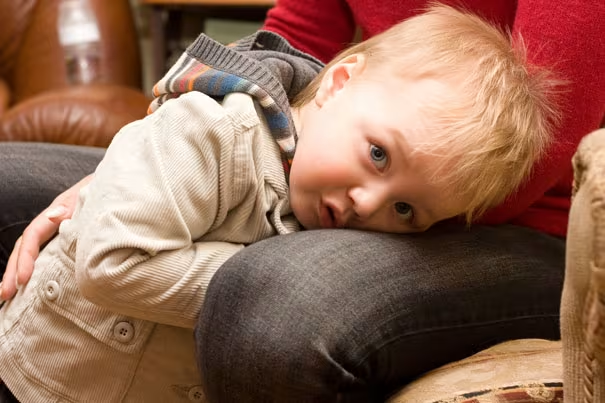
How to Help a Child Who Is Shy
What causes shyness? How can we help a young child overcome these feelings?
Read more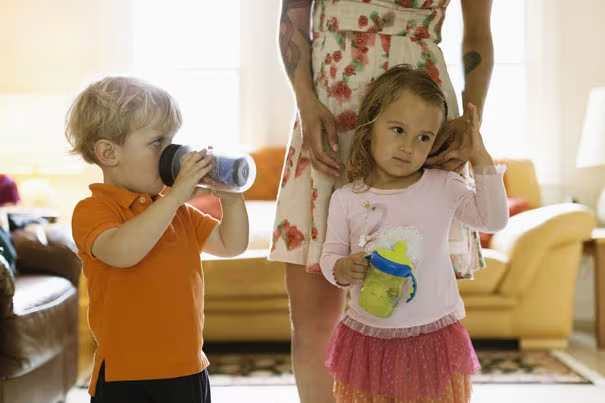
Fighting Toddlers: Handling Aggressive Behavior
Does your child fight a lot? Some toddlers and preschoolers get into repeated and escalating tussles. Get some tips and insight on helping kids cope with aggressive behavior.
Read more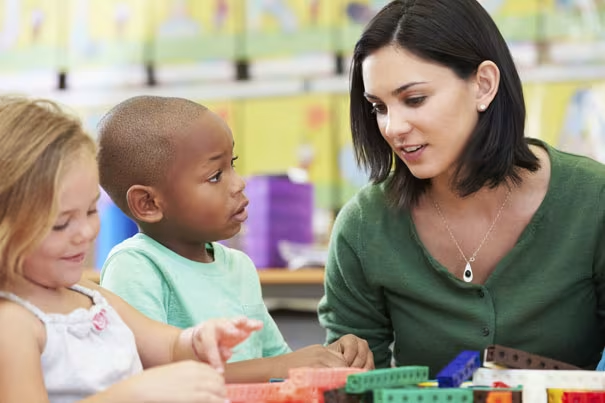
Manners for Toddlers
Are you struggling with getting your little one to say please and thank you? A few smart strategies and techniques may help this go more smoothly. Learn more about teaching manners.
Read more
Potty Talk: Curbing Bad Language in Toddlers
Poo-poo head! Sometimes, the words toddlers and preschoolers use are not as innocent as you might hope. What does this bad language really mean to them?
Read more
How to Handle Toddler Temper Tantrums
By Christopher B. Peltier
Temper tantrums are an inevitable part of toddler development. Learn how to prevent and manage your toddler’s temper tantrums before they escalate.
Read more
How Understanding ‘Power’ Can Help With Toddler Behavior
Back to basics parenting consists of four major tools that parents can learn to resolve 90% of behavior issues with your little ones at home. Mastering the first principle, power, is an important step to conquering these challenges and reducing tantrums. Read more about it here!
Read more
Toddler Biting: How to Help a Child Who Bites
Ouch! Biting is a common behavior among toddlers and preschoolers, who often have strong feelings and limited language ability. Get some tips on dealing with biting.
Read more
Why Does Your Child Suck Her Thumb and Should You Stop It?
Most babies suck their thumbs, but should you be trying to stop it when they get older? Learn why your child sucks her thumb and when to break the habit.
Read more
Pincer Grasp Development
Find out at what age your baby may start developing the pincer grasp, the type of hold that’s used for fastening and holding a pencil.
Read more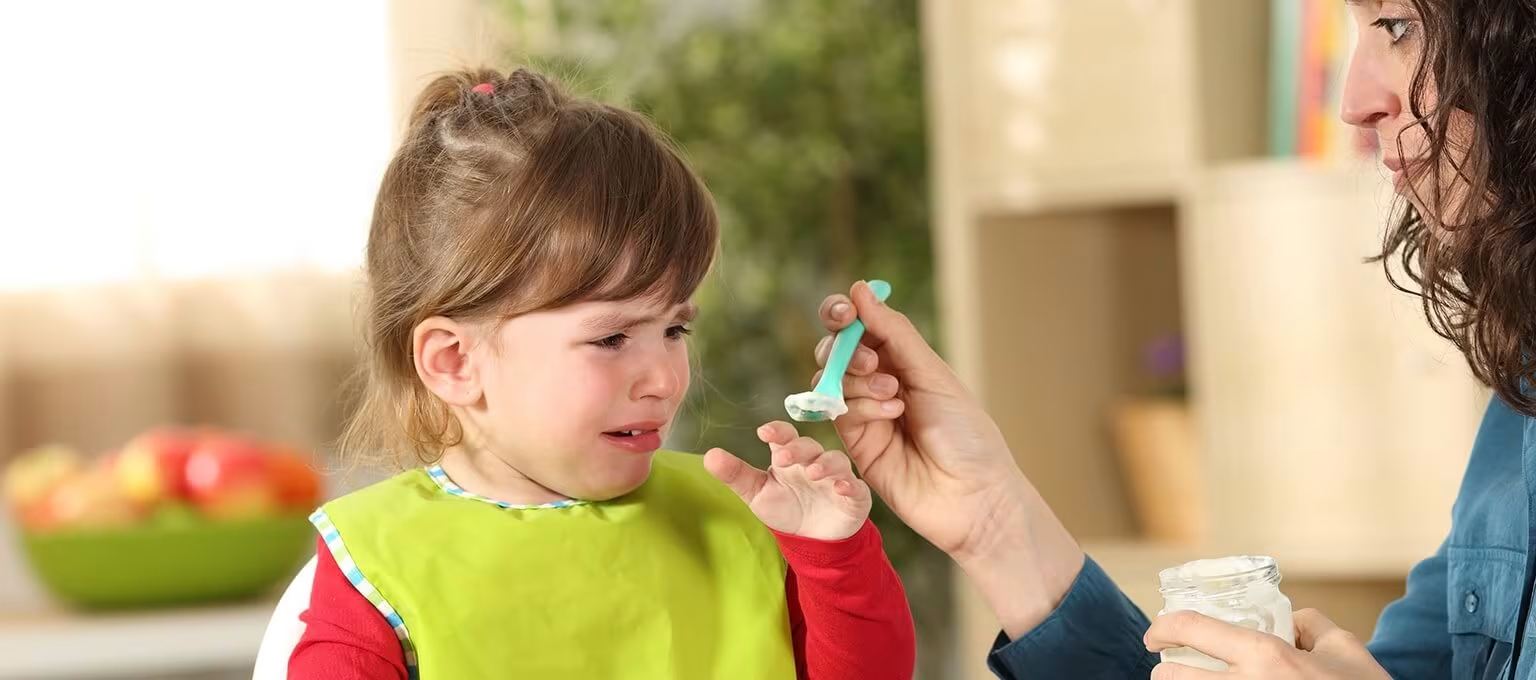
Toddler Pushing Boundaries? Learn Techniques to Help you Best Handle the Situation
Set boundaries for kids' behavior. Without them, they won't know what's acceptable. Learn effective responses as parents. More info.
Read moreHow to Help a Child Who Is Shy
What causes shyness? How can we help a young child overcome these feelings?
Read moreFighting Toddlers: Handling Aggressive Behavior
Does your child fight a lot? Some toddlers and preschoolers get into repeated and escalating tussles. Get some tips and insight on helping kids cope with aggressive behavior.
Read moreManners for Toddlers
Are you struggling with getting your little one to say please and thank you? A few smart strategies and techniques may help this go more smoothly. Learn more about teaching manners.
Read morePotty Talk: Curbing Bad Language in Toddlers
Poo-poo head! Sometimes, the words toddlers and preschoolers use are not as innocent as you might hope. What does this bad language really mean to them?
Read moreHow to Handle Toddler Temper Tantrums
By Christopher B. Peltier
Temper tantrums are an inevitable part of toddler development. Learn how to prevent and manage your toddler’s temper tantrums before they escalate.
Read moreHow Understanding ‘Power’ Can Help With Toddler Behavior
Back to basics parenting consists of four major tools that parents can learn to resolve 90% of behavior issues with your little ones at home. Mastering the first principle, power, is an important step to conquering these challenges and reducing tantrums. Read more about it here!
Read moreToddler Biting: How to Help a Child Who Bites
Ouch! Biting is a common behavior among toddlers and preschoolers, who often have strong feelings and limited language ability. Get some tips on dealing with biting.
Read moreWhy Does Your Child Suck Her Thumb and Should You Stop It?
Most babies suck their thumbs, but should you be trying to stop it when they get older? Learn why your child sucks her thumb and when to break the habit.
Read moreJoin a World of Support
through Pregnancy and Parenthood.
TRACK WITH TOOLS
LEARN WITH EXPERTS
GET REWARDED




Where You Already Belong