
What Are Pampers Diapers Made Of? Ingredients Explained


Every day, Pampers diapers work hard to keep millions of babies around the world dry, comfortable, and happy. As a parent, you naturally want to understand the products that touch your baby's delicate skin. Have you ever wondered what exactly makes a Pampers diaper perform so well?
This guide takes you on an exciting journey inside a Pampers diaper. We’ll explore the meticulously chosen materials and advanced design that work together seamlessly to provide dryness and comfort for your little one, supporting their everyday adventure.
Key Takeaways
At a glance, here’s what makes up a Pampers diaper:
If you’ve ever wondered, “What are diapers made of?” you’re not alone. As a parent, it’s natural to want to understand the materials that help keep your baby dry, comfortable, and protected every day.
In short, Pampers diapers are carefully engineered using soft, skin-friendly layers and highly absorbent materials that work together to lock away moisture and help reduce leaks.
How Do Pampers Diapers and Their Ingredients Work?
Understanding what's inside a diaper becomes much easier when you know how its layers work together. Each Pampers diaper is thoughtfully constructed with multiple layers that perform essential functions:
Pampers Diaper Ingredients Explained
When parents ask, “What are Pampers made of?”, the answer isn’t just a list of materials—it’s how those materials work together to keep your baby dry, comfortable, and protected.
Here’s a clear breakdown of the key materials in Pampers diapers and what they actually do.
Soft topsheet (Polypropylene and occasionally polyethylene)
This is the layer your baby feels most. It’s designed to feel soft while helping keep skin drier by moving moisture away quickly.
Did you know? Some of our diapers have a unique topsheet design with pores to help absorb runny poo.
Our scientists have discovered that tiny perforations can significantly improve the absorption of runny messes, reducing direct contact and helping to prevent diaper rash. This has been published in Pediatric Dermatology (Gustin et al., 2018).
What this means for your baby: By minimizing skin exposure to wetness, our diapers help to keep your baby comfortable and support healthy skin, reducing the likelihood of irritation and diaper rash. |
Absorbent Core (polyester, cellulose, sodium polyacrylate)
The absorbent core is the “engine” of the diaper. It is composed of three layers that have a very specific role.
The acquisition layer made of polyester fibers acquires and spreads wetness horizontally to minimize diaper bulk between baby legs.
The high performing cellulose we use is bleached without elemental chlorine and is coming from FSC certified forests and other controlled sources.
The bids of sodium polyacrylate can absorb up to 30 times its own weight and turn liquid into a gel, helping prevent it from coming back to the surface.
Did you know? Studies publish in Pediatric Dermatology (Odio & Thaman, 2014)show that with the introduction of superabsorbent diaper materials combined to breathable outercover, moderate-to-severe diaper rash decreased by 50% over time.
What this means for your baby: Helps keep skin dry over time to provide skin comfort, especially overnight. |
Breathable Outer Cover (Polyethylene + Polypropylene)
The outer cover keeps moisture inside while allowing airflow through micro-perforations.
What this means for your baby: Helps support healthy-looking skin by balancing dryness and breathability |
Fastening System & Elastics (Polypropylene, polyethylene and spandex)
The fastening tabs allow you to adjust the fit as needed.
What this means for your baby: A better fit helps prevent leaks while keeping your baby comfortable as they move, sleep, and play. |
Anti-Leak Barriers & Cuffs (polypropylene, spandex)
These features help create a secure seal around your baby’s legs and waist while staying soft and flexible.
Some Pampers diapers also include a blowout barrier to help catch mess up the back and provide extra protection.
What this means for your baby: Helps keep mess contained—so your baby stays cleaner and more comfortable. |
Wetness Indicator (Color-Changing Strip)
What this means for you: A simple visual cue that can make diaper changes easier—especially in those early newborn days. |
Adhesives (polymers)
What this means for your baby: All the diaper parts remain reliably combined throughout the use to provide the protection and comfort your baby needs. |
What Ingredients Are NOT in Pampers Diapers?
Parents often ask, “Do Pampers diapers have chemicals?” The word “chemicals” simply refers to ingredients. In Pampers diapers, every ingredient is carefully selected, evaluated, and always used in a safe way for your baby.
Every ingredient in our diapers is a conscious choice, selected for its purpose and gentle properties, reflecting our dedication to your baby's well-being. This deliberate approach means our diaper design is crafted without the addition of ingredients such as:
Remember that some of these substances are present in common environmental elements like drinking water, air, and dust and may therefore be found in trace amounts in various household items used in everyday life, as These can occasionally be detected using very sensitive analytical equipment, not representative of real usage conditions. What’s important to remember is that every substance has a safe threshold, and we’re committed to working against the highest safety standards. We will NEVER intentionally use an ingredient that poses a safety concern to your baby.
You can learn more about the ingredients that are NOT in Pampers products in our dedicated guide.
Are Pampers Diapers Safe for Babies?
Yes! All Pampers products are safe.
When it comes to your baby’s skin, wanting the safest, most gentle option is only natural. Many parents searching for non-toxic diapers ask, “Are Pampers diapers non-toxic?”
Let’s deep dive into Pampers products that are safely used by millions of babies every day. Pampers diapers are thoughtfully designed with carefully selected materials and made without common unwanted ingredients—so you can feel confident with every change.
Research published in Clinical Pediatrics (Counts et al., 2017) reviewed common questions about diaper ingredients and found that materials used in modern disposable diapers are carefully selected and assessed for safety.
Pampers diapers are:
Each diaper is also fully traceable and monitored during production, helping ensure consistent quality. Discover more about the Pampers manufacturing process.
Parents also ask... How do I know if a diaper is suitable for sensitive skin? Look for claims such as dermatologically tested, hypoallergenic and SHA accreditation and monitor your baby's skin for any signs of irritation. What should parents look for when reviewing diaper ingredients? Parents often look for transparency, safety testing information, skin-friendly materials, and clear labeling of components. |
How to Choose the Right Diaper for Your Baby
Choosing a diaper isn’t just about size—it’s about finding materials that help care for your baby’s skin while keeping them dry and comfortable.
You might explore different Pampers options depending on what matters most to you:
Explore our full range of Pampers diapers.
In the end, the best diaper is the one that keeps your baby comfortable, helps protect their skin, and gives you confidence with every change.
The Bottom Line
Understanding what Pampers diapers are made of can help bring peace of mind.
Pampers diapers are built layer by layer using:
Each ingredient is carefully chosen, evaluated, and designed to work together—so your baby stays dry, comfortable, and protected every day.
Because when it comes to your baby, every layer matters.
How We Wrote This Article
The information in this article is based on the expert advice found in trusted medical and government sources, such as the American Academy of Pediatrics and Pampers’ own safety and product experts. When applicable, you can find a full list of sources used for this article below. The content on this page should not replace professional medical advice. Always consult medical professionals for full diagnosis and treatment.
Sources
![Discover The Pampers Safety Promise]](https://images.ctfassets.net/2ql69mthp94m/287avtdivzt4XJ0EcEiCed/c61799238a2e717a9a84938a940ab0be/4_steps_of_safety_assessment_720x432.jpg?fm=avif&w=3840&q=75)
Discover The Pampers Safety Promise
Pampers works to provide safe, high-quality products for your baby. To accomplish this, all products are tested using the Pampers 4-step safety promise.
Read more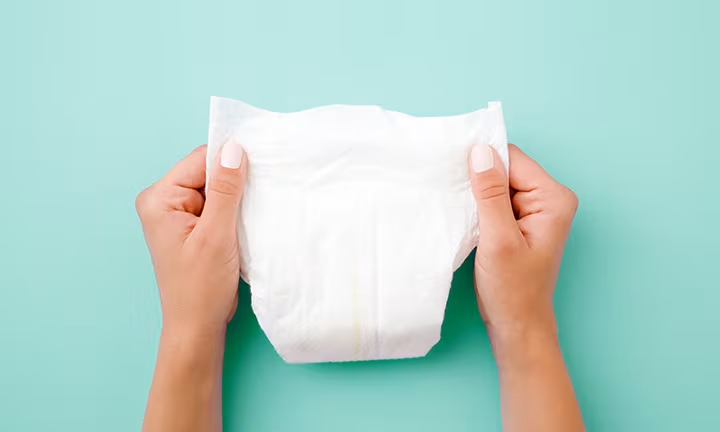
What Ingredients Are NOT In Pampers Products
All Pampers diapers, wipes, and training pants are made from ingredients that are carefully tested and shown to be safe. Find a list of no-go ingredients here.
Read more
What’s In A Pampers Diaper?
Pampers diapers are made of many different layers and materials. Learn more about what the absorbent material is made of and the ingredients.
Read more
Our Pampers Safety Promise
Discover how Pampers keeps your baby safe with hypoallergenic materials, expert testing, and ingredient transparency. No PFAS, no parabens, just trusted protection.
Read more
Baby Wipes Ingredients: What’s Inside Pampers Wipes?
Discover Pampers baby wipes ingredients. Dermatologically tested, gentle formula safely cleans and helps support baby’s developing skin. Find out now!
Read more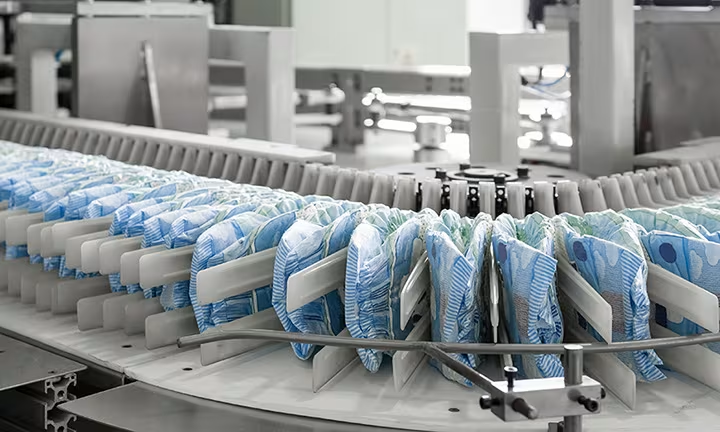
How Are Pampers Diapers And Wipes Manufactured?
Wondering where Pampers are made? See how experts craft them for safe baby protection. Trusted quality - discover the process now!
Read more
Our Dedication To Safety
Your baby's safety is a top priority for us at Pampers. Find out about high quality products and smart practices that keep your family safe.
Read moreDiscover The Pampers Safety Promise
Pampers works to provide safe, high-quality products for your baby. To accomplish this, all products are tested using the Pampers 4-step safety promise.
Read moreWhat Ingredients Are NOT In Pampers Products
All Pampers diapers, wipes, and training pants are made from ingredients that are carefully tested and shown to be safe. Find a list of no-go ingredients here.
Read moreWhat’s In A Pampers Diaper?
Pampers diapers are made of many different layers and materials. Learn more about what the absorbent material is made of and the ingredients.
Read moreOur Pampers Safety Promise
Discover how Pampers keeps your baby safe with hypoallergenic materials, expert testing, and ingredient transparency. No PFAS, no parabens, just trusted protection.
Read moreBaby Wipes Ingredients: What’s Inside Pampers Wipes?
Discover Pampers baby wipes ingredients. Dermatologically tested, gentle formula safely cleans and helps support baby’s developing skin. Find out now!
Read moreHow Are Pampers Diapers And Wipes Manufactured?
Wondering where Pampers are made? See how experts craft them for safe baby protection. Trusted quality - discover the process now!
Read moreOur Dedication To Safety
Your baby's safety is a top priority for us at Pampers. Find out about high quality products and smart practices that keep your family safe.
Read moreDiscover The Pampers Safety Promise
Pampers works to provide safe, high-quality products for your baby. To accomplish this, all products are tested using the Pampers 4-step safety promise.
Read moreJoin a World of Support
through Pregnancy and Parenthood.
TRACK WITH TOOLS
LEARN WITH EXPERTS
GET REWARDED




Where You Already Belong