
Second trimester
of pregnancy
You are 35% through your pregnancy, with your due date in 26 weeks
Fetal development
Height
~14 in
Weight
~2.25 lb
Highlights: Second Trimester
- 1Baby’s Development. Between weeks 14 and 27, your baby grows rapidly and becomes more active. By week 14, senses of smell and taste are forming, and by week 18 you may feel the first flutters of movement (quickening). Vernix, a protective waxy coating, forms around week 17, and by 23 weeks, your baby can hear and recognize your voice. Near week 27, REM sleep patterns develop, and baby may even smile during sleep.
- 2Bodily Changes & Symptoms. Your bump becomes more noticeable, and energy often improves compared to the first trimester. Common symptoms include round ligament or pelvic pain, backaches, nasal congestion, constipation, leg cramps, skin darkening, itchiness or stretch marks, and “pregnancy brain.” Breasts may enlarge, so maternity wear and a supportive bra can help.
- 3Health & Wellness. Around 18–20 weeks, an anatomy ultrasound checks growth, organs, and placenta health and can reveal your baby’s sex if you choose. Expect ongoing fundal height checks and a glucose screening for gestational diabetes, usually between 24–28 weeks. Aim for about 300 extra calories per day, stay active with moderate exercise, and continue prenatal vitamins.
- 4Tips & To-Dos. Keep up regular checkups, balanced nutrition, hydration, and safe activity. Rest and use relaxation strategies to manage stress. Contact your provider for severe headaches, vision changes, sudden swelling, bleeding, fluid leakage, or any concerning symptoms.
You are 35% through your pregnancy, with your due date in 26 weeks
Checklist for the Second Trimester
- Take a deep dive into the second trimester by reading our week-by-week pregnancy articles.
- Consider getting some stretchy clothes to accommodate your growing bump.
- Sign up for childbirth classes to ensure you get a spot.
- Make an appointment for your second-trimester ultrasound scan, which usually takes place between 18 and 20 weeks.
- Ask your provider what, if any, genetic testing may be recommended for you. Consider whether genetic tests like amniocentesis and maternal serum alpha-fetoprotein (MSAFP) testing are right for you.
- Ask your provider if you'll need an Rh immune globulin shot. (This may be recommended if an earlier blood test showed you're Rh negative.)
- Make a list of any questions you have about your pregnancy and childbirth so that you can get answers at your next prenatal checkup.
- Ask your healthcare provider about options you have for labor and childbirth, and think about where you would like to give birth.
- Think about whether you would like to write a birth plan.
- Start doing pelvic floor exercises. Consult our guide to learn more about Kegel exercises.
- Think about whether you'd like to hire a labor support person called a doula. If yes, start researching your options.
- Talk to your employer about your maternity leave if you haven’t already.
- Connect with other seasoned and soon-to-be parents in your area or online so that you have a support network of others who are going through similar experiences.
- Start researching your childcare options.
- Still looking for the perfect baby name? Play around with our Baby Name Generator for inspiration.
- If you’ve decided not to find out your baby’s sex during an ultrasound, have some fun with our Chinese Gender Predictor.
- If you are given a printout of the ultrasound image, use it to start your baby’s first photo album.

Loyalty program
Are you starting to think about buying the first diapers for your baby?
Get exclusive recommendations and offers just for you to save hundreds of $$$ on Pampers

Get the Pampers Rewards app
For many, the second trimester is the most enjoyable and comfortable phase of pregnancy. You’re now in that sweet spot where your morning sickness may have subsided, but your baby bump isn’t so big yet that it gets in the way or causes any aches. You may even experience a burst of energy! Read on to learn about fetal development in the second trimester and what happens during this exciting period.
Highlights From the Second Trimester of Pregnancy
Second Trimester Weeks: When Does the Second Trimester Start and When Does It End?
So, when is the second trimester, when does it start and end, and how many weeks long is it? The second trimester runs from 14 to 27 weeks of pregnancy, lasting 14 weeks orapproximately three and a half months.
Your Baby’s Development in the Second Trimester
In the second trimester of pregnancy, your baby’s development continues and builds on the foundation set in the first trimester. Your little one goes from being about the size of a nectarine to that of a head of cauliflower, and this growth spurt will become more visible to the outside world as your belly becomes more prominent. Each week of pregnancy brings something new. Read on for some of the highlights of your little one's development in the weeks during the second trimester.
14 Weeks: Senses Developing
Around the time you’re 14 weeks pregnant, your little one is developing their senses of smell and taste, and their skin is becoming thicker.
16 Weeks: Baby on the Go
Around the time you’re 16 to 18 weeks pregnant, or soon after, you may feel a tiny flutter in your belly as your little one rolls around or does flips in the amniotic sac. This feeling is called quickening. If this is your first pregnancy, it may take longer for you to detect the sensations of movement. Conversely, if this is your second pregnancy, you may recognize the signs of movement sooner. You’ll probably notice your baby’s kicks and movements are getting stronger from around 19 weeks onward. Your baby is growing but still has plenty of room to move now, which is a good thing because it gets a little more cramped during the third trimester.
17 Weeks: Your Baby's Skin Gets a Waxy Coating
The glands in your baby’s skin may already be producing a greasy substance called vernix. This will cover your little one’s body and act as a waterproof barrier protecting the skin.
22 Weeks: Your Baby Has Eyebrows
Those little brows are visible now: tiny tufts of fine hair with no pigment yet. Though your baby's eyelids are still fused shut for a few more weeks, their eyes can now move behind the lids.
23 Weeks: Your Baby Can Recognize Sounds
Your baby's recent ear development means that they can now recognize familiar sounds, such as your voice. This is an excellent time to start singing to your baby and playing music—and don't forget to talk to them and tell them what you’re up to.
27 Weeks: Your Baby May Smile
Your baby’s first smile could be happening any day now, as babies often start practicing inside the womb from around 27 weeks. Smiling typically occurs when your baby is asleep, often during the Rapid Eye Movement (REM) phase.
Illustration of Fetal Development Week by Week
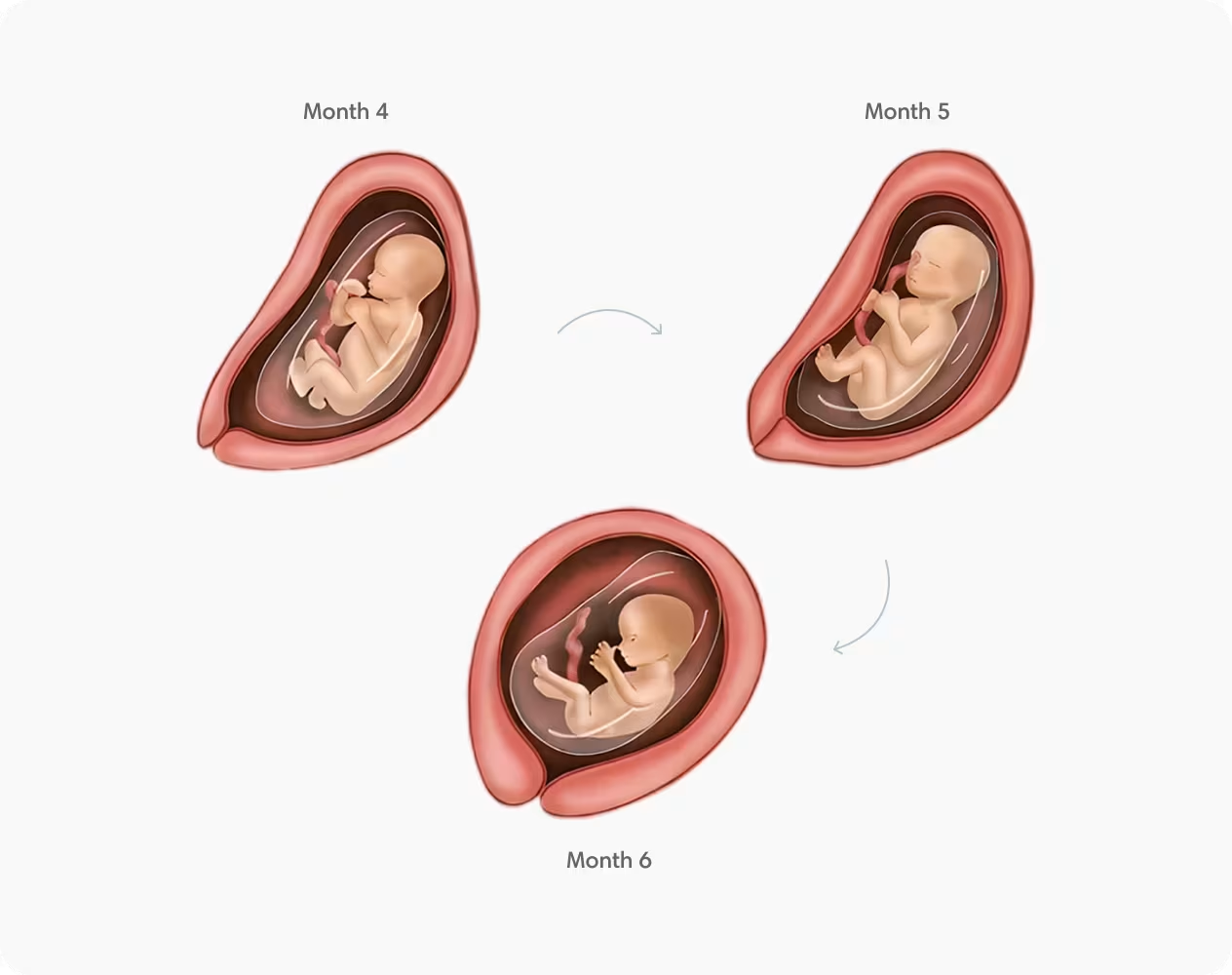
Take a look at the illustrations below for a visual representation of how your little one develops week to week during the second trimester:
What’s in Store for You in the Second Trimester
These are just some of the highlights and things to expect in the second trimester:

What Weeks and Months Are in the Second Trimester?
If you’re curious about what weeks and months make up the second trimester, check out our visual below to see what’s included and to get an idea of how your belly may be growing:
Second Trimester Symptoms
As you enter your second trimester of pregnancy, you may notice that symptoms such as morning sickness have subsided and that you’ve regained some of your energy. Old symptoms may make way for a few new ones, which we’ll explore in more detail below. Remember, every pregnancy is different, and you may or may not experience some of these common symptoms during the second trimester:
Precautions to Take in the Second Trimester of Pregnancy
During the second trimester of pregnancy, it’s important to maintain a healthy lifestyle and watch out for any unusual symptoms. Here are some good things to do and precautions to take:
As for signs your pregnancy is going well in the second trimester, your provider can fill you in on these, which may include consistent weight gain, the absence of severe pain, regular baby movements, the absence of vaginal bleeding, and generally feeling well. Always contact your healthcare provider if you have concerns.
When to Contact Your Healthcare Provider
It's important to maintain open lines of communication with your healthcare provider during pregnancy. Furthermore, don’t hesitate to seek medical attention if you experience any of the following symptoms during the second trimester or at any point in your pregnancy:
Remember, when in doubt, it's always wise to contact your healthcare provider, who can provide reassurance, conduct necessary tests, and offer appropriate treatment based on your specific situation. Listen to your body and trust your instincts. If something doesn't feel right, don't hesitate to seek help.
Checklist for the Second Trimester
Here’s a handy checklist to help you stay organized during your second trimester of pregnancy:
FAQS AT A GLANCE
The second trimester runs from 14 weeks to 27 weeks pregnant.
The Bottom Line
The second trimester of pregnancy is a time of remarkable development and change. During this phase, you could experience a burst of energy and may feel your little one wriggle around for the first time. As your baby grows and your body adjusts, staying informed and maintaining an open line of communication with your healthcare provider is important. Make sure to pay attention to your body, and don't hesitate to seek advice if you notice any unusual symptoms. Remember, every pregnancy journey is unique, and your healthcare provider will always be a top source of advice and support.
How We Wrote This Article The information in this article is based on expert advice found in trusted medical and government sources, such as the American Academy of Pediatrics and the American College of Obstetricians and Gynecologists. You can find a full list of sources used for this article below. The content on this page should not replace professional medical advice. Always consult medical professionals for full diagnosis and treatment.
- American Academy of Pediatrics, Caring for Your Baby and Young Child: Birth to Age 5, 7th ed. (New York: Bantam Books, 2019).
- ACOG. “Skin Conditions During Pregnancy.”
- Kids Health. “Sleep during pregnancy.”
- March of Dimes. “Pregnancy Week by Week – Week 15,”
- Mayo Clinic. “2nd trimester pregnancy: What to expect.”
- NCBI. Is there really such a thing as ‘mommy brain’?
- Mayo Clinic. “Fetal development: The 2nd trimester.”
- Mayo Clinic. “Nonallergic rhinitis.”
- Mayo Clinic. “Working during pregnancy: Do's and don'ts.”