Week 36
of pregnancy
You are 90% through your pregnancy, with your due date in 4 weeks
Fetal development
Height
~18 in
Weight
~6 lb
Weekly highlights
- 1Baby’s Development. Your baby is around 6 pounds. Growth now focuses on fat gain, while length is mostly complete. Movements may feel different with less space but should remain regular. Skull bones are formed but not fused, which helps during birth.
- 2Bodily Changes & Symptoms. As your baby drops into the pelvis (“lightening”), breathing may feel easier but pelvic pressure and frequent urination often increase. Common symptoms include Braxton Hicks contractions, sleep challenges, swelling, back pain, and tingling in hands or feet. Hydration, pillows, support hose, and gentle stretches can ease discomfort.
- 3Health & Wellness. You’ll likely begin weekly provider visits to monitor weight, blood pressure, cervical changes, and baby’s position. Screening for group B strep is common. Keep up with moderate activity, vitamin C intake, and daily kick counts—call your provider if movements noticeably decrease or if you have signs of preeclampsia or preterm labor.
- 4Tips & To-Dos. Finalize your birth plan, pack your hospital bag, and install the car seat. Wash baby clothes and linens, stock essentials, and continue baby-proofing. Learn the signs of labor—including regular contractions, mucus plug, and water breaking—so you’ll know when to call your provider.
You are 90% through your pregnancy, with your due date in 4 weeks
Checklist for week 36
- Find out what room options are available to you at your hospital or birthing center.
- Wash any new baby clothes and linens.
- Learn about your options for feeding your baby. Your healthcare provider can go over breastfeeding and formula feeding with you.
- Start your Pampers Diaper Stash, an online diaper fund for friends and family to gift all the diapers and wipes you will need. And make sure you have everything you need for all those diaper changes you’ll be doing, including things like diaper rash cream, a diaper pail, and a changing mat for the top of your changing table.
- If you haven’t already, start considering the things you’ll need to baby-proof your home. We asked thousands of Pampers Parents to review and vote on all the best baby products and their choices include baby gates and child-proof locks to help you with your babyproofing efforts.
Loyalty program
Are you starting to think about buying the first diapers for your baby?
Get exclusive recommendations and offers just for you to save hundreds of $$$ on Pampers

Get the Pampers Rewards app
At 36 weeks pregnant, you're coming ever closer to meeting your new bundle of joy. Your body is preparing itself for labor and delivery while your baby continues to grow and develop. Read on for insights and information on potential symptoms you might experience at 36 weeks of pregnancy, the developments taking place inside your belly, and what you can do to help prepare for labor and birth as you approach your due date.
Highlights at 36 Weeks Pregnant
Want some highlights from 36 weeks pregnant? Check these out:
36 Weeks Pregnant: Your Baby’s Development
Your little one's steady growth and various fetal developments continue around 36 weeks pregnant:
How Many Months Is 36 Weeks Pregnant?
You know that you're 36 weeks pregnant, but what is that in months? Although the 40 weeks of pregnancy don’t fit neatly into months, it’s likely you’re considered at the beginning of your ninth month now.
Baby's Size at 36 Weeks Pregnant
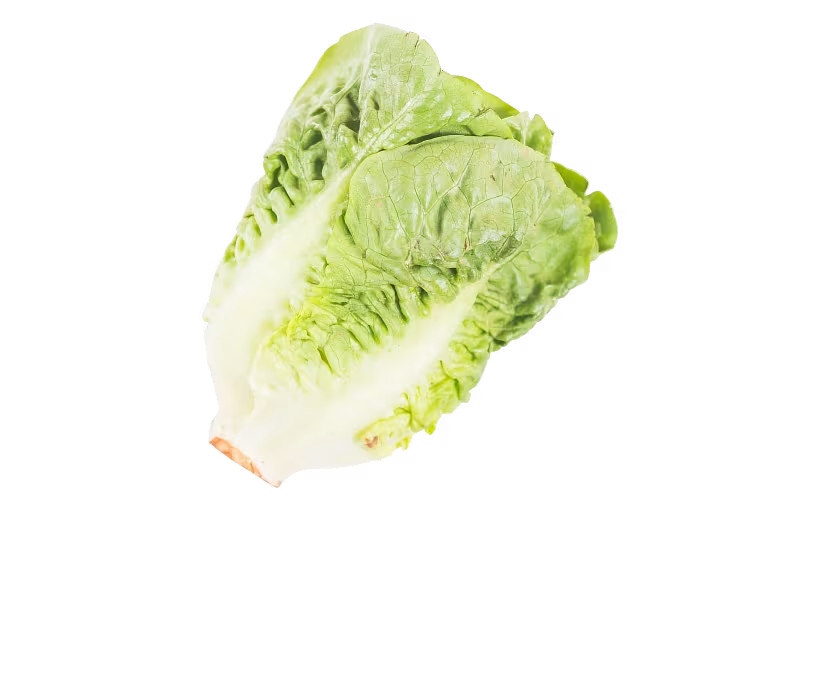
Your baby may likely have gained a pound or two over the past few weeks, and when you're 36 weeks pregnant, they’ve probably already reached the length they’ll be when they’re born. At 36 weeks, the size of your baby is about that of a head of Romaine lettuce. Though each baby is different, a typical baby weight at 36 weeks pregnant might be about six pounds.
Your Baby: What Does 36 Weeks Pregnant Look Like?
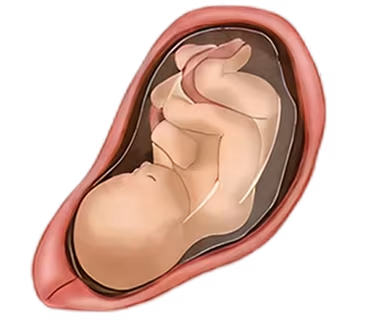
Although your healthcare provider would be able to confirm how your baby is positioned this week, here’s a general illustration of what your little one might look like and how your baby may be positioned at 36 weeks.
Your Body at 36 Weeks Pregnant
From now until you give birth, you may be going in for weekly checkups with your healthcare provider. During your appointment at 36 weeks pregnant and in the following weeks, you can expect to have your weight, blood pressure, and fundal height checked. Your provider may check your cervix to see if it’s preparing for labor.
Your provider will also examine you to find out whether your baby has moved into the head-down position in preparation for birth. If your baby is in a breech position, meaning that their bottom or their bottom and feet are positioned to come out first, the provider will be able to tell you whether they recommend trying to turn your little one.
You may have detected a feeling of pressure down below in your pelvic area and bladder around 36 weeks as your baby settles lower in your pelvis. The upside of your baby “dropping” is that there is now less pressure on your diaphragm and lungs than before, which is why this change is sometimes called “lightening.” You may be uncomfortable as your baby drops, but at least you’ll be breathing a little easier!
36 Weeks Pregnant: Your Symptoms
At 36 weeks pregnant, here are some of the symptoms you may be experiencing:
How Big Is a Pregnant Belly at 36 Weeks?
Around 36 weeks or in the coming weeks, as your pregnancy is nearly full term, your uterus will finish expanding. It may now weigh about 2 ½ pounds. This extra weight and size around 36 weeks pregnant may lead to some of the uncomfortable symptoms we listed above.
What Does 36 Weeks Pregnant Look Like?
Every baby bump is different, but here’s an idea of how your belly may look around 36 weeks pregnant.
36 Weeks Pregnant: Things to Consider
Here are a few things you may wish to consider at this stage, when you're 36 weeks pregnant:
Tip for Partners It might be a good idea to prepare for after the birth by stocking up on all the essentials for your new baby and your family. You may also want to precook and freeze some meals. This can save you some time when your baby is home and lets you focus more on quality family time. |
36 Weeks Pregnant: Questions for Your Healthcare Provider
Here are a few questions you might like to ask your healthcare provider around 36 weeks of pregnancy:
FAQS AT A GLANCE
If your baby is born at 36 weeks pregnant or any time before 37 weeks, it’s considered a preterm birth. Some babies may need care in the hospital's neonatal intensive care unit, which is well equipped to deal with any special needs of preemies.
If you notice any of the signs and symptoms of labor at 36 weeks, such as a change in vaginal discharge, a constant dull backache, spotting, or frequent contractions, contact your healthcare provider right away.
How We Wrote This Article The information in this article is based on the expert advice found in trusted medical and government sources, such as the American Academy of Pediatrics and the American College of Obstetricians and Gynecologists. You can find a full list of sources used for this article below. The content on this page should not replace professional medical advice. Always consult medical professionals for full diagnosis and treatment.
- American College of Obstetricians and Gynecologists. Your Pregnancy and Childbirth: Month to Month, 7th ed. (Washington, DC: American College of Obstetricians and Gynecologists, 2021).
- Kids Health. “Week 36.”
- Mayo Clinic. “Sleep tips: 6 steps to better sleep.”
- Mayo Clinic. “Cranial Sutures and Fontanels.”
- National Institute of Health: Office of Dietary Supplements. “Vitamin C.”
Week 27
At 27 weeks pregnant, your baby’s heart rate may slow down when they hear your voice. Learn all baby development and your symptoms at 27 weeks pregnant.
Read more
Week 14
At 14 weeks, your fetus is developing a sense of taste and smell. Find out more about baby development, and common pregnancy symptoms at 14 weeks pregnant.
Read more
Week 15
Discover the most common pregnancy symptoms at 15 weeks pregnant, and all the exciting ways your fetus is developing this week.
Read more
Week 16
At 16 weeks pregnant, you may have an ultrasound where you could learn your baby’s gender. Discover more about this exciting week of pregnancy.
Read more
Week 20
By 20 weeks pregnant you may have found out the gender of your baby via an ultrasound. Learn more about what takes place at 20 weeks.
Read more
Week 11
At 11 weeks pregnant, you might be experiencing some unusual food cravings. Find out why this happens and catch up on baby development at 11 weeks.
Read more
Week 13
At 13 weeks pregnant, you’ve almost made it to the “honeymoon” period of pregnancy—the second trimester. Find out what else is exciting about this pregnancy week.
Read more
Week 12
At 12 weeks pregnant, there’s a lot going on with your baby’s development and your body. Read on to learn about what happens during this week of pregnancy.
Read more
Week 34
At 34 weeks, you might feel more pressure on your pelvis as your baby drops down. Read on for more about what might happen during this week of pregnancy.
Read more
Weeks 1 to 2
Will you really notice those very early signs of pregnancy in weeks 1 to 2? Read on to learn what’s happening in your body at the start of your pregnancy.
Read moreWeek 27
At 27 weeks pregnant, your baby’s heart rate may slow down when they hear your voice. Learn all baby development and your symptoms at 27 weeks pregnant.
Read moreWeek 14
At 14 weeks, your fetus is developing a sense of taste and smell. Find out more about baby development, and common pregnancy symptoms at 14 weeks pregnant.
Read moreWeek 15
Discover the most common pregnancy symptoms at 15 weeks pregnant, and all the exciting ways your fetus is developing this week.
Read moreWeek 16
At 16 weeks pregnant, you may have an ultrasound where you could learn your baby’s gender. Discover more about this exciting week of pregnancy.
Read moreWeek 20
By 20 weeks pregnant you may have found out the gender of your baby via an ultrasound. Learn more about what takes place at 20 weeks.
Read moreWeek 11
At 11 weeks pregnant, you might be experiencing some unusual food cravings. Find out why this happens and catch up on baby development at 11 weeks.
Read moreWeek 13
At 13 weeks pregnant, you’ve almost made it to the “honeymoon” period of pregnancy—the second trimester. Find out what else is exciting about this pregnancy week.
Read moreWeek 12
At 12 weeks pregnant, there’s a lot going on with your baby’s development and your body. Read on to learn about what happens during this week of pregnancy.
Read more